Pan’s Labyrinth Opening Essay


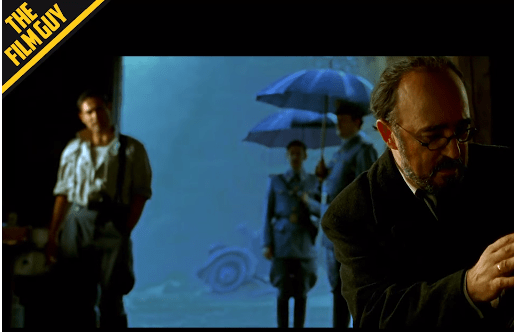
The opening sequence to Del Toro’s Pan’s Labyrinth, a film set after the Spanish Civil War, establishes the rest of the film using the film form elements. From just the opening sequence, the audience is taught about context, characters, representation and is even shown the ending causing dramatic irony throughout.

Colour is key to how the film works, the contrast of yellows and reds to blues and greens is used throughout the movie, largely through the lighting (cinematography). The blue lighting of when we first see Ofelia dead, is uninviting and cold, the colour then goes on to identify with Vidal throughout the film. The yellow lighting of the car contrasted with the blue lighting, makes the audience feel calmer especially as it’s paired with the change from low key lighting to high key lighting, which appears to happen in one shot after “going through Ofelia’s eye” and above ground.

One way that sound is used is the sound bridge of Vidal’s watch. The audience hears it ticking before we see it. As the watch is a symbol for death, the ticking generates the response from the audience about the fragility of life, especially Ofelia’s as through dramatic irony it is known that she dies. Another way sound is used is with the close sonic perspective of Ofelia’s heavy breathing which makes us feel emotionally closer to her. Close sonic perspective is also used for the wooden sounds of the insect, showing the audience that it’s important as it’s exaggerated.

Vidal’s character is established through the performance. His first line “Fifteen minutes late” shows that he is punctual and a leader. The audience would be shocked at his actions towards his wife, as they are not loving but instead controlling and begins to reveal his sexism. The way he grabs Ofelia’s hand rather than shake it is also shocking and reveals his cruel nature.  Plus, Vidal is instantly impersonal with Ofelia by putting his glove back on before greeting her. We also know that Ofelia favours her books/”fake” reality over Vidal/”real” world   because she holds her books with her right hand and shakes with her left. Ofelia’s use of her left hand compared to Vidal’s preference of his right could link to the Spanish civil war in terms of left and right wing.

Mise en scene is used through props like the watch. It’s a metonym and represents Vidal, as the watch is cracked the audience knows that Vidal is damaged. The cars also represent Vidal and his men, they’re expensive and have the fascist symbol on them, showing the audience what type of people they are, and it links to the Spanish civil war. As the voiceover says “dead”, a skull appears on screen, this is vanitas as it’s a symbol of morality and shows the civil war aftermath. Colour is again used, Ofelia’s dress is green, linking her to the “real” world; clothing is something played with throughout the film to show her true connection to the magical world. Ofelia is also shown as connected to the magical world because of the statue that she completes, the face on the statue matches the face of Pan above the labyrinth, the fact she completes it, shows her connection.

The editing made the scene look like one continuous shot, it looks as if the camera goes through Ofelia’s eye and from underground to above ground in one shot, linking Ofelia to the fairy-tale. The audience then knows that Ofelia is the lost princess and that it will be a plot for the film. Plus, the narration of the fairy-tale feels more personal than the written context at the beginning, making the audience feel closer to the “imaginary” world than “reality” which helps enable us to connect with it with Ofelia without feeling that the “real” world is more important.

When it comes to representation in the opening sequence, women are presented as more submissive than men. The first adult woman we see is Carmen, who is struggling with her pregnancy. The audience see’s her in need of help, which comes from a man, which presents women as people who cannot cope without men. This changes later in the film with characters such as Mercedes, who is underestimated due to being female but plays a key role in taking down Vidal. The men are also shown to be controlling, Vidal forces Carmen to sit in a wheelchair despite her declining. Vidal is also a captain, which shows leadership as a good role for men, contrasting to the women later in the film who work as chefs and helpers. Ofelia is the only child in the film, and during the opening sequence we see the curiosity in children as she instantly wanders off when the car stops, this contrasts to Carmen who asks her to come back and asks her to stop reading her fantasy books; this contrasts childhood and curiosity with adulthood. Despite Ofelia only being a child, the roles are somewhat reversed as she has to take responsibility for her mother due to her being unwell. Plus, her mother treats her as if she were older by frowning upon her fairy-tale books.  The film represents children as people who shouldn’t be looked down upon like the characters in the movie do as they are curious and can take responsibility. The representation of ethnicity in the scene is not very broad, the characters are all Spanish due to the movie being set in Spain. As the film is partly about the Spanish civil war, the characters being Spanish fits the context of the movie, especially since Vidal is a captain.

Within the opening sequence, many of Del Toro’s aesthetics are used. One of the Del Toroizms used is religious symbolism. In the underground world, there is a building that’s similar to the tower of Babel (mise en scene) which is a building known for being built high to get to heaven and God then inventing different languages so they were unable to communicate and finish, this may have been included because religion in Spain was a big topic at the time the film was set.  Another Del Toroizm that’s used is a dying child; the first shot the audience see’s is Ofelia’s death in reverse. Having a child die instantly shows the brutality of the war, it’s also a way of exploring the effects that war has on children which is a theme Del Toro wanted to explore. Showing the death in reverse with the shot of seeing the blood go back up her nose may show the audience that death isn’t the end, which is true in the film as Ofelia is reborn at the end of the movie. This scene also creates a sense of dramatic irony as the audience now knows that Ofelia dies, meaning they are aware of this during the events of the film.

The film is set shortly after the Spanish Civil war which lasted from 1936 to 1939. One of the ways this influences the film is that Vidal, a main character, is involved in the aftermath of the war, he is a captain that is taking action against a group of rebels in the nearby forest. The film also uses the Spanish civil war to show the influence of war on children, Ofelia lost her father to the war which led to her unhappiness with Vidal, her stepfather. She also died at the hands of a fascist, Vidal. Plus. As a child she was unable to stand up for herself during such times, she needed help from Mercedes who said she would help her escape. Some of the ways fascism is shown in the film is through props, the cars have fascist symbols on them. A subtler way is that Vidal favours his right hand linking him to right wing politics. There is also religious context from mise en scene as the tower of babel is represented in the scene underground, both religious symbolism and underground scenes being a Del Toroizm.

To conclude, the opening of Pan’s Labyrinth manages to establish the majority of the film within a short amount of time. As well as context being involved surrounding the Spanish civil war and religion, Del Toroizms are too included in ways such as the camera rarely stopping, a scene taking place at night, a child dying and scenes taking place underground. The representation of the film sets up the stereotypes of women compared to men, that Vidal believes in, ready for the plot to prove him and the stereotypes wrong later in the film. It also explores the capability of children compared to what adults generally estimate they can and should do. It also foreshadows the ending with Ofelia’s death which changes the viewers reactions to the movie compared to if they were never told. Plus, the wordless lullaby is introduced which is a motif throughout the film and can make the reader feel certain ways depending on when and how it is used. Overall, the opening sets up the rest of the film so that ideas and techniques that have already been used can be played with to convey different/the same ideas and control how the audience feels.
An Authors Inspiration Script


Authors Inspiration

1.Ext. Daytime at a park. It’s not crowded. Average weather.

ELIZA, a woman with brunette hair is sitting cross-legged with a pink laptop on her lap underneath a tree. Her “over the shoulder” bag is next to her. She keeps typing and deleting what she has written.

VIDAL and CODY walk through the park. VIDAL is significantly taller than CODY. ELIZA can see them but is out of earshot. CODY uses many hand gestures, but VIDAL does not.


CODY

Sir, you promised that you would follow my plan.

VIDAL

I wanted to follow my own plan.

CODY

You certainly did and look what happened.


The two of them are walking quickly. ELIZA is watching with curiosity and begins to type notes down. Her laptop screen reads ‘Book Character Plan’.

The two men stop briefly. CODY is still using hand gestures; his leg is bouncing up and down. VIDAL stands up straight and appears stiff.


CODY

I gave you a detailed plan that had a 100 percent chance of success.

VIDAL

And I looked at it.

CODY

Did you even read-

VIDAL

I do the plans that I wanna do

CODY

You hired me to make you plans! Sir, why did you ignore it?


VIDAL looks over at ELIZA. ELIZA quickly looks away. She turns back when VIDAL has stopped looking at her.


VIDAL

You scared?

CODY

Is it that shocking that I’m afraid of getting caught by the authorities?


VIDAL shifts to the side.

CODY

After what you did?

VIDAL

Fuck off you signed up.

CODY

Sir, I needed the money.


VIDAL pushes CODY but not hard enough to hurt him then starts walking away. CODY recoils a little before catching up with him. ELIZA is still writing down notes and watches as they walk away, still talking.

ELIZA carries on typing after they have left her view for a few seconds, before smiling at her notes. She then packs up her laptop and places it gently into her bag before walking away with a purposeful walk.


  1. INT. Day. Wooden and colourful kitchen. Later on that afternoon.

ELIZA is sitting at the counter with her friend SIAN. Her friend is walking around the kitchen putting clean dishes and cups away.

SIAN

So, how’d the story planning go?

ELIZA

It went well. You were right, trying to get inspiration from somewhere other than my study was a good idea. (In a jokey way) I should have listened to your wise words sooner.

SIAN

(With a hint of sarcasm) How will you ever repay me?

ELIZA

Hmmmm (looks around kitchen). I’ll help tidy your kitchen?

SIAN

About time! (said light-heartedly with a giggle and smile)


The two girls were tidying the kitchen together.


SIAN

So, what inspired you?

ELIZA

These two guys I saw in the park. They looked unusual so I spied on them and took notes.

SIAN

Well that’s creepy, do I need to report my friend to the authorities?


The two girls laughed.


ELIZA

Give me a break, besides it was your idea!

SIAN

Not quite what I had in mind.


There was a quick pause were the girls were silent. They finished up tidying and were standing at either end of the counter. ELIZA was leaning against it and SIAN had sat on the edge.


SIAN

So does this mean that there won’t be a character based on me? (sarcastically) Have to say, I’m shocked, after all I am the most interesting person you know.

ELIZA

(sarcastically) That’s the issue, you’re so amazing I could never quite capture that with writing.

SIAN

Apology accepted.

They shared a laugh.

SIAN

But anyway thanks for helping me tidy.

  1. Night time. The camera moves through a dark and cramped corridor into slightly lit room, the kitchen. It’s a dark room with a small black and white kitchen. The table is dirty.

CODY is sitting at the table. VIDAL is pouring an alcoholic drink.


CODY

I’ll have to think of a plan sir. We can’t get caught, we can’t go to prison, we’ll be there for life!

VIDAL

SHUT UP! If you’re going to keep whining then get out.

CODY

We need a plan sir.

VIDAL

Then make one. You’re the brains out of the two of us.

CODY

(VIDAL pours another drink and hands it to CODY who refuses. VIDAL pours another drink and downs it himself) Exactly, so why did you ignore my plan!

VIDAL

I already told you.

CODY

You were supposed to just rob the place.

VIDAL

(calmly) Which I did.

CODY

(yelling) You killed a man!


VIDAL slams down the bottle and it smashes. CODY jumps. VIDAL storms over to CODY who scrambles out of his seat.

VIDAL

You think I don’t know that? (he laughs) The plan you’ve been so keen to make is all about covering that up, is it not?

CODY

(silence)

VIDAL

Now get out of my apartment and make the god-damn plan.


CODY leaves immediately. VIDAL slams the door on him and goes back to his kitchen to pour another drink. You can see a bag of money and jewellery in the corner.

Del Toro

Some influencers:

  • James Whale’s Frankenstein
  • Alfred Hitchcock’s Shadow of a Doubt
  • Terence Fisher films
  • Ingmar Bergman


Frequent elements of the protagonist character arc

  • Face a choice, to deal with their own mistakes or let others suffer
  • To fit in to what is expected or stand out.
  • Put aside vengeance and mistrust for the greater good.
  • To kill or not to kill

Choice is what separates is protagonists and his antagonists as his villains are never shown to have to choose to continue with their actions. This is a reason why people feel his characters are well written and are continuous.

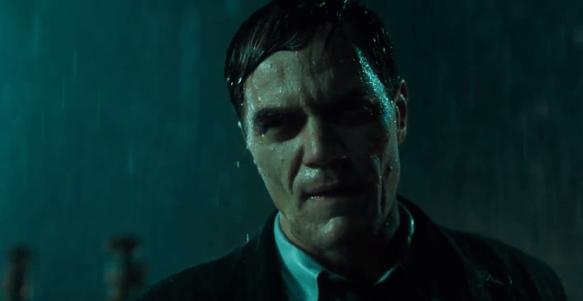
Strickland

“I never fail” – An example of a villain who doesn’t ever make a choice. (Plus there’s heavy rain when is a Del Toroizm)

Similarities between protagonists

  • Many of them are orphans (in or be set before the film)
  • We often see the person that the main character loves the most die or dying which is often a parent (or a parent is one of them)
  • Often have a power or an ability that other people in the film don’t have/aren’t capable of. This commonly the ability to see spirits or to see into another world but we also see super human strength and agility


Del Toro treats the fantastical as the mundane

  • In Devils Backbone the first ghost sighting is during the day and purposely edited to not be scary
  • In Pan’s Labyrinth the first magical character Ofelia meets is a fairy and it almost plays out as though she were expecting it to happen
  • And specific rim starts years after humans have had their fast encounter with something else


Other films have to give lots of rules to make it believable. But as the magical in Del Toro films isn’t treated as overly special and doesn’t have a huge impact on the daily life of the characters, you don’t have to give a lot of exposition.


Mise en Scene

  • His films are constantly gorgeous to look at. It’s the difference in designing something to look cool and designing something to tell you about the character.
  • He’s a believer in encouraging the set to be character itself, building at least one big statement piece on to every set. It’s his way of connecting story moments with locations.

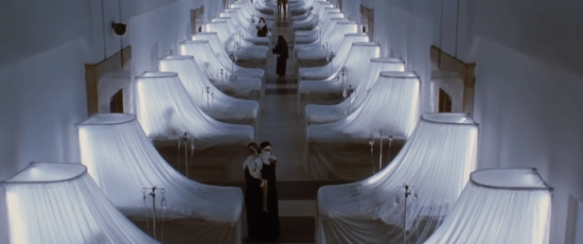
del toro set thing


Colour

  • He often uses colour to help tell his story.
  • Common tones are yellow, blue and green which will often change dramatically per sequence such as in Pan’s Labyrinth where you have the blue vs the gold and red. When the magical and ‘real’ world collide, they colour difference starts to become more noticeable (battle between two worlds) and sets that were once coloured one way are now coloured another as they have been affected by one of the two worlds. He wanted to show the difference in intention between both story lines and the effect Ofelia’s story had on the world. You can find more control of colour in most of his other films where lighting will dramatically change from environment to environment including in the same scene to coincide with a characters journey or spiritual direction.
yellow vs blue vs green

Yellow/blue/green


difference in lighting

Difference in lighting


Logic and showing vs telling

Del Toro hates the need for perfect logic in films his beliefs that the strongest story telling comes from a place of mystery and awe and that not everything has to make effect sense. However audiences often do think about the logic and he has been criticised for not being able to get great performances from his actors, a possible reason is that he is an extremely visual story teller. He shows things rather than using long dialogue (telling). This means any problem with the actors, might be down to the script. His lean on visual style has stopped many of his films from achieving as well as they could have but more often than not, when he leads on his world creation abilities his films get closer to achieving it.


Del Toroizms

  • Religious symbolism
  • Scene taking place at night
  • Scene taking place underground
  • Heavy rain
  • Orphans
  • Clockwork
  • Children dying
  • Creepy stuff in glass containers
  • The camera always moving and rarely stopping
  • Creatures and monsters


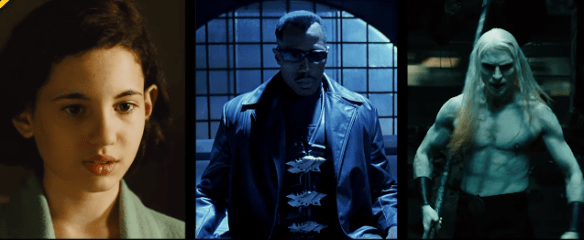
The monsters are human

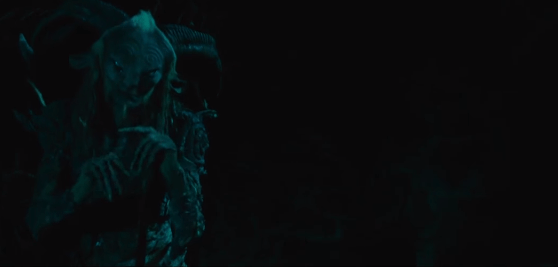
A common theme is that the humans are monsters and the monsters are often human. As well as this, the human character that is the villain tends to take advantage of the monster. Del Toro said as he was bullied growing up because of his size, he relates more to his movie monsters than the people. This is a perspective that sees them as misunderstood creatures and not necessarily stereotypical monsters. Del Toro could be showing the desire for acceptance and how society should be more accepting.

pan

An example of a monster who is ‘human’ (but not a protagonist)


Pan’s Labyrinth Response

One of the main things I noticed about the film was the use of colour. Del Toro often uses colour to tell a story and he defiantly did so in Pan’s Labyrinth. The ‘reality’ world is largely made from blues and greens making it cold an uninviting. For example, the lighting is often blue, such as when Ofelia gets into bed with her mother. The mise en scene is also what makes this blue and green common; the costume design is a key element when it comes to colour telling the story. Ofelia wears a green dress when in ‘reality’, she physically takes it off before entering the tree. To contrast, when she is reborn at the end of the movie into the magical world, she is wearing gold and red which matches the colour scheme for that world throughout the film. Things like Ofelia’s red shoes and the close up of them could be a link to ‘The Wizard of Oz’ as Dorothy’s red shoes. The gold and red colours are more inviting and are internal colours which matches the frequent reproductive system imagery.

The fallopian tubes are an image that frequent occurs during the movie. This links with Ofelia’s desire to be close to her mother again after the war had affected her life. Del Toro wanted to explore the effect that war had on children, it’s part of the theme and binary oppositions brutality vs innocence. The war took her dad and then her mum re-married to Vidal who was part of the war leaving Ofelia in a situation and place she didn’t want to be in. The internal colours of the magical world and the tree being in the shape of fallopian tubes (mise en scene) therefore makes it a metaphor when Ofelia climbs into the tree (wants to be close to her mother again) and means that at the end of the movie she is reborn. This added to the sympathy that I already felt for Ofelia. There were other fallopian tube symbols in the movie such as in Ofelia’s book, the fauns antlers and a picture of the pale faced man in Ofelia’s book forms the shape of fallopian tubes.

I tend to think Del Toro puts masses of detail into his films regarding recurring symbols. In this movie time and hands were repeated many times but one that stuck out to me was the use of words. Ofelia’s mother tells her to call Vidal her father and that it is just a word, suggesting there was no meaning behind it. Plus, the doctor gave the speech about obeying just because people were told to which had a connection to the use of words. As well as this, the lullaby that Mercedes sings Ofelia which becomes a frequent melody throughout the film is wordless. I think Del Toro is trying to suggest that people other than Vidal use actions to express emotions whereas Vidal will use words which can be hollow, and that even if he does use actions he’s often just obeying because he’s told to.  He’s cruel and insincere, which we can tell from his actions as well.

Time was also mentioned and hinted at many times, especially with Vidal. His father smashed his watch so that he knew what time he had died, he asked Mercedes for his son to know the same. As well as this, he frequently checks his watch (a prop which is part of mise en scene) and we get frequent close ups of the watch because of this as well as being able to hear it tick, I think the first words we hear him say are stating that Ofelia and her mother are late. This could link to Ofelia’s story that she tells her brother about the flower that grants immortality, and how there were poisons thorns that guarded it, but all people spoke about was how dangerous it was and never the reward. It cuts to Vidal during this scene. I think Vidal is a contrast to the story, that it suggests that he believes he is ‘immortal’ because he thinks he’s better than everyone else, such as he believed he could defeat the rebels. His constant checking of time supports this as it could be a hint to how short life is, even for Vidal who seems to feel indestructible. It’s possible that the thorns in the story for Vidal were his actions that were cruel and evil, causing his own downfall and un-deservingness of immortality.

The violence in the film was significant in terms of characters and who they are. Vidal, was cruel and murdered without a thought. Ofelia, was passive even when faced with the pale faced man and had the dagger (mise en scene – prop). Mercedes was brutal but did it for her safety. I think Del Toro often uses violence to explore characters, I noticed similar scenarios in films like ‘The Shape of Water’ and ‘The Devils Back Bone’ (which is actually a sister movie to Pans Labyrinth).

2001: A Space Odyssey Essay Questions

Explore how two film form elements have been used in this sequence to provoke response and make meaning

The Mise en Scene of Hal, the AI, is part of the theme technology vs humans which is binary opposition. It is also part of the explored idea that technology advancement is dangerous. The space pod that Frank comes out of was designed to look like it had arms, the camera that “he” looks out from is also like an eye. This makes the space pod look similar to a human suggesting and meaning that technology has gone too far. The technology is also dangerous, the mise en scene also shows this because the space pods are white, and the connotation of white makes it appear de-humanised and impersonal, also suggesting that something so similar to humans and so intelligent can be dangerous especially if it has no moral compass and is just a machine. The cinematography, or more specifically the camera angles also support this idea. The wide angle lens that makes the shot look distorted and curved like a fish eye lens suggests that Hal, the AI, is always watching, it also gives an eerie effect. This gives Hal the sense of being omnipotent and omniscient, and something with such power and intelligence is a threat to humans, or more specifically Frank. The audience’s response to knowing this about Hal would be to expect Hal to act negatively towards the other characters.


Before Frank is killed, the camera shot shows us Hal turning around behind Franks back, if Hal were a human it would be an over the shoulder shot. This is dramatic irony as we know something that a character doesn’t, as a response, we feel concerned for Frank. In this moment the spectatorship is that we may be positioned with Hal due to the camera, but we are aligned with Frank because we know that he will be unable to stand up to the technology that is Hal. As well as this, we are passive viewers during this moment because all though we do not have any music to guide us we know something bad will happen because we can see Hal turning. The meaning behind this could be to show that humans have invented their own downfall and that we will lose control. We may have created technology to help us, but it will ‘turn’ on us.


When Frank, a male like all of the cast in this scene due to lack of representation, is in space after leaving the space pod, the editing cuts so the viewers do not see what happens, this forces the viewers to be active viewers as we have to use our own imagination to piece together what happens. After Frank has had his wire cut by Hal, he is struggling through space. We see this through long shots (which is part of cinematography), which emphasises his vulnerability. Through smurfette syndrome, Frank becomes the representative for all of humanity, that we are vulnerable in the face of space and the powers of future technology. Because of the long shots and the extra-long shot showing him disappear, my response to what was happening on screen was not only to feel sympathetic towards Frank, but to feel small myself in the face of how big space is and knowing the danger of technology progression.


The technology is colourful which contrasts to the monochrome space craft, this is part of mise en scene. This highlights that the technology is futuristic which would make sense as the film is from 1968 but set in 2001. Although the technology can be dangerous, it can also be a safe haven. The light vs dark being the lightness of the space craft against the darkness and emptiness of space, shows to the audience that the spacecraft the Borman is on as a safe haven. It puts meaning to the light vs dark as safe vs danger. Speaking of how danger is presented, the camera (cinematography) and set design (mise en scene) is also used to foreshadow danger. The close up of the writing on the pod door foreshadows danger, this is because caution is written in big red letters, and red has connotations of danger and the close up emphasises the connotations that the audience has thought of. This will provoke the response to expect something bad to happen to one of or all of the protagonists.


What might this film from 1968 be trying to say about the future?

One of the things that this science fiction film might be trying to say about the future is that humans will eventually be powerless compared to technology if it keeps developing to dangerous levels. The technology is something that makes the film a science fiction along with the space crafts and space. Technology vs humans is a theme of the film and are binary oppositions. One of the ways that the film presents this is with the sound and editing. The film edits out Hal cutting Frank’s wire, leaving the audience to be active viewers and piece together what happened. However, the sound does cut and go to silence. All of the diegetic sounds such as heavy breathing and machinery sounds stop. This could make us active viewers as well instead of passive as we have no music to guide us. This silence suggests something happens and the meaning behind it could be to show how quickly human life can come to end, and how easily an intelligent piece of technology such as Hal can end it. Therefore, suggesting that technology advancement can be/will be dangerous. It also in this moment that the camera positions us with Hal, but we are aligned with Frank as we feel sympathy for him but the camera has placed us with Hal. The red eye that Hal has (which is part of mise en scene) also suggests the danger of technology as red has connotations of danger, therefore making Frank evil. Altogether, this suggests that the film was predicting a future where humans are vulnerable against technology.


Another way that the film presents the danger of technology in the future by showing how helpless humans can be in relation to technology such as Hal is through the cinematography or more specifically the camera. It makes Frank look small and helpless in space after technology had doomed him. After Hal had cut his wires, we get long shots of Frank struggling in silence in the vastness of space. The comparison of him to his surroundings shows how much he doesn’t fit in, this is also shown by mise en scene, Frank wears a yellow space suit which contrasts him to space and the space crafts that are white. All of this shows how not adapt he is to survive, the technology had made him vulnerable. Frank also stands in for all of humanity through Smurfette Syndrome so the film is saying that the human race will be no competition to technology in the future if it keeps developing, and that humans we will be vulnerable.


The theme of technology and the future is explored to show how technology will be futuristic in the future. The film is from 1968 but set in 2001, so although what viewers see today may not be very futuristic (apart from Hal) back then it would have been. Kubrick presented the idea that technology will be futuristic in the future by using mis en scene. The buttons and other technology was brightly coloured and lit up, this contrasted to the monochrome aesthetic to the space craft making it stand out and look more interesting and futuristic, presenting technology in the future in a good light. However, the cinematography or more specifically the camera makes Hal, an AI and therefore technology, seem very futuristic by making him appear omniscient and omnipotent and therefore godlike by using a wide angle lens providing the idea to the viewers that Hal is always watching and knows everything that happens. We know that he is powerful because of what he did to Frank, the what would have been over the shoulder shot of Hal physically turning behind Frank’s back shows that technology has the power to destroy human life, the dramatic irony of the viewers knowing something that a character (Frank) didn’t, emphasises the danger that Frank, and therefore humanity (Smurfette syndrome), is/could be in. The idea of technology being godlike in the future is a scary prospect but also possibly a prediction that the film was trying to make about the future, that technology would advance in not just nice ways (the colourful and bright buttons) but also in dangerous and negative ways.


It’s possible that the film was also trying to present the idea that in the future humans will rely and trust on technology even to weird extents. We know this because of the performance. Borman. Frank’s companion notices that Frank is in a life threating scenario. The performance is very unusual as instead of panicking Borman is very calm and good under pressure. This would confuse viewers as if they were in a similar situation, they would not act this way. This performance shows how much humans would rely and trust on technology in the future because instead of Borman panicking he stays calm and uses technology (space crafts) to help Frank. Because he immediately takes to technology, the film shows that he is relying on it, and the fact that his performance is so calm suggests that he trusts it, which the viewers know he shouldn’t after seeing what Hal did to Frank. The film is suggesting that in the future humans will rely without question on technology even when human life risks are involved, and how this can be dangerous. A viewers response in 1968 might have been shock at the idea of technology having such key role in something so important, but viewers now may take time to reflect on how it is already happening, for example the machines that help during surgery. The film was predicting a future were technology is involved in serious situations and trusted.


The film has a lack of representation. The only characters other than Hal are all white, male and adult. This could be representing Stanley Kubrick’s idea of what the future will be like due to what his present was like in the 1960’s. Although improvements were being made around sexism and racism, equality was still far out of site. Things like the equal pay act was established before the film came out in 1963, but women still had discrimination including surrounding housing. This could be why the director had no women astronauts, maybe to him the idea of women being in space was unlikely or impossible. Martin Luther King was part of the civil rights movement in the 50’s and 60’s and actually died the year the film came out, along with this one of the civil rights act’s was established in the 60’s. So although there was progression, equality was still far away which could be why the director cast with such a lack of diversity and representation. If the film was made today, I’d hope for and think there would be more representation, but I think Kubrick was trying to say that to him the future looked similar equality wise in 2001 as it did in 1968, and so he showed that through the film.


2001: A Space Odyssey

Editing: 

  • The editing matches with the sound in terms of when it cuts to silence
  • The viewers do not see Frank get detached/what happened to him, you see Hal’s eye (the AI) and then silence.
  • The duration of the shots is long until you see that Hal will attack Frank.


Cinematography:

  • extra long shot of Frank disappearing in space, it shows how helpless he is
  • close up of the writing on the door foreshadows danger
  • long shots of frank to show what is happening to him and to show his vulnerability
  • Bright lights vs the dark. The light could represent safety whereas in space where it’s dark human’s cannot survive and are in danger
  • The mid shot of someones face presents being in the astronaut suit as claustrophobic when could again show his vulnerability against the big, wide and open space
  • Wide angle lenses give it an eerie effect. It also gives the idea of being watched by Hal who appears omniscient and omnipotent.


Sound:

  • Heavy breathing vs silence
  • No music even when tension is being built
  • No non-diegetic sound
  • Mechanical sounds
  • You cannot see where Hal’s voice comes from which shows he has omnipresent control


Mise en Scene:

  • The space pod that Frank flew from look like a human because of the eye and the parts that look like arms. This could suggest technology has come too far.
  • There is not much set design because it’s set in space so it’s mainly vastness
  • The space crafts are white which makes Frank stand out who is wearing yellow
  • The technology is brightly coloured, this could be to show it as futuristic technology
  • The monochrome decor contrasts with the colourful technology
  • Borman has an orange space suit but Frank has a yellow one, this could be to help identify the characters
  • Caution is written in big and bright red letters on the door, this foreshadows danger


Performance:

  • Borman speaks calmly and is good under pressure despite his friend being in a life threatening situation, this shows what Borman is like as a character but is also very unusual
  • You only see one character at a time
  • Hal’s voice is ominous and monotone despite the situation


Genre (science fiction):

  • Space
  • Space crafts and suits
  • Technology


Messages/meanings/responses:

  • Dramatic irony of seeing Hal turn around behind Franks back makes us worry for the character as we know he is in danger and vulnerable
  • That technology can be/will be dangerous. Fear of the advancement of technology and that it can and might go too far
  • That humanity can be insignificant in comparison to technology
  • Smurfette syndrome – Frank stands in for all of humanity. He is so small and vulnerable and maybe even insignificant in comparison to space and technology.
  • The extra long shot and long shot of Frank showed his helplessness. It made me concerned for him and made me feel small
  • Silence is the equivalent to the end of life and how quick it can happen


Themes:

  • Technology and humanity inventing its own downfall
  • Control and false control
  • Isolation
  • Human meaning


Representation: 

  • Age – all adults who are not yet middle aged
  • Gender – Male
  • Ethnicity – white
  • Bad representation with no diversity which could reflect the inequality of the time it was made/ reflect the inequality that the creator of the film imagined to exist in the future


Context:

  • American
  • 1968
  • ‘Space race’ to get someone on the moon (soviets were the first to put a human and satellite into space)
  • cold war
  • Greatest age of space exploration


Spectator-ship:

  • Not seeing Frank’s death leaves it to the imagination. The film pushes you to be an active viewer
  • The shots before Frank’s death are moments when the viewer is a passive viewer because we know that something is going to happen to him (dramatic irony)
  • Positioning (where we are place geographically usually with the camera)- we are positioned with Hal
  • Alignment (who we are with emotionally) – we are aligned with Frank, we are sympathetic towards him
  • The fact that there is no music to guide us makes us active viewers as well


Ideology (connotations, binary oppositions, positioning and address, ideological perspectives and critics approaches):

  • Binary opposition – technology (AI) vs humans
  • The colour red is linked with evil and danger so Hal having a red eye shows us he is not trustworthy and likely evil (connotation)
  • Light in the ship vs darkness outside shows that outside the ship is dangerous. Inside is safe and like an oasis in the vastness
  • Hal having no body – suggests he is every where and godlike
  • The spacecraft is white which is a contrast to space, a dramatic image. It could mean either/both clean and pure or de-humanised and impersonal


Key things to mention in the essay:

  • Binary oppositions
  • Smurfette syndrome
  • Active/passive  viewer
  • Dangers of technology
  • Space exploration around 1968
  • Wide angle lens – eerie and being watched
  • Lack of music
  • Close up of the red caution sign
  • Dramatic irony of seeing Hal turn around and how this makes us concerned for Frank in response
  • Vulnerability of Frank compared to space and technology – response and meaning
  • Lack of representation
  • Our alignment and positioning
  • Themes like control (or lack of it) and technology
  • Colour of the props and set design and how this can show things like the technology being futuristic and the space pod (Hal) being impersonal
  • Extra long shot and long shots showing Frank as vulnerable and small


Film Form Examples


Happens withing the first 14 seconds of the clip.

Film: Thor Ragnarok

Director: Taika Waititi

Film Form Notes:

Sound:

  • Silence – there is still background music and you can hear muffled speech from background characters (so it’s not actually silence) but the dialogue between the main three characters goes silent. This is done for comedy purposes.

Cinematography:

  • Camera – mid shot – the mid shot of the three characters shows their reactions to what has been said and/or the silence. It is done for comedic purposes.

Performance:

  • The glances that each character does (which you can see from the mid shot) adds to the comedy, as does the awkward wink.
  • Proxemics – they are all standing very close to one another with again adds to the comedy element.


Film: Baby Driver

Director: Edgar Wright

Film Form Notes: 

Mise en Scene:

  • Some of the words that are in the song that Baby is listening to appear on the walls/poles etc, they appear on screen.
  • There are people that appear with an instrument in time with the song such as the man with a trumpet (?) towards the end of the scene and the man playing “drums”.
  • The performance matches up with the mise en scene, the character Baby imitates the graffiti behind him and pretends to be playing a brass instrument outside the window of a brass instrument shop, this also matches the timing of the song.
  • When he enters the coffee shop, on the wall which you can see out of the window, there is graffiti with a black heart on top. But, after he sees Debora, it turns red. This could show his instant attraction to her and foreshadow their romantic relationship.
  • At the very begin when we get the shot of the building. There are two yellow lines that run up the side of it like double yellow lines on a rode. This fits the film as it is an action movie that follows the main character Baby, who is the get away driver for a group of criminals.

Performance:

  • Baby is dancing to the song as he walks down the street and doing things such as pretending to play an instrument, keeping in time with the song.
  • Baby imitates the graffiti
  • The people that appear playing instruments in time with the song.
  • When Baby is giving his coffee order, he sings along with the song but makes it sounds like he’s deciding what to order.

Sound:

  • Music – the music fits with the mise en scene and performance, it controls and is the scene.
  • The scene is kind of choreographed to the music, there are lots of scenes in the film Baby Driver that are choreographed to music.


Film: I  Kill Giants

Director: Anders Walter

Film Form Notes:

Sound:

  • Environmental sounds – you can hear birds in the background
  • Diegetic – the footsteps of the two main characters
  • Foley – the sound of the rope trap swinging down is exaggerated, it would have been edited in sound but you can see where it came from on screen and the characters would have heard it.
  • Non-diegetic – there is a quiet piano playing at the beginning of the scene and there is another quiet background noise that plays throughout most of the scene.


From 1 minute into the clip to about 3 minutes

Film:  La La Land

Director: Damien Chazelle

Film Form Notes:

Editing:

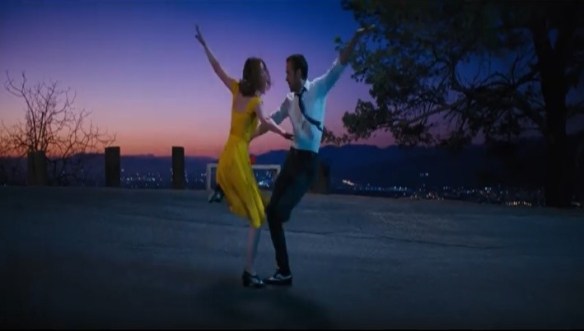
  • It is a montage scene. We see their relationship progress quickly, within seconds, but for the characters it would have been weeks and possibly months.
  • It’s like a match cut when it switches between Sebastian playing the piano and Mia dancing however it doesn’t appear like it is actually cut, it looks like it’s all one shot.

Performance and Sound:

  • The music in the background is what makes the montage possible.
  • The performance matches up with the music, they start dancing together as though to the music (but it’s non-diegetic they cannot actually hear it yet) until the montage ends and it’s them in a bar and the music is being played by Sebastian and a band and Mia is dancing to it. The music became diegetic.


Starts around 25 seconds into the clip.

Film: Thor Ragnarok

Director: Taiki Waititi

Film Form Notes: 

Sound:

  • The music fits the scene as it marks the start of the end fight scene.
  • It indicates to the genre of the movie. It’s an action and superhero movie but it doesn’t take itself too seriously, it’s still a comedy.


I made notes on film form until around 3:10

Film: Matilda

Director: Danny DeVito

Film Form Notes: 

Mise en Scene:

  • Props- the chocolate box which has not been put back properly is what starts the scene.
  • Props – the props break after Miss Trunchball jumps. It’s makes her scary but also adds to the comedy.

Sound:

  • Heavy footsteps up the stairs makes miss Trunchball scary
  • The music builds tension/highlights that the characters are in danger
  • Matilda’s heavy breathing builds tension and shows how she is scared and vulnerable, it makes the viewers worry for her.
  • Foley – Miss Honey throwing the ball in the air makes an exaggerated sound. This could be for comedic purposes.
  • The loud sound of the props (mise en scene) falling down the stairs indicating where Matilda is builds tension and makes you worry for Matilda.
  • Foley – Miss Trunchball grinding to a halt sounds like a car stopping. It’s exaggerated and comedic.
  • Music – the music when miss Trunchball enters the kitchen where Matilda is hiding builds tension as well but is still suitable for a children’s movie.

Cinematography- camera:

  • You see Matilda running away and Miss Trunchball looking for her in the same shot. It’s a mid shot for miss Trunchball showing her emotion and a long shot for Matilda to show what she is doing. This builds tension.
  • Close up of Matilda’s face to show her emotion, fear.
  • The camera shakes when Miss Trunchball lands after jumping. This shows how dangerous and powerful she is as a character but it’s also funny.
  • Extreme close up of Matilda’s eyes during the table seen shows her panic and builds the tension because you think she might get caught.

Cinematography- lighting:

  • The shadow of Miss Trunchball on the table cloth for the table that Matilda is hiding under, builds tension again because you think Matilda will get caught.


0:45 to 1:17

Film: Baby Driver

Director: Edgar Wright

Film Form Notes: 

Cinematography:

  • Colour – black and white like his dream/hopes for the future from earlier in the movie but it becomes more saturated until it is in colour indicating that his dream became reality.
  • Sound- music – the music is uplifting which fits the scene and the idea that his dream came true.


Film: The Shinning

Director: Stanley Kubrick

Film Form Notes:

Sound:

  • The eerie noise builds tension and fits the horror genre of the film.

Cinematography:

  • Camera- mid shot shows her worried expression (performance)
  • Over the shoulder shot – the audience knows that he is there and that the woman is now in danger. It’s dramatic irony because the audience knows something that a character doesn’t. The viewers would worry for her because she is vulnerable and therefore tension is built.
  • Action reaction shot of  the paper and her face builds tension and makes the audience worried and freaked out just liker her. It also makes sure that the audience knows how she is feeling.

Mise en scene:

  • Props – the fact that every paper is slightly different and says the same things makes it seem scary and weird. The fact that some pages have many mistakes or have not been lined up properly makes it freaky as well.

Film Form – Cinematography

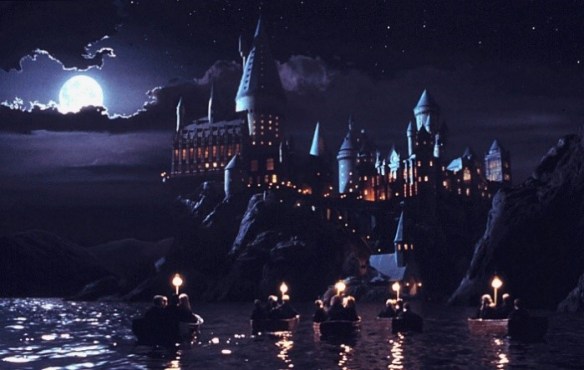
Extra Long Shot (ELS/XLS)

What:Human is equal to or less than 1/3rd the height of the frame.

Why:Identifies the location and/or establishes the kind of place/genre of film

Example:

Harry Potter - Hogwarts

Film: Harry Potter and the Philosopher’s Stone

Director: Chris Columbus

Year: 2001


Long Shot (LS)

What: Human is almost equal to the height of the frame.

Why: Can identify what type of person a character is.

Example:

la la land

Film: La La Land

Director: Damien Chazelle

Year: 2017


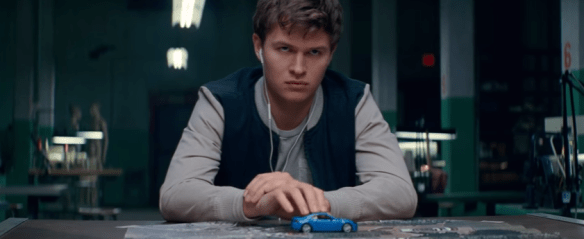
Mid Shot (MS/Medium Shot)

What: A shot taken from a medium shot away. If of a person, you can see from their head to above the hips.

Why:  This shot can show what a character is doing.

Example:

baby driver

Film: Baby Driver

Director: Edgar Wright

Year: 2017


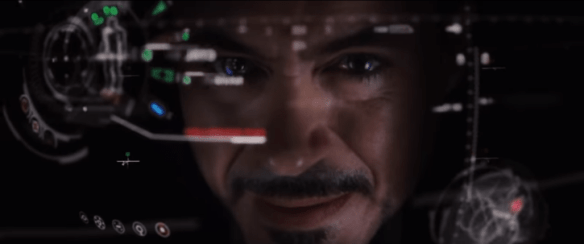
Close Up (CU)

What: A shot that tightly frames a person or object.

Why: Can be used to show how a person is feeling.

Example:

RDJ IRONMAN 1

Film: Iron-man

Director: Jon Favreau

Year: 2008

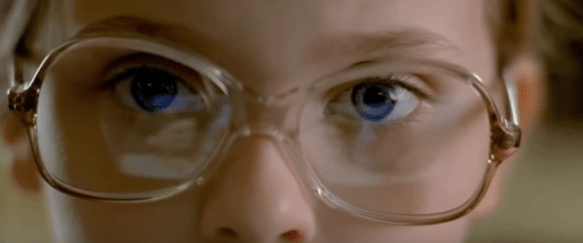
Extreme Close Up (ECU/XCU)   

What:   Extremely close to something or someone and shows a lot of detail.

Why: Doesn’t usually show character reactions but is normally used to portray something specific.

Example:

Little Miss Sunshine - Olive

Film: Little Miss Sunshine

Director: Valerie Faris

Year: 2006


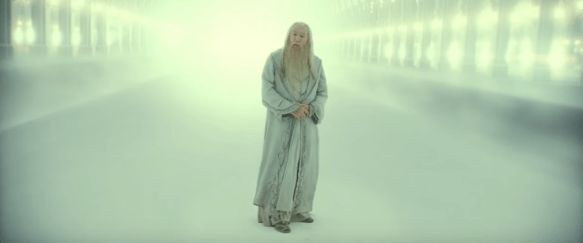
High Key Lighting         

What: Light tones and not many shadows and brighter.

Why: Can suggest an upbeat mood but not always.

Example:

hpdhp2 dumbledore scene

Film: Harry Potter and the Deathly Hallows Part 2

Director: David Yates

Year: 2011


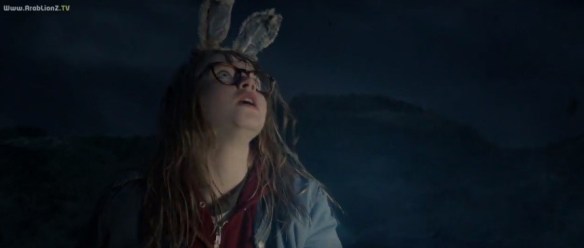
Low Key/High  Contrast Lighting

What: Contrasts between dark and bright.

Why: Convey mood, typically in horror films.

Examples:

I kill giants

Film: I Kill Monsters

Director: Anders Walter

Year: 2018

IT

Film: IT

Director: Andrés Muschietti

Year: 2017

Elements of Film/Film Form

Performance 

  • Style e.g. comedic
  • Expression and body movement
  • Position and proxemics (the space between others and themselves)

Cinematography 

  • Colour/film stock
  • Saturation
  • German expressionism

Lighting –

  • High key and low key (with high contrast)
  • High contrast and low contrast
  • Vignette

Camera –

  • High angle and low angle
  • Over the shoulder shot (dramatic irony because the audience knows something that a character doesn’t)
  • Point of view
  • Focus/lens

Mise en scene

Everything you can see such as props, costume design and set design.

Sound

  • Diegetic (noises that have not been edited in, can be from off or on screen) and non-diegetic (not visible on screen/edited in)
  • Silence
  • Music
  • Atmosphere and punctuation
  • Sonic perspective
  • Environmental sound (background sound like the wind or office noises)
  • Contrapuntal sound (Usually the sound we hear in a film directly accompanies what we see on the screen; it is appropriate sound, it is the sound we expect.- Film Technology)
  • Foley (sound that is diegetic but added in post production)

Editing 

  • Pace
  • Rhythm
  • Continuity editing – parallel action, actin/reaction
  • Montage
  • Action reaction shot
  • 180 degrees rule
  • Match cut (a match cut is a cut from one shot to another where the two shots are matched by the action or subject and subject matter. – Wikipedia)


Pan’s Labyrinth

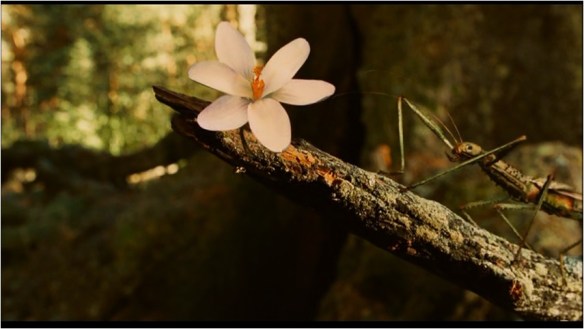
pans labyrinth flower and fairy


Some of my information was from this website: http://panslabyrinth.co.uk/

Director: Guillermo del Toro

Plot

In 1944 at the end of the Spanish civil war, Ofelia seeks refuge in a mysterious labyrinth and follows three dangerous tasks set for her by a magical creature who tells her she is the lost princess. Meanwhile, her mother (who has recently married a horrible man), is having pregnancy issues.

Spanish Civil War

Ofelia 

A brave, kind, young girl who is interested in fairy tales who seeks refuge in a labyrinth. She follows three dangerous tasks set to her by a faun and struggles with loneliness and the health issues her mother has regarding her pregnancy. Del Toro explores the way war effected children through this character and Ofelia also had to cope with her step-father who has no interest in her, and who is a horrible man. She is told by the faun that she is the long lost princess of the kingdom.

Mercedes 

Mercedes works as a house keeper for Captain Vidal (Ofelia’s step father) and forms a bond with Ofelia. Mercedes fights against Captain Vidal secretly along with the doctor but eventually has to face him.

Pan

A satyr/the faun who guards the labyrinth. He is complimentary and playful but also fierce, this represents both the bad and good in natures forces. Pan sets Ofelia the three dangerous tasks she must do, he needs her to discover the truth.

Captain Vidal 

He is a captain in Franco’s army and the new husband to Carmen (Ofelia’s mother). Along with soldiers he is attempting to find and kill resistance fighters near by. He is a cold, horrible and violent man who has no interest in fathering Ofelia. Without hesitation, he told the nurses that if Carmen must die to save the baby, they must do it which suggests he didn’t love Carmen either.

Carmen 

Ofelia’s mother and Captain Vidal’s wife. She is pregnant with Captain Vidal’s baby and is having serious pregnancy issues. She would like Ofelia and Vidal to get along, this might be why she told Ofelia to put away her books about fairies as Vidal would not have approved.

The Doctor 

He is the towns doctor and is secretly helping the resistance fighters with Mercedes. He must make a serious decision when it comes to helping the resistance. He also helps Carmen with her pregnancy problems.


About the Film 

  • Directed by Guillermo del Toro
  • Doug Jones played the creatures (he often appears in del Toro’s films)
  • There are lots of metaphors and lots of symbolism around hands, faces, eyes, time and the use of words
  • Innocence vs brutality is a theme throughout the film
  • The fantasy world was as dangerous and real as the real world.
  • The fantasy world is actually real, it’s not just inside Ofelia’s head. We know this because Ofelia was able to draw doors with the chalk Pan gave her and because of the flower at the end of the film.
  • The violence was significant and had meaning behind it. This is the same with other films directed by Guillermo del Toro too such as ‘The Shape of Water’
  • The iconic tree looks like fallopian tubes, the child entering the tree is like her being re-born. The film is full of baby and child imagery because Ofelia is re-born at the end of the movie and because most of the fantasy world she would dream of is going back in to her mothers womb. The colours of the magical world are golden and scarlet because they are internal colours and the rest of the world is blues and greens and pale greys which makes it more cold and un-inviting. Ofelia even takes off her green dress before entering the tree.
  • ‘The Wizard of Oz’ and ‘Alice in Wonderland’ were both inspirations
  • Pan the faun would “appear” to the director del Toro from behind a wardrobe in his grandmother’s house as a child
  • The scene where Vidal beats an innocent man with a bottle was inspired by a fight in which Del Toro was in when he was younger with a friend who was being hit with a bottle (but less brutally)
  • There is a lullaby that repeats throughout the film and can make the audience feel emotional


‘to obey – just like that – for obedience’s sake… without questioning… That’s something only people like you do.’ – the doctor