Week 25 ISP – Essays on Everything
Reply

The Fallen Angels Question didn’t work for some reason, so here it is:
Section D: Film movements – Experimental film (1960-2000)
62) To what extent is the film you have studied recognisable as the product of an auteur? [20]
Fallen Angels is very recognisable as the product of the auteur Wong Kar-wai. For example, his recognisable use of film form. One of the main examples is his use of non-diegetic pop songs throughout the movie, not for ironic purposes, but to connote certain feelings to the audience. Another main example is his use of rain, which he uses to bring characters together in Fallen Angels, furthering the themes of loneliness and togetherness. The mise-en-scene of rain is also used in his other films like ‘The Grandmaster’. Furthermore, he has a specific use of editing in terms of time manipulation to convey meaning. Such as, the use of step printing, like during the assassination sequence, which to partially used to connote a sense of coolness to the character. He also uses slow motion, like the slow motion of the train dirivng past during the opening, which has a sense of lonliness. Simialrly, his use of cinematography also does this. His use of wide angle lens and deep depth of field shots create the sense of sepeartion, as the character at the front is distant from those behind them, creating the sense of lonliness and need for connection with other human beings. These themes can also be seen in his film ‘Chungking Express’, which is the sister film to Fallen Angels, which was initially the third part to the movie. Another connection between these movies are the actors. Interestingly, the same non-actor was used in both, which is an experminetal attitude to film making.
Narratively, Wong Kar-wai’s work tends to be experimental, which is part of his auteur signature. Such as, instead of the narrative focusing on plot and explantaion, it focuses on character, themes like lonliness and connection, and emtions, as he uses expermintal narrative devices and narrative structure to convey very real human emotion. Such as, the narrative device during the opening of narrative repeition of two characters following the same path through the station, then both picking up the same key (close up) and enetring the same house but at different times highlights their lonliness and lack of close connection. This is instead of narrative devices being used for expostion, which most films have during the opengn equilibrium, but Fallen Angels does not. Throughout, instead of explaining who the charcaters are, and why they do what they do, like why the man assisinates people, Wong Kar-wai doesn’t tell us, and instead focuses on the emotion. This could be why the ending equilibrium is open instead of a closed ending, as the two characters on the same bike, with her holding on to him, is suggesting a closness between the two, even if momentary, which in a way sums up the themes of the films and the emotions of the film rather than any plot. During this ending, the lighting in the tunnel is green, and green lighting was also iused earlier when the son was spying on his dad watching the footage he filmed. As Wong Kar-wai doesn’t foolow traditional colour theory, it can be hard to intepret the exact connotations and meaning of his colour choices, but they are picked intentionaly and for emotional meaning. It’s possible due to both times that green lighting was used that it represents closeness between the characters.
Context
Richard Wilson’s 20:50 Artwork
Caspar David Friedrich’s ‘Wanderer Above the Sea of Fog’
Themes:
Cinematography:
Opening Sequence
Shopping Centre Sequence
Middle Sequence
Ending Sequence
Mise en Scene:
Opening Sequence
Shopping Centre Sequence
Middle Sequence
Ending Sequence
Performance:
Opening Sequence
Middle Sequence
Ending Sequence
More
Sound:
Opening Sequence
Shopping Centre Sequence
Middle Sequence
Ending Sequence
Editing:
Opening Sequence
Shopping Centre Sequence
Middle Sequence
Ending Sequence
Representation:
Gender
Age
Scotland
Narrative:
Human and Alien
Men and Women
Light and Dark, and Black and White
Nature and City/Town
Natural and Unnatural
Worker and Employee
Some Narrative Devices/Techniques/Structure Examples and More:
Ideology:
Capitalism (and a possible Marxist critique of Capitalism)
It could be interpreted that this film explores capitalism through showing us exploited workers. For example, the unconscious woman at the beginning has clearly met a bad fate and end and can be considered to be the worker alien before Laura. Plus, Laura completely loose herself and who she is by carrying out her job, which is shown through the mise en scene of the van, the super imposed/cross fade of her and the alien form, and more. Because of her job, Laura no longer fits in anywhere and is fearful of the motorcyclist. The extreme close up of the ant can be interpreted as a way of helping to start the exploration of this ideology, and set it up, as ants are workers like Laura may be.
Feminism and Feminist Critique
It can be interpreted that Laura is objectified in this movie. This is because she hardly speaks, and her job involves luring men by tricking them into thinking she will have sex with them. Laura’s clothing choice may also be interpreted in certain and different ways, which sometimes may link back to the exploration of this ideology. Laura is shown as both the predator and the prey and overall a strong character. The women are represented as more emotional than the men, for example, the unconscious woman at the beginning cries, and Laura feels fear. But the men tend to be shown as emotionless.
Romanticism (and nature)
This ideologies exploration shows the audience that Laura is becoming more human. A part of the Romantics was closeness to nature, and feeling a connection to nature, which Laura does. The super imposed image of her sleeping on the trees shows this, contrasting to the motorcyclist who is presented as not being able to feel the sublime through the reference to Caspar David Friedrich’s ‘wanderer above the sea of fog’ painting. Also, when Adam Pearson’s character runs away, who runs into the country and walks thought nature rather than the road.
Romantic Primitivism
This is the idea that we are born innocent but society corrupts us. At the beginning, it is as if Laura is born suggesting she is a child (e.g. sounds like she is learning how to speak, the making of the eye). At this stage in her life, she is shown as innocent through the extreme long shot of her looking at the ant with a childlike curiosity. This innocence in her is corrupted by the end of the movie, as she looses herself and her identity. Plus, her body on fire contrasts greatly to the mise en scene of the white snow, and as white has connotations of innocence, it could suggest that she has lost her innocence. It would make sense for the film to have explored this as it also explored the Romantic’s in general.
Existentialism
The audience is left wondering if Laura’s life had any meaning or purpose. The circular structure of the unconscious woman and Laura (*) suggests that Laura will just be replaced by another alien, possibly therefore suggesting that her life has no meaning as she lost her identity, died and is then replaced.
(*) The circular structure is formed because of the similarities between the two characters. Not only do they look the same, but the performance of the unconscious woman crying at the beginning suggests is similar to Laura’s face still blinking once she has taken it off.
Environmentalism
It’s possible that the reference to Richard Wilson’s 20:50 was used to explore the ideology of environmentalism, and how damaging the planet is bad.
British Film
How useful has an ideological critical approach been in understanding the narrative resolution of your chosen films?
One way that an ideological critical approach has been helpful in understanding the narrative resolution in ‘Under the Skin’ is through the films exploration of the ideology of Romanticism. This is because from the opening equilibrium onwards the film explores the loss of innocence and the effect of nature. During the opening equilibrium, Laura (Scarlett Johansson) stares at an ant with a childlike curiosity (performance). The extreme high contrast lighting emphasises her performance, as she intensely stares at the ant. This could be interpreted as a sense of innocence in Laura which would make sense as the non-diegetic phonetic sounds, she made earlier suggested learning how to speak like a child. This child like innocence is lost as the film continues and as she is exposed to the world, linking therefore to the ideology of Romanticism. Later on in the film, the mise en scene of Laura’s black abyss has negative connotations and suggests her loss of innocence after entering and being exposed to the world. It’s also reminiscent of Richard Wilson’s 20:50 oil artwork, meaning this negatively connotated mise en scene could have a link to environmentalism in which the director is trying to say something bad about the way humans treat the earth. Throughout the film, Laura’s performance is shown to us as emotionless. She emotionlessly watches as people drown and she emotionlessly lures men into death. The pivotal turning point in her narrative is the mirror moment. There is a long take of Laura staring at herself in the mirror which is a visual metaphor for her analysing herself and choosing to become a better person as she literally steps into the light. This in turn comes with a representation that she is human like now. She cares for people like Adam Pearson’s character and lets him go, as seeing the fly on the window (extreme close up) made her think of him and feel sorry for him which is a very human thing. This humanity allowed her to feel connected with nature and it’s this connection with nature that proves to us that she is human like now, providing a narrative conclusion. During the closing equilibrium, there is an extreme long shot of the forest super imposed with Laura sleeping. This suggests her closeness and connection to nature and how in nature she can feel calm; linking to Romanticism. This is further proven and emphasised with the contrast to the motorcyclist man who hasn’t had the same journey. The extreme long shot of him standing on the mountains suggests he can’t find Laura because she’s human now, but it’s also reminiscent of Caspar David Fredrich’s Wanderer Above a Sea of Fog, and through this we wonder if he can feel the connection to nature, knowing he probably can’t unlike Laura who’s narrative has concluded with her being proven to be more human due to her kindness, caring nature and connection with nature.
Feminism is also explored in the film ‘Under the Skin’ linking in with the binary opposition of men and women. For the majority of the film, Laura who represents all women are displayed as predator like. For example, the over the shoulder, high angle shot of her in the shopping centre makes her seem predator like, as does the mise en scene of her picking a fur coat. She’s also expressed as a predator later in the film when she’s luring men in her abyss room. The non-diegetic eerie music is in sync with her performance making her seem powerful, dangerous and predator like. To contrast, the men are seen as the victims/prey as they aimlessly get lured into death by Laura. However, there is a narrative flip during the ending equilibrium that flips the binary oppositions of men and women and therefore prey and predator. During the ending, she is chased by a man who is attempting to rape her. The lack of music during this scene emphasises the scariness and horrificness of the situation as it doesn’t need music to convey it’s horrifcness. The extreme long shot of her hiding in the trees paired with her scared expression suggests the danger she is in as well. To contrast, the man’s performance is disgusting and terrifying, as he continues to chew gum while aggressively attacking her. There can very easily be a feminist critique of the film, as the binary opposition of men and women hardly ever suggests equality, apart from maybe straight after she saves Adam Pearson. Plus, there has been critique of how she dressed herself up in a stereotypically attractive way, and how she hardly speaks and lures men in with the idea of sex, it can come across as objectifying.
One way that an ideological critical approach has been helpful in understanding the narrative resolution in ‘Moon’ is through the films exploration of the ideology of capitalism; specifically, its critique of capitalism. During the opening of Moon, the montage of the earth has high key lighting, and is all colourful. This contrasts to the monochrome like and dirty mise en scene with functional lighting of Sam’s work base, suggesting an unfair working environment to Lunar Industries Workers. Plus, Sam is seen running on a treadmill which could be a visual metaphor for him putting in all the work but getting nothing back. This all links in with the ideology of capitalism as capitalism doesn’t benefit everyone, like workers, and through this representation the film presents a critique of capitalism which is still evident in the narrative conclusion possibly suggesting no hope. The spider like shadow of the Eliza arrival, and the mise en scene of them carrying guns all has connotations of this capitalist company being dangerous. The motif of the countdown device of the Eliza arrival diegetic/foley countdown also suggests their dangerousness, as we are told to worry about them arriving before Sam leaves. When Sam does escape, we hear non-diegetic voice over of the earth’s reaction to what he has told them about Lunar Industries and their exploitation of workers through cloning. He’s called a ‘wacko’ and an ‘illegal immigrant’ suggesting that what he has to say isn’t listened to, meaning the film could be saying that capitalism couldn’t be taken down.
Another ideology that is explored in ‘Moon’ is environmentalism. During the opening infomercial montage that uses archive footage, the voice over discusses how Lunar Industries is positively impacting the environment by finding an energy resource (the moon) that doesn’t hurt the environment. It contrasts long shots of factories producing pollution to extreme long shots of greening deserts suggesting it can help make this positive change. Plus, the positive non-diegetic major music also has positive connotations. However, viewers are also told to question them. The immediate switch to more negative non-diegetic music is one of the reasons why. Plus, how they say they are environmentalists, but they’ve just move from harming one unrenewable resource to another. Plus, during the animated sequence they present the areas they are going to help (70%) as basically purely West America, setting up the binary opposition of the east and the west as well as suggesting that they are corrupt to the audience. This idea of corruption plants the seed of doubt in the viewers mind, allowing things like the ticking time bomb of the Eliza arrival during the ending to create tension, as well as again linking into capitalism as Lunar Industries are a capitalist company. This is allowed an impactful narrative conclusion due to build-up of tension and doubt. However, the environmentalism problem wasn’t solved by the end of the movie. Possibly being suggestive of real life as the film was made in 2009 and environmental problems were a big deal then as they still are now.
The function of narrative devices in the ending of ‘Under the Skin’
One of the main narrative devices during the ending of ‘Under the Skin’ is the flip of narrative repetition. Throughout the film, Laura, the alien, leads men into her abyss, which was inspired by Richard Wilson’s 20:50, as a predator. But at the end of the movie, a man is attacking her. Technical aspects of the film such as the low angle shot during the shopping mall sequence emphasise this predator like aspect to her, making her seem threatening to the audience. This also links to the binary opposition of men and women, which is also flipped at the end of the movie, as a man is now attacking the woman. As the motorcyclist was presented as emotionless throughout the film through his performance, having a cruel, evil and violent male at the end of the movie could make some audience members believe that the representation of men was unfair, as they were shown to be evil. Especially in comparison to Laura, who’s taking in of men was done in a non-violent way. Another narrative device during this ending sequence are the action reaction shots and the parallel action which build up tension and fear in the audience while Laura is running away, and we can see the man running behind her. As well as this, the lack of music could be considered a narrative device, as it shows the audience how they don’t need to be told what to feel or what to think, the scene is horrible enough on its own. Another way that the cinematography can be considered a narrative device are the mid-shots when Laura is running away, with tree’s in the foreground of the shot, creating the sense that the audience is spying on her, and adding to, and emphasising, the horrible and creepy emotions of the sequence.
Binary oppositions in ‘Under the skin’
The binary opposition of human and alien on ‘Under the Skin’ is both brought together and connected, as well as opposed. An example of the oppositions being opposed is the super imposed image of the close up of Laura’s human form, and the alien form, where they are facing different directions. This could be interpreted as symbolic of Laura now finding a new path in life on earth that is separate from her alien self, adding to the opposition of human and alien and how they are different. However, Laura becomes more human as she begins to feel more. For example, the close up of the fly on the window could be interpreted as a metaphor for the man she almost kills, and she feels sorry for him, and therefore saves him. She is also shown to be able to feel the connection to nature through the exploration of the ideology of Romanticism. This is shown by her running away to nature after the recognition of disequilibrium and the super imposed image of her sleeping among the extreme long shot of the forest, suggesting she feels free and connected to nature which is a human emotion. This contrasts to the mise en scene of the motorcyclist standing on the mountain, as it’s reminiscent of Caspar David Freidrich’s ‘Wanderer above a sea of fog’, which is all about the sublime, but as the motorcyclist feels no empathy and shows no sign of human emotion, we assume he cannot feel the sublime, contrasting to Laura who can despite actually being an alien, therefore bringing the opposition of human and alien together. However, empathy is also shown to not be a human trait, despite Laura learning this from humans. This was shown through the performance of the lady looking out her window when Adam’s character is forced into a car, and she does nothing, suggesting not all humans are good. This could possibly mean that Laura’s emotions are not a sign of her being more human, again contrasting the oppositions of human and alien.
The function of narrative devices in the opening of ‘Under the Skin’
An example of a narrative device in the opening of ‘Under the Skin’ is how the cinematography is used to create a jarring experience for the audience specifically during the opening equilibrium. An example of this are the sudden changes from high key lighting with high contrast, such as Laura standing by the woman, to low key lighting and shots that are jarring like the extreme close up of the ant. The sudden change from low key to high key lighting also sets up the binary oppositions of light and dark, and black and white. The director may have created a jarring experience so that the audience feels detached from the film right from the very beginning, just like Laura feels detached from society. The narrative device also makes the audience question what they are watching, which is important for the rest of the film as it tends to be quite symbolic, such as the symbol of the white van being empty during the long duration shot when Laura has left the van, symbolising how she has walked away from her old life. It’s also an example of her losing her identity because of what we can assume to be her job. This could link to the films exploration of capitalism as it’s showing how she isn’t benefiting from her work and instead suffering, which links to how not everyone benefits from capitalism.
Representation of Gender in ‘Under the skin’
The representation of gender in ‘Under the Skin’ links to the binary opposition of men and women. During the opening equilibrium of ‘Under the Skin’, the performance of the motorcyclist man is that he is emotionless. Such as, he emotionlessly picks up the unconscious woman, making the audience dislike him. This is a negative representation of men, as they are shown to be cruel and emotionless. Although the close sonic perspective noises of Laura undressing the woman add to the nastiness of her actions, and the emotionless way that she drops the woman’s head on the ground suggest the same representation for women, the film brings this down by the end of the movie feels empathy and rescues the man after physically and metaphorically stepping into the light while analysing herself in the mirror, whereas the representation of men doesn’t change by the closing equilibrium. This is because the man at the ned of the movie, is vile and cruel and aggressive. The performance of him chewing adds to his grossness, and the narrative device of lack of music shows how the scene and what he was doing was horrible enough, so it didn’t need music, as the audience didn’t need to be told what to feel. This representation of men is still that they are emotionless and cruel, therefore it is a negative representation men. They are also mainly represented as only being interested in sex, which is why they all follow Laura into her abyss black room, which was inspired by Richard Wilson’s 20:50.
Ideological analysis of ‘Under the skin’
An ideology that is explored in ‘Under the Skin’ is Romanticism. This is because Laura is shown to seek comfort in nature and make emotional connection to nature. For example, she runs to nature when she runs away. Plus, the super imposed image of her sleeping among the extreme long shot of the forest shows that she has found mental freedom in nature and connection with nature which ic a big part of the Romantics, it also links to the binary opposition of alien and human, as it emphasises how her character has become more human after feeling empathy. This is shown by her physically and symbolically stepping into the light during the long duration shot of her looking in the mirror, analysing her identity. To contrast, the motorcyclist man who has not felt empathy or become more human, cannot feel an emotional connection to nature. This is shown through the mis en scene of the extreme long shot oh him standing on the mountain which is reminiscent of Caspar David Fredrich’s ‘wanderer above a sea of fog’, which is all about the sublime, and most audience members assume that he cannot feel the sublime. The Romantics are also explored through the ideology of Romantic Primitivism as Laura loses her innocence through corruption by society. During the opening equilibrium, the performance of her staring at the ant suggests a childlike innocence and curiosity, but by the end of the film her innocence is lost because of society. The bright red colour of the fire when she is dead contrasts heavily to the white snow. As white is typically linked to and suggestive of innocence, her standing out from white could be a symbol of her loss of innocence.
Impact of narrative structure in ‘Under the skin’
An example of the impact of narrative structure in ‘Under the Skin’ is how the opening equilibrium is purposefully made to be a jarring experience for the audience. This is done through the cinematography, such as, the sudden change from low key lighting to high key and high contrast lighting, as well as, the extreme close up of the ant. All these things make it a jarring experience for the audience right from the beginning, which impacts how they view the film. It might make them feel detached from the film, allowing them to feel and understand how the protagonist Laura feels detached from society. As well as, it is making the audience question what they are watching which is important as allot of the film is symbolic and/or needs to be interpreted. Such as, the symbol of the white van that she uses being a symbol for her life and identity, and how the long duration shot of the empty van once she’s left symbolises how she has left her life and who she was. The narrative structure also has impact when you compare the opening equilibrium and closing equilibrium as it shows the films ideologies. One example of this is the ideology of Romantic primitivism. During the opening equilibrium, we see through a long shot Laura staring at an ant, this performance suggests a childlike curiosity and innocence to her. But by the end of the film, she has been corrupted and effected by society, which is what Romantic primitivism is about. For example, when she is on fire, the mise en scene of the bright red contrasts greatly to the white snow that is around her. As white has connotations of purity and innocence, her contrasting to this in her last moments could suggest her loss of innocence due to exposure to society.
Comparing the opening and closing sequence of ‘Under the Skin’ reveals the films ideologies such as Romantic primitivism. During the opening equilibrium, there is a long shot of Laura staring at an ant on her hand. She comes across as staring at it with a childlike curiosity and innocence, especially since this is her first proper interaction with the world. However, this innocence is lost as the film goes on. For example, the narrative repetition of her leading men into the abyss. The abyss room is similar to Richard Wilson’s 20:50, and it’s possible that the director was exploring environmentalism as the artwork used oil, and he portrays the abyss room as very negative. The abyss room is also completely black (binary opposition of white and black), contrasting to the abyss room at the beginning which had high contrast lighting and was completely white, this has connotations of her losing her innocence which happened after being exposed to society. During the ending equilibrium, the ideology of Romantic Primitivism is brought to a close with the mise en scene of her body on fire in the snow. The red fire contrasts to the white snow, and as white can have connotations of purity and innocence, it could be a way of contrasting her morality to goodness and innocence, suggesting that she has lost it. The film does however end on a shot of the snow falling down, which could be interpreted that the film is showing her as innocent still, however it can also be interpreted as a way of presenting the idea the Laura is at peace during death, and possibly going to a better place. It would make sense for this film to be exploring Romantic primitivism as it also explores the Romantics. Such as, the extreme long shot of the motorcyclist on the mountain which is reminiscent of Caspar David Friedrich’s ‘Wanderer above the sea of fog’ painting, which is about the sublime; the audience is left to consider whether the motorcyclist can feel the sublime like humans can, and will probably that decide that he cannot unlike Laura who now can, which is shown by the super imposed image of her sleeping among the trees, suggesting she is connected to nature and finds peace in nature.
Comparing the opening and ending scenes of ‘Under the Skin’ also reveals the ideology of feminism, which links to the theme of gender. During the opening of the film, both the motorcyclist man and Laura are presented as emotionless through their performance. Such as, the way that the man carries the woman and how Laura emotionlessly undresses the unconscious woman and drops her head on the ground when undressing her. However, the unconscious woman is shown as emotional, as when there is a close up of her face the audience can see that she is crying. By the end of the movie Laura has changed, she has become more emotional. This can be seen by her fear during the ending, which can be seen through her performance such as her scared noises and her facial expressions. Plus, the long shot of her crouching behind a tree in the forest makes her seem vulnerable, emphasising her fear. However, a lot of this ideology is explored during the middle of the film rather than just at the end and the beginning. Such as, how her change to becoming completely emotional happens during the middle when she analyses herself during the long duration shot when she looks in the mirror, and metaphorically and literally steps into the light. Plus, during the shopping mall sequence she is presented as a predator with the high angle shot of her on the escalator. The mise en scene of her picking a fur coat also shows her as a predator. This predator representation of women is continued when she leads men to their death in the abyss. The non-diegetic music that follows her every footstep emphasises her power during this sequence, and therefore her predator like qualities. In this scenario, the men are shown to be the prey and the women are shown to be the predators, but this changes. Such as, when the bus man leads her to the castle, the narrative repetition of her leading men is flipped which is why she is so cautious to continue as she fears that it is a trap. And also, during the ending equilibrium, when she is chased by the log man. This sequence has a lack of music, as it is scary enough already which emphasises his cruelty towards Laura. As well as this, the motorcyclist can be interpreted as a failed predator during the ending, as the extreme long shot of him in the mountain suggests that he has lost Laura, and so cannot do any harm.
Comparing the opening and closing sequence of ‘Moon’ reveals the films ideologies such as Capitalism with a Marxist critique, as well as showing how the film explores the binary opposition of worker and employee. During the opening equilibrium, there is a montage of the moon and Sam on the moon, during this montage, Sam’s performance explores the ideology of Capitalism such as through the mise en scene of him running on the treadmill. This can be considered to be a visual metaphor of how he is putting effort into his job but getting nothing out of it; just like he is running on the treadmill but getting nowhere. This could be a critique of capitalism, as it is showing how Sam Bell is not benefiting from his job, and Capitalism doesn’t benefit everyone. The opening also shows this through the mise en scene/cinematography of the moon being desaturated, which contrasts greatly to the saturated and highly colourful earth during the opening montage infomercial made of archive footage. The moon being desaturated contrasting to the earth attaches negative connotations to the moon and Sam’s work life there. The ending equilibrium also explores the ideology of capitalism as it continues to show how the Sam’s do not benefit from their work, just like not everyone benefits from Capitalism. Such as, the first Sam we meet has to die, and the only time that the second Sam we met is exposed to anything positive is when he leaves the work environment. Such as, when he is travelling back to earth, the cinematography and mise en scene of colourful lights such as blue by his head have positive connotation, suggesting that leaving the workplace is beneficial for him.
However, comparing the films opening and ending is not always a good way to show its ideologies. Such as, the ideology of existentialism can’t really be found during the opening equilibrium but is still explored throughout the film such as during the ending. For example, the narrative repetition of the diegetic voice over of the Eliza arrival can be heard while there is a lingering long shot on Sam 3, which suggests that his life is important, despite being a clone. This links to the binary opposition of human and clone and how both are presented as important individuals. As well as this, Sam 1 dying to let Sam 2 leave suggests a meaning to Sam 1’s life, which links to the ideology of existentialism. In the same way that Sam 2 leaving to expose Lunar Industries can be seen as his meaning in life. However, the voice over of the reaction to him being on the earth presents the idea that people have not and will not react to him very well. For example, he is called a ‘wacko’ and an ‘illegal immigrant’. This could link to the ideology of nihilism, as it suggests that despite the Sam’s best efforts, they could not change anything such as the world’s opinions. Nihilism is also explored during the ending equilibrium as it is suggested through this voice over that the problem with the earth is the people on it, and that they cannot be changed, and so problems will still exist despite any effort to stop it. Such as the corruptness of companies like Lunar Industries which is shown during the opening equilibrium during the animated sequence of the montage edit. For example, we learn that they plan on using the moon instead of the earth for energy which is just swapping one finite resource for another suggesting that they are not as environmentalist as they try and seem.
Opening Sequence
Shopping Centre Sequence
Middle Sequence
Ending Sequence
Opening Sequence
Shopping Centre Sequence
Middle Sequence
Ending Sequence
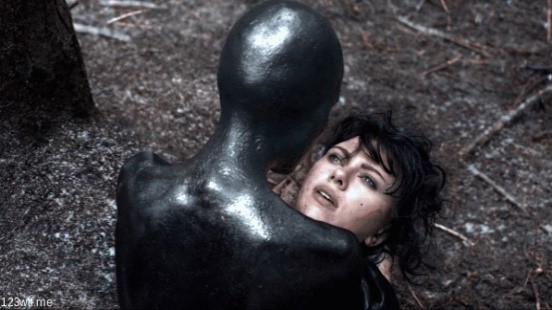
Opening Sequence
Middle Sequence
Ending Sequence
 Georgia Newman Film Studies