Ideology Essay – LA LA LAND


How valuable has ideological analysis been in developing your understanding of the themes of your chosen films? [20]

An ideological analysis of the feminism ideology has been important in developing and understanding the theme of independence in La La Land. For example, during the messengers sequence, Emma Stone’s performance highlights her strong reaction to the situation. When she hears the Messenger’s music, it’s clear that she understands that Seb is performing music he doesn’t like and is living a dream that isn’t his. This is evident on her face which we see through mid-shots focused on her, and the use of change in coloured lighting from orange to blue suggests a lack of passion once she hears the song representing how Seb has a lack of passion for this band which an active spectator would pick up on whereas a passive spectator would just pick up on his performance of playing with one hand in his pocket. Mia feels strongly about this, and quickly tells Sebastian that she believes he’s not where he wants to be or should be. This reaction shows that she doesn’t spectate passively, which goes against the feminist critique that Mia is portrayed as a spectator and she only spectates passively. This is also proven wrong earlier in the film when she picks up on the jazz music in the restaurant and has a strong reaction to it and therefore leaves. Her having her own opinion and strong reaction to art and Seb’s performances shows that she is independent, therefore linking onto the theme of independence, and by doing this the film explores feminism in a way that proves the feminist critique wrong as Mia is a self-reliant and independent woman. The theme of independence is started during the opening, when the woman is singing about leaving her old life and close ones behind to achieve her dreams which is reflective of Mia later on in the film. However, this does link into the representation of LA because the woman in singing a song in major key in a yellow dress (which has happy connotations) yet they’re in a traffic jam which could be a visual metaphor for how it’s actually hard to make it in LA. Moreover, Mia is represented to spectators as an independent and passionate performer, such as during the audition scene. The spotlight motif that is reminiscent of Seb’s spotlight is used to focus in on her, conveying to active viewers that she is lost in her art and passionate, therefore emphasising her independence as a performer and as a woman as well as he ability to perform brilliantly just like Seb.

Another ideology that is explored is traditionalism which links in with the binary opposition of traditionalism and progression. This binary opposition and theme are largely explored through Mia and Sebastian; she represents the future and he the past. For example, when we first meet them, Sebastian is rewinding tapes to old music and Mia is learning new lines. An passive or active viewer would consider how this is why during the messengers scene it’s made so clear that Sebastian is not where he should be. The spotlight that shines on him at the start is reminiscent of the spotlight from the restaurant, but after all the music kicks in it disappears and ‘in you face’ bright lights flood the screen. This reflects how Sebastian is no longer lost in his art because this isn’t the art he wants to perform, before he was sticking to traditional music and now, he’s performing modern music. Passive viewers are aligned with Mia because she isn’t happy with it either, and there’s more film form elements that tell the spectator to be unhappy with it too like the ridiculous dancers or the painful to listen to diegetic synth. This links to the ideology of traditionalism because the messenegers music is all about progression which contrasts against Seb’s tradionalists beliefs. Some people have pegged this moment with a feminist critique saying that Mia is always the spectator and Seb the performer. In many ways this can be proved wrong, but one way is to link it to the ideology of traditionalism and the binary opposition of traditionalism and progression. If Mia represents progression, it’s normal for future art to take influence from the traditional art, whereas, traditional art is less likely/never going to do so. Therefore, it’s not about gender, but rather the binary opposition of progression and traditionalism, which therefore links into the ideology of traditionalism.

La La Land Essay – Isp


‘How far does La La Land demonstrate a constant shift between passive and active spectatorship? Refer in detail to at least one sequence.’ (40 marks)

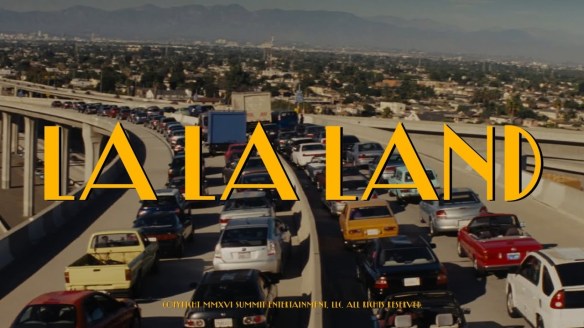
The opening of ‘La La Land’ can been viewed on a passive level to seem absurdly happy with the upbeat diegetic music, the bright colours, and synchronised dancing. However, an active spectator would see beyond this appearance, and find the true meaning of the scene. The somewhat perfect aspects of the scene contrast the harsh reality of making it in Hollywood, therefore being a representation of LA and what it’s really like. For example, the scene is edited to appear as though it’s taken in one shot, which would seem perfect and dreamlike. However, the cuts are actually hidden in whip pans suggesting that everything is not as perfect as it all seems on the surface. Plus, as they all sing on the runway, the traffic jam can be interpreted by an active spectator to be a visual metaphor for what it’s like trying to make it in LA, it’s difficult and there’s not enough space for everyone. Moreover, the diegetic song may sound upbeat and happy, but the lyrics all suggest a more negative side to the situation including what they’ve given up on to try and make it. Meanwhile, there is a synchronised dance number (an element of the musical genre) again suggesting perfection which contrasts to the reality which they express in their song. In terms of responses, I think the preferred reading of this scene is to understand the true nature of making it in LA, and to consider the upbeat music, perfect looking cinematography and the use of bight primary colours as somewhat ironic. However, the primary colours do also give to the scene in other ways because of their connotations. For example, the use of red showing passion like the woman’s dress.

However, the opening scene of ‘La La Land’ also has passive spectatorship in terms of the film exploring the old and new, specifically old and new film. The opening shot is in black and white which is reminiscent of classical Hollywood, it then becomes colourful being suggestive of the modern film industry. There’s also an accidental Marilyn Monroe reference, which they decided to keep in because of said reference, where a woman’s dress blows up like Marilyn Monroe’s did in the film ‘The Seven Year Itch’, which is one of the most iconic bits of cinema ever and so using this moment was a perfect way for the film to continue exploring the binary opposition of the old and new, as well as traditionalism and progress. An active spectatorship may be required to explore the ideas presented regarding these binary oppositions and consider how the film is exploring the conflict and compromise in creating new art in terms of the old and the new. For example, the Cinemascape writing cannot be fully seen until the twin wipe and in the process it becomes more colourful, this editing and mise en scene is suggestive of the old new being co-existent, but also how there’s conflict as they can’t both exists at the same time without compromise. However, the theme of individuality suggests the importance of individuality in creating art and it not just being about traditionalism and/or progress. The different genres of diegetic music, and the performances of different dancing shows this individuality between them, and how it’s important, as well as being a good representation of LA.

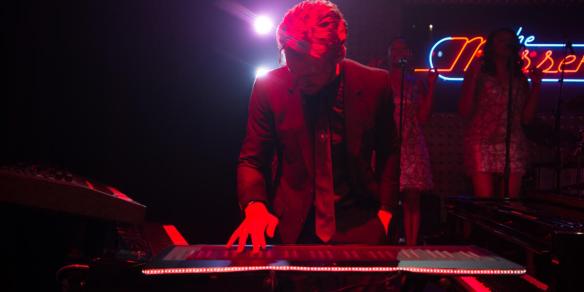
The preferred response to the Messengers scene is to understand how although Sebastian is playing for a big and appreciative crowd, it’s not his dream. A passive spectatorship can see this in Mia’s performance, and as a spectator would align with her. Her shocked face paired with the harsh blue lighting with connotations of coldness rather than the original yellow lighting, all suggest that she is empathetic but also disappointed that Sebastian is dedicating so much time to a career that isn’t his passion. Sebastian’s performance can also be interpreted by a passive spectator that he isn’t where her wants to be or should be. Whereas in the restaurant he played passionately now he plays with one hand in his pocket. It makes sense to refer to the restaurant scene, as the opening of the Messengers performance has Sebastian under spotlight which is reminiscent of the moment on the restaurant where it identified how engrossed he was in his art. Now, the screen is flooded with bright and colourful in your face lights, a visual representation that this isn’t his dream, and he notices how Mia is lost in the crowd. Passive spectators can also pick up on this due to the commercial and over the top performance such as the ridiculous dancers, the very colourful and bright lights, and the synth. The synths diegetic noise is painful to listen to, again suggesting that this isn’t a good place to be especially for Sebastian.

However, the Messenger’s scene requires an active watch from the spectator as well in terms of the representation of women. The film has been criticised for Mia being displayed as the spectator and Sebastian as the performer. A passive spectator may feel this way, but an active viewer would feel differently and get the preferred reading rather than the oppositional. Not only does Mia perform plenty, but she never passively spectates art. She notices the jazz music in the restaurant which requires attentiveness and knowledge, and in this scene her emotions are clear. Mia doesn’t clap along like the rest of the crowd she is independent and has her own opinion which she is quick to tell Sebastian without hesitation. Plus, when Sebastian doesn’t keep the relationship equally balanced by coming to her play, she ends the relationship. Furthermore, Mia represents progress and the new in the binary opposition of the old and new (traditionalism and progress), as she creates new art like her one woman show and Sebastian represents the traditionalism/old, he rewinds his tapes and wants to stick with classic jazz. This could be why Mia is seen watching him more than he’s seen spectating her because progress tends to be inspired by the old while keeping individual, whereas the old is just individual, this is an active viewing of the scene and probably the preferred reading or maybe a compromised reading of the scene/binary oppositions that run through the film.

La La Land Messengers Scene Notes


messengers


Cinematography:

  • bright, in your face lighting
  • spotlight (like from the restaurant)
  • JL in silhouette – faceless, lack of personality
  • low angle – someone in the crowd looking up?
  • changes in colour. Mia – yellow, blue


Mise en Scene

  • yellow vs blue
  • classic piano vs electronuic piano


Performance

  • Mia gets pushed back
  • Seb is not as passionate and expressive than in other performances – one hand in his pocket
  • Dancers
  • The crowd is pleased but not Mia
  • Look at each other and smile like at the end of the movie
  • Mia is shocked – disappointed/empathetic
  • He can’t see her in the crowd anymore


Editing

  • Actin reaction shots
  • Montage of band players
  • Cutting rate goes up


Sound

  • Seb’s playing is foregrounded
  • Synth solo – awful
  • Sound bridge of the audience and the piano


Genre

  • Musical
  • Romance


Messages

  • Preferred reading – commercial performance, align with Mia


Spectatorship

  • Activivly pursue going against the feminist critiques
  • Building up of tension – retain attention, spectacle builds up
  • Passive – Mia’s reactions
  • Active – colourful lighting, Seb’s performance and his many, many pianos
  • JL’s performance is natural, Seb’s performance contrasts what we know about him (active)
  • Active – not as good as the appearance of the situation
  • Active – only meaningless song in the film, out of place


Ideology

  • old vs new
  • traditionalism vs progress

La La Land Opening Notes


lalaland opening


Cinematography:

  • Imitating a one shot
  • Used a steady cam – fluid, dreamlike
  • Wide shot/long shot of all the cars in the traffic is representative of LA (contrasting to the optimistic lyrics of the song)
  • Uses a broad colour palette focusing on primary colours
  • The use of whip pans to disguise the cuts
  • Transition from black and white to colour – binary opposition of old and new
  • It’s like the camera is dancing
  • There’s a point of view like shot of one of the dancers
  • Motivated tracking camera


Mise en Scene

  • The use of primary colours
  • (Accidental) Marilyn Monroe reference with the woman’s dress blowing up
  • The traffic jam could be a representation of LA
  • From black and white to colour
  • Yellow dresses – can have negative and positive connotations
  • Red clothing – connotations of passion
  • Wide colour palette
  • The cinemascape (logo?) cannot be fully seen until the twin wipe and in the process becomes more colourful – binary opposition of old and new
  • Vintage font (1920/30s)
  • Bright sunny sky


Performance:

  • They all look at the camera at the end
  • They all shut their car doors at the same time – sense of perfection – representation of LA
  • Dancing revolves around and started from mundane actions
  • Only one bit of completely synchronised dancing
  • Not the best dancers/singers – the film is about ordinary people like Mia and Sebastian
  • Each person is like the protagonist but of their own life
  • Lots of different types of dancing – diversity, individuality


Editing:

  • The camera work hides the cuts in whip pans
  • One singles shot looks magical and perfect – representation of LA
  • Ratio change – links to classic and old films


Sound:

  • Foley footsteps on the rooftops
  • Everyone shuts their door at the same time
  • Lyrics – harsh reality of making it in Hollywood
  • Car horns – first things we hear, reality
  • Different people’s music – individuality
  • Shift between diegetic and non-diegetic sound


Genre

  • Musical: colourful, instruments, dancing/choreographed dance and mass choreography (ensemble performance)


Messages

  • The connotations of the colours


Themes

  • Ambition
  • Optimism
  • Individuality
  • Nostalgia
  • Independency
  • Compromise (left her date to pursue her dream)


Spectatorship

  • Passive – happy
  • Active – negative representation of LA contrasting the optimistic feel
  • Irony of the situation


Ideology

  • Old vs new


Screenplay Draft (but I’m making a film)


1 – INT – DAY – OFFICE


MAYA’s boss is sitting opposite her in his office.


BOSS

I can’t give you the promotion

MAYA

What? But I did everything. Look!


She puts her notebook in-front of him which is filled with a to-do for work that is neatly organised with arrows and colour.


BOSS

Yeah, I’m aware you did everything I asked. But that doesn’t change anything.

MAYA

You said you’d give me the promotion if I did all of this

BOSS

Yeah. Things change.


2 – INT – DAY – HOUSE


MAYA enters her house looking defeated. She drops her stuff on the floor. She heads upstairs.


3 – INT – DAY – BEDROOM


She enters the room and crosses go to work of her to-do list and then heads to a closet. When she opens it, you see it’s actually full of fairy lights and cushions not clothes. She turns on the fairy lights, sits down, brings out a book and starts reading. She is content and somewhat happy.


4 – INT – DAY – OFFICE


MAYA sits at her desk looking bored and defeated. She sifts through work and aimlessly clicks things on her computer. She’s given up. The BOSS walks past and waves. She gives a small wave back.


5 – INT – DAY – CLOSET


MAYA turns on her fairy lights and proceeds to sit down and read again. After a while, she looks away from her book too busy thinking.


[IMAGINING] MAYA hears a strange noise from outside the closet. When she opens the door, the room is blue and there is a DVD on the floor addressed to her, with a light up arrow pointing towards it. MAYA picks it up and heads downstairs to the living room.


6 – INT – N/A – LIVING ROOM


MAYA places the DVD into the player and sits and waits patiently. It begins to play.


MAYA FROM THE FUTURE

Hi, I’m Maya, from the future. I’m you from the future. I get it’s a bit weird, but you’ll have to get passed that to listen to me.

MAYA smiles lightly to herself.


MAYA F

I’m not going to tell you were we ended up. I don’t want to mess anything up. But it went well, really, it did. I learnt along the way that what we decide to do matters much more than we think. Not just to the people around us, but ourselves. I wish I learnt that sooner, and now I guess I have. You’ve got strangers to meet and places to leave. It’s all waiting for you. Good luck.


The DVD ends. MAYA smiles.


7 – INT – DAY – CLOSET


[END OF IMAGININING] MAYA is smiling. She puts her book down and leaves the closet, adding ‘Quit job’ on her to-do list. She then goes back inside her closet.


8 – INT – DAY – OFFICE


MAYA

I quit, I’m giving you my three weeks’ notice

BOSS

What?

MAYA

I’m leaving

BOSS

But you were voted least likely to leave

9 – INT – DAY – PICTURES ON A WALL


Staff pictures hang on a wall with descriptions of each employee. MAYA was voted ‘least likely to leave’.


10 – INT – DAY – OFFICE


BOSS

Why are you leaving?

MAYA

I have better things to do

BOSS

Like what?

MAYA

I don’t know for sure yet but anything. Maybe I’ll start writing.

BOSS

I can’t believe this. (he sighs) Good luck then.

The BOSS gestures for her to leave. She does.


11 – DAY – OUTISDE


MAYA is happy. She leaves the workplace building.

Blade Runner Middle Notes – Re-written

Key

*indicates most important notes


Auteur Signature Film Form 

  • neon colours outside of his window*
  • Genre shifts – science fiction, film noir*
  • Strong directional low key lighting


New Hollywood Film Form 

  • non-diegetic choir singing*
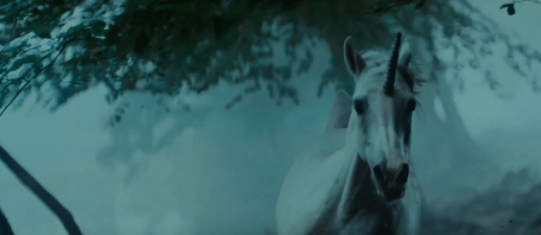
  • unicorn – high key lighting*
  • close up of pictures – he thinks it is his family etc.*
  • minimal and wooden performance – replicant? wooden performance relates back to the replicant at the beginning*
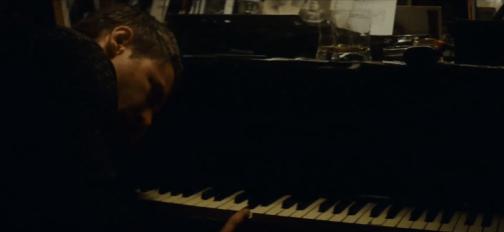
  • piano – evokes memory in himself*
  • gun and whisky – noirish character*
  • unicorn is fantastical yet it’s the only “real” animal in the film*
  • only real nature (trees) in the film*
  • morally ambiguous/compromised*
  • cross fade – like a flashback*
  • picture is labelled
  • the news paper on the TV type thing when he is searching is written in ideograms


br unicorn


Production Context 

  • unicorn scene – another movie – legend test shot*


Themes and motifs 

  • theme of surveillance – search light*
  • piano*
  • character haunted by memories*
  • unicorn motif*
  • technological advancement and high tec  – fear of it*
  • existentialism theme*


br piano


Representation 

  • apartment is decorated with Eastern looking furniture and ornaments (e.g. Buddah head and bonzi tree)*
  • women represented as exotic (?)


Political Context 

  • mise en scene – mix of cultures  – passed Cold War*

Moon Paragraphs


Representation of Gender in ‘Moon’

During the opening sequence of ‘Moon’ (2009) there is a montage sequence that shows the space station on the moon. During this montage, the audience is introduced to the worker Sam who is running on a treadmill. This performance and mise en scene could be seen as a visual metaphor for the ideology of capitalism, as it symbolises how Sam is putting in effort but getting nowhere, which links to hoe capitalism doesn’t help everyone. This would make sense, as the film often explores a Marxist critique of capitalism throughout the film, such as the heavy implication that the Sam’s working conditions aren’t nice. One example of this, is how the earth during the opening montage infomercial of archive footage is colourful and saturated, but the moon is desaturated and monochrome which has connotations of lack of emotion and happiness, giving the sense that where he works isn’t a very nice place to work. The Sam’s are the only workers on the moon, and them being male creates the binary opposition of men and women as there are no women who work on the moon. Instead, they are shown to be the ones who stay at home, in the form of Sam Bell’s wife a daughter. They are represented as a prize for the Sam’s to go back to. This is a negative representation of women, because it’s suggesting that men are the ones who do the physical labour jobs and it is slightly objectifying women. The film also includes negative representation of men, as it shows them as aggressive and quick to anger which is a stereotype. For example, during the Sam fight sequence, Sam two’s performance of physically throwing and destroying the model shows his anger. The model is also an important part of mise en scene, as it could be interested as a symbol for the world that the Sam’s want to live in, but their jobs prevent them from having, again criticising capitalism and capitalist company’s as the workers are not benefiting from their jobs. Another example of men being presented as aggressive during the fight scene is the close up of Sam’s blood, which makes the scene violent, not only showing how Sam is slowly dying as a clone, but also that the Sam’s, as males, are aggressive. A narrative device during this sequence is that the Sam Bell’s are played by the same actor, Sam Rockwell, which emphasises the theme of cloning and advanced technology (cloning humans) to the audience.


Binary oppositions in ‘Moon’

The binary opposition of the earth and moon is established during the opening equilibrium of the movie. One way in which this is done is through the mise en scene. For example, the opening montage infomercial sequence made from archive footage is the only part of the film where we see the earth. During this montage, the mise en scene is colourful, such as the greening fields, and saturated. This contrasts to the desaturated and monochrome moon and space station. Another contrast between this binary opposition is the cinematography, as during the infomercial montage, the lighting tends to be high key as it has positive connotations and Lunar Industries are trying to get across that they are a good company. But the montage of the moon includes functional lighting which is darker, and has a less positive connotations just like the monochrome aesthetic and desaturation. This mise en scene and cinematography was a way to show the unlikeable working conditions that Sam had to work in. This link to the ideology of capitalism, which the film often explores. This is because giving the Sam a bad working environment suggests that he is not happy where he works, meaning that he isn’t benefiting from his work and that links to ideology because not everyone benefits from capitalism. This would make sense as the film tends to display a Marxist critique or capitalism. The performance of Sam running on the treadmill supports this exploration of ideology, as it could be considered a visual metaphor for him working but achieving nothing, therefore how he is not benefiting from working for a capitalist company. The binary opposition of the earth and moon is continued during the ending equilibrium when Sam two leaves the moon to go to earth, and the mise en scene and cinematography includes bright colours zooming past him. As these bright colours are only used again when the destination is earth rather than the moon, it emphasises the negative connotations of the working place as well as being a reference to 2001: A Space Odyssey. This would make sense as it’s not the only reference to 2001: A Space Odyssey, such as the mise en scene of the chair that Sam one sits in after the fight scene which is reminiscent of the chair in 2001: A Space Odyssey.


Ideological analysis of ‘Moon’

One of the main ideologies explored in ‘Moon’ (2009) is environmentalism. One reason why it is used is to create the narrative device and technique of dramatic irony in the opening equilibrium. This is done through the opening montage infomercial for Lunar Industries, that uses archive footage. The infomercial’s aim is to promote Lunar Industries, hence the major piano non-diegetic music with positive connotations and the discussion and display of how Lunar Industries represent themselves as an environmentalist company. For example, the mise en scene contrasts a long shot of polluting factories to an extreme long shot of greening fields, with a voice over that explains how Lunar Industries are an environmentalist company. Originally, this would make the audience like Lunar Industries. This is because the film was made in 2009, and so environmental problems like global warming would be very real in the audience’s lives, and so being presented a company that has helped solve environmental problems makes them likeable. However, the animated sequence of the infomercial explains through mise en scene and voice over, how the company use the moon as an energy resource. The audience might recognise this as swapping one finite resource for another, and therefore how Lunar Industries are not as environmentalist as they like to appear. This creates the narrative device of dramatic irony, as the audience knows not to trust Lunar Industries before the protagonist. This is the only example of dramatic irony in the movie, as mystery is a theme of the film, and so not knowing that the company uses clones allows the audience to find out information at the same time as the protagonist, as well as keeping their interest in the film as they want to find out what is happening.


The function of narrative devices in the opening of ‘Moon’

The narrative device of the montage infomercial sequence made of archive footage during the opening equilibrium of ‘Moon’ serves function as it creates binary oppositions and starts to explore ideologies. For example, the contrasting mise en scene of the long shot of the factories and the greening fields, paired with the narrative device of the voice over, creates the sense that Lunar Industries are an environmentalist company. This would make the audience like them, as the film was made in 2009 and so environmental problems were very real in the audiences lives like global warming, and so seeing a company solve these problems is a good thing. However, the animated sequence suggests otherwise as the audience learns that they use the moon as an energy resource which is just swapping one finite resource for another, this therefore makes them seem untrustworthy and they are not as environmentalist as they try and make out to be. This creates dramatic irony, as we know that the company cannot be trusted before the protagonist does. The narrative devices of the opening montages also create the binary opposition of the earth and moon through cinematography and mise en scene as the earth is saturated and colourful such as the extreme long shot of the green deserts and the long shot of the beach, but the moon and space station is monochrome and desaturated creating negative connotations about the work place and creating the binary opposition of the moon and the earth.


The function of narrative devices in the ending of ‘Moon’

An example of a narrative device during the ending of ‘Moon’ that serves function is the voice over of the Eliza arrival timer that acts as a ticking time bomb. This narrative device creates tension in the audience, as we feel a pressure for Sam 2 to leave, before the arrival for his safety. We are proven right when they show up, and they are carrying guns, and their spaceship has a spiderlike shadow. The Eliza arrival narrative device has other meaning too, it’s a motif that has narrative repetition throughout the film emphasising its meaning, but it’s also heard when there is a long shot of Sam 3. This suggests that Sam 3 matters too, and that he should also be saved. This links to the film’s exploration of the ideology of nihilism and existentialism, and how this moment proves that every life is important, as the timer is shown as important to him too, despite the audience not even knowing who he is. Sam 3 is also a narrative device, as its narrative repetition of the Sam’s waking up.  This repetition throughout the film emphasises the unmoral way that Lunar Industries uses and creates workers, which links to the films exploration of capitalism, as it shows how not everyone benefits from a capitalist company. This makes sense as the film often uses a Marxist critique of capitalism.


Impact of narrative structure in ‘Moon’

One impact of narrative structure in ‘Moon’ is the use of the narrative device of the montage edit specifically during the opening equilibrium. This is because, the opening montage infomercial made from archive footage for Lunar Industries causes dramatic irony which is important for the rest of the film. It causes dramatic irony through the ideology of environmentalism. Lunar Industries claim to be an environmentalist company, shown through the voice over and contrasting mise en scene of polluting factories to greening deserts. However, the animated sequence proves otherwise as they use voice over and mise en scene to show how they use the moon as an energy resource which is just swapping one finite resource for another, and therefore they are not as environmentalist as they try and portray. This causes dramatic irony in the opening equilibrium as the audience know that they are not trustworthy before the Sam’s do. This makes the closing equilibrium of the Sam’s trying to escape even more tense as we have been anxious for them to escape since the very beginning. The narrative device and narrative repetition of the Eliza arrival voice over during the ending of ‘Moon’ helps build tension in the audience, as the time pressure and repetition emphasises the need to escape which was first brought about with dramatic irony. Comparing the opening and closing equilibrium gives a sense of the film’s ideologies. For example, the opening explores capitalism and how it doesn’t help everyone. It does this through the mise en scene, such as the visual metaphor of Sam running on a treadmill, symbolising how he’s putting work in but getting no benefit. As well as, the desaturation and monochrome aesthetic of the moon, contrasting to the earth which is colourful and saturated; this is a binary opposition and shows that Sam’s working conditions aren’t good. By the end of the movie, the Marxist critique of Capitalism is still being explored, such as through the tension of the Sam’s trying to escape as their work is dangerous. The audience are proven that Lunar Industries are a dangerous company with the cinematography as the Eliza arrival has a spider like shadow, and the mise en scene of the rescue team carrying guns.


Positioning and Alignment Essay (Beasts of the Southern Wild)


Account for the difference in positioning and alignment in the film you have studied. [20]


An example of the difference between positioning and alignment in ‘Beasts of the Southern Wild’ is when the spectator is aligned with Hushpuppy at the hospital, but positioned with Wink. The mid shot of Wink being told his medical problems is an example of being positioned with Wink, and the spectator can just about hear the diegetic dialogue of Wink being told he could die. Wink rejects the help of the hospital, adding to the theme of self reliance. In this moment, one response is to be aligned with Hushpuppy which could be considered to be the preferred reading and response. This alignment would come from feelings of empathy and sympathy for Hushpuppy, as she knows that her father will die and is seriously ill. The performance of Hushpuppy during the mid shot to close up after this moment shows the spectators that Hushpuppy is processing this serious information, and that she understands its seriousness as her facial expression is serious. However, a different response to this moment could be that during the entire scene we were both positioned and aligned with Hushpuppy, as the shot of her father could be interpreted as a point of view shot from her perspective meaning we are positioned with her as an audience. This is supported by how low camera angles are used throughout the film to emphasise how the narrative and film is seen and explored through her perspective. There is also a negotiated response to the alignment during this scene, as a viewer may believe we are aligned with both Hushpuppy and Wink, rather than just one of them. The changes in positions and alignment while involving these two characters is common in this movie. Sometimes it takes the for, of the difference between positioning and alignment with one character, then in the next shot with the other. An example of these different positioning’s and alignments is during the ending of the movie, when Wink is dying. We as spectators are mainly positioned with and aligned with Hushpuppy. Such as, the beyond close sonic perspective, subject positioning of the heart beat sound when Hushpuppy puts her ear to Wink’s chest. This emphasises our positioning  with Hushpuppy, as well as our alignment as we feel sympathy for her being in that situation. However, we are also positioned and aligned with Wink during this scene which is different to what’s normal in the film. For example, the close ups of his face position us with him, and his performance of his emotional facial expressions align spectators with him, as an active viewer may consider some of the thoughts going through Wink’s mind, such as how he is about to die, and what will happen to his daughter.

Another example of the difference between positioning and alignment in ‘Beasts of the Southern Wild’ is during the sequence where the social workers from the Levee come and force people from the Bathtub to go to hospital. In this scene, a spectator may feel that they are positioned with the social workers, but aligned with the Bathtub. For example, the over the shoulder shot when a social worker is forcing a woman to move could be interpreted as being positioned with the social workers, as we see from what is almost their perspective. Their performance of physically grabbing the woman and the over the shoulder shot makes the social workers seem like invaders, and this allows the spectators to be aligned with the Bathtub and to fear the social workers, despite being positioned with the social workers. This scene also adds to the binary opposition of the Levee and the Bathtub. The threat that social workers impose upon the Bathtub helps to create this opposition, through cinematography and performance that encourages spectators to feel a certain way. A spectator feeling as though the social workers were like invaders was probably the preferred reading and response to this part of the movie, and maybe the movie as a whole. However, an oppositional reading could be that the social workers were in the right, and were not like invaders. For example, the mise en scene of their clean clothes might suggest to them a sense of professionalism which could have connotations of trust. However, this is unlikely.

Some Ideas of Possible Influences from the Short Films – Draft 1 (not complete)


Night Fishing 


night fishing

One of the things that I found interesting about ‘Night Fishing’ was the upside-down shot. I would like to incorporate an upside-down shot into my film as I think it’s jarring for the spectator and forces them to consider the meaning of not only the shot but the scene.

nf 2


‘Night Fishing’ involves narrative repetition of the use of bells, both the sound of them and the sight of them (mise en scene). I would also like to incorporate narrative repetition into my short film but instead of the bells, it would be the mise en scene of the fairy lights which I’d like to incorporate in several scenes. The use of fairy lights in both the reading space and the imaginary world will emphasise the power that art has on our decisions.


When the Day Breaks 


fygvkgv


‘When the Day Breaks’ also uses narrative repetition (opening the blind both at the start and the end of the film) which I would like to include in my short film. The use of the narrative repetition in this film provides a sense of hope at the end, but mine is to show the power of creativity and making decisions (going against nihilism).


when the day breaks

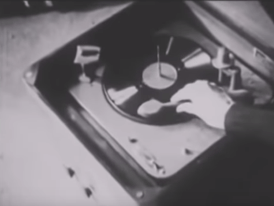
This short film manages to tell an emotional and meaningful story, while using mundane and everyday actions which I also plan to do like going to work, reading, watching a film. I think it grounds the film and this way the viewers have a higher chance of relating to the protagonist of the story.


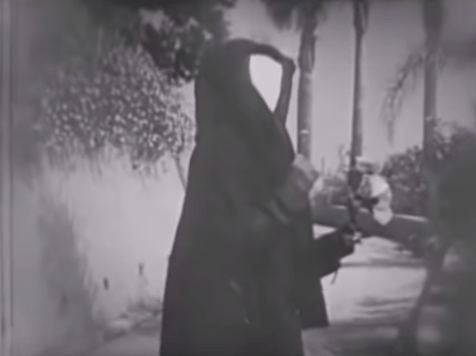
Meshes of the Afternoon


Capture

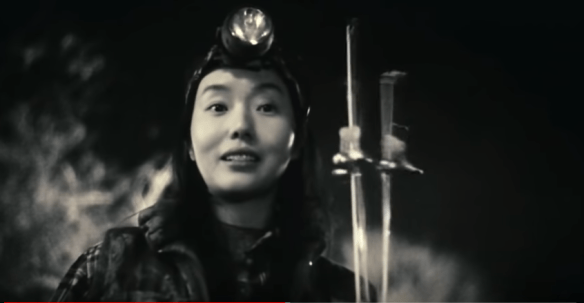
This short film also uses narrative repletion, which I plane to use in my short film.


guviug


This short film uses mirror as a symbol which I would also like to use in my film during a pivotal moment in which the protagonist decides to take control of her life.

This short film also uses non-diegetic music, which I have considered doing in my short film as well to help convey the emotions of the scene, especially in the imaginary section as I could use the non-diegetic music to emphasise that it’s not real and to emphasises the sci-fi theme.


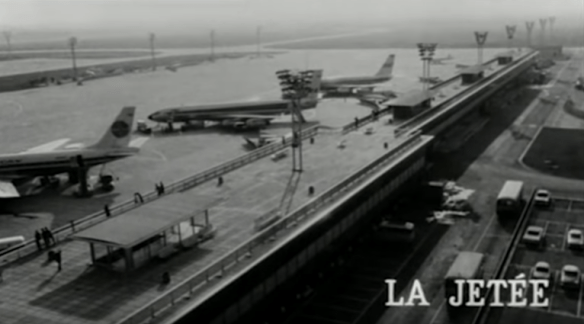
La Jetee


5d rftyfyt

This short film is bookended by the same place (mise en scene, set) which I am planning on doing in my film as I want to open and close with the workplace, specifically in the boss’s office. However, I will open with the boss and close with Maya to show how she now has found the control.

Under the Skin – Mise en Scene Key Points


Opening Sequence

  • exploded projection with a planetary feel or an eye being made
  • black eye (no soul) being formed/squashed in (‘eyes are the window of the soul’)
  • road and river seen near/next to another and presented like they were the same
  • white background suggests the woman is a ‘failed’ alien. Cycle is ended at the end of the film.
  • Woman’s face looks like Laura’s at the end of the movie – narrative repetition
  • Don’t know where they are but it doesn’t matter
  • Scotland represented as cold/wet etc


Shopping Centre Sequence

  • Fur coat – predator
  • She’s alone contrasting to the majority of others who are with other people
  • Clothes – the clothes are bold and picking out clothes is a very human thing for her to be doing. It can be interpreted as her adapting to being on earth or her purposefully wearing what could be considered to be sexually provocative clothing


Middle Sequence

  • Laura is facing the other way to the alien in the cross fade suggesting her change of direction/path in life
  • Fly on the window – point of view shot – flies individualistic unlike the ant at the beginning, she’s evolving from what she was/she compares the fly to Adam’s character and how he’s trapped somewhere he doesn’t want to be/representation of her trying o get out and wanting to be free. Feels empathy for people who are vulnerable now.
  • The camera remains in the empty van after she has left and walked/ran out of shot – she’s left her position and her old ways/life
  • Fog – she’s lost literally but could represent morally as well/white suggests clean slate
  • The man has to walk from what looks like countryside back to civilisation (town) (Romantic’s links?)


Ending Sequence

  • Sleeping in the tree’s shot – free/at peace/nature is big/nature plays a role/nature is powerful/she is connected with nature – both Laura and nature are unpredictable etc. It also links to the Romantics.
  • Her face when she is holding it looks like the woman’s/alien’s from the beginning of the movie
  • Fire – stands out, like she’s been cremated. The fire standing out from the white snow could suggest her loss of innocence
  • The forest man has dirty clothes
  • Mise en scene/trees in the foreground partially obscuring Laura – outsider/spying/creepy/vulnerable if you feel someone is watching
  • The motorcyclist on the mountain looks like ‘wanderer above the sea of fog’ – Romantics link