Pan’s Labyrinth Opening Essay


The opening sequence to Del Toro’s Pan’s Labyrinth, a film set after the Spanish Civil War, establishes the rest of the film using the film form elements. From just the opening sequence, the audience is taught about context, characters, representation and is even shown the ending causing dramatic irony throughout.

Colour is key to how the film works, the contrast of yellows and reds to blues and greens is used throughout the movie, largely through the lighting (cinematography). The blue lighting of when we first see Ofelia dead, is uninviting and cold, the colour then goes on to identify with Vidal throughout the film. The yellow lighting of the car contrasted with the blue lighting, makes the audience feel calmer especially as it’s paired with the change from low key lighting to high key lighting, which appears to happen in one shot after “going through Ofelia’s eye” and above ground.

One way that sound is used is the sound bridge of Vidal’s watch. The audience hears it ticking before we see it. As the watch is a symbol for death, the ticking generates the response from the audience about the fragility of life, especially Ofelia’s as through dramatic irony it is known that she dies. Another way sound is used is with the close sonic perspective of Ofelia’s heavy breathing which makes us feel emotionally closer to her. Close sonic perspective is also used for the wooden sounds of the insect, showing the audience that it’s important as it’s exaggerated.

Vidal’s character is established through the performance. His first line “Fifteen minutes late” shows that he is punctual and a leader. The audience would be shocked at his actions towards his wife, as they are not loving but instead controlling and begins to reveal his sexism. The way he grabs Ofelia’s hand rather than shake it is also shocking and reveals his cruel nature.  Plus, Vidal is instantly impersonal with Ofelia by putting his glove back on before greeting her. We also know that Ofelia favours her books/”fake” reality over Vidal/”real” world   because she holds her books with her right hand and shakes with her left. Ofelia’s use of her left hand compared to Vidal’s preference of his right could link to the Spanish civil war in terms of left and right wing.

Mise en scene is used through props like the watch. It’s a metonym and represents Vidal, as the watch is cracked the audience knows that Vidal is damaged. The cars also represent Vidal and his men, they’re expensive and have the fascist symbol on them, showing the audience what type of people they are, and it links to the Spanish civil war. As the voiceover says “dead”, a skull appears on screen, this is vanitas as it’s a symbol of morality and shows the civil war aftermath. Colour is again used, Ofelia’s dress is green, linking her to the “real” world; clothing is something played with throughout the film to show her true connection to the magical world. Ofelia is also shown as connected to the magical world because of the statue that she completes, the face on the statue matches the face of Pan above the labyrinth, the fact she completes it, shows her connection.

The editing made the scene look like one continuous shot, it looks as if the camera goes through Ofelia’s eye and from underground to above ground in one shot, linking Ofelia to the fairy-tale. The audience then knows that Ofelia is the lost princess and that it will be a plot for the film. Plus, the narration of the fairy-tale feels more personal than the written context at the beginning, making the audience feel closer to the “imaginary” world than “reality” which helps enable us to connect with it with Ofelia without feeling that the “real” world is more important.

When it comes to representation in the opening sequence, women are presented as more submissive than men. The first adult woman we see is Carmen, who is struggling with her pregnancy. The audience see’s her in need of help, which comes from a man, which presents women as people who cannot cope without men. This changes later in the film with characters such as Mercedes, who is underestimated due to being female but plays a key role in taking down Vidal. The men are also shown to be controlling, Vidal forces Carmen to sit in a wheelchair despite her declining. Vidal is also a captain, which shows leadership as a good role for men, contrasting to the women later in the film who work as chefs and helpers. Ofelia is the only child in the film, and during the opening sequence we see the curiosity in children as she instantly wanders off when the car stops, this contrasts to Carmen who asks her to come back and asks her to stop reading her fantasy books; this contrasts childhood and curiosity with adulthood. Despite Ofelia only being a child, the roles are somewhat reversed as she has to take responsibility for her mother due to her being unwell. Plus, her mother treats her as if she were older by frowning upon her fairy-tale books.  The film represents children as people who shouldn’t be looked down upon like the characters in the movie do as they are curious and can take responsibility. The representation of ethnicity in the scene is not very broad, the characters are all Spanish due to the movie being set in Spain. As the film is partly about the Spanish civil war, the characters being Spanish fits the context of the movie, especially since Vidal is a captain.

Within the opening sequence, many of Del Toro’s aesthetics are used. One of the Del Toroizms used is religious symbolism. In the underground world, there is a building that’s similar to the tower of Babel (mise en scene) which is a building known for being built high to get to heaven and God then inventing different languages so they were unable to communicate and finish, this may have been included because religion in Spain was a big topic at the time the film was set.  Another Del Toroizm that’s used is a dying child; the first shot the audience see’s is Ofelia’s death in reverse. Having a child die instantly shows the brutality of the war, it’s also a way of exploring the effects that war has on children which is a theme Del Toro wanted to explore. Showing the death in reverse with the shot of seeing the blood go back up her nose may show the audience that death isn’t the end, which is true in the film as Ofelia is reborn at the end of the movie. This scene also creates a sense of dramatic irony as the audience now knows that Ofelia dies, meaning they are aware of this during the events of the film.

The film is set shortly after the Spanish Civil war which lasted from 1936 to 1939. One of the ways this influences the film is that Vidal, a main character, is involved in the aftermath of the war, he is a captain that is taking action against a group of rebels in the nearby forest. The film also uses the Spanish civil war to show the influence of war on children, Ofelia lost her father to the war which led to her unhappiness with Vidal, her stepfather. She also died at the hands of a fascist, Vidal. Plus. As a child she was unable to stand up for herself during such times, she needed help from Mercedes who said she would help her escape. Some of the ways fascism is shown in the film is through props, the cars have fascist symbols on them. A subtler way is that Vidal favours his right hand linking him to right wing politics. There is also religious context from mise en scene as the tower of babel is represented in the scene underground, both religious symbolism and underground scenes being a Del Toroizm.

To conclude, the opening of Pan’s Labyrinth manages to establish the majority of the film within a short amount of time. As well as context being involved surrounding the Spanish civil war and religion, Del Toroizms are too included in ways such as the camera rarely stopping, a scene taking place at night, a child dying and scenes taking place underground. The representation of the film sets up the stereotypes of women compared to men, that Vidal believes in, ready for the plot to prove him and the stereotypes wrong later in the film. It also explores the capability of children compared to what adults generally estimate they can and should do. It also foreshadows the ending with Ofelia’s death which changes the viewers reactions to the movie compared to if they were never told. Plus, the wordless lullaby is introduced which is a motif throughout the film and can make the reader feel certain ways depending on when and how it is used. Overall, the opening sets up the rest of the film so that ideas and techniques that have already been used can be played with to convey different/the same ideas and control how the audience feels.
Del Toro

Some influencers:

  • James Whale’s Frankenstein
  • Alfred Hitchcock’s Shadow of a Doubt
  • Terence Fisher films
  • Ingmar Bergman


Frequent elements of the protagonist character arc

  • Face a choice, to deal with their own mistakes or let others suffer
  • To fit in to what is expected or stand out.
  • Put aside vengeance and mistrust for the greater good.
  • To kill or not to kill

Choice is what separates is protagonists and his antagonists as his villains are never shown to have to choose to continue with their actions. This is a reason why people feel his characters are well written and are continuous.

Strickland

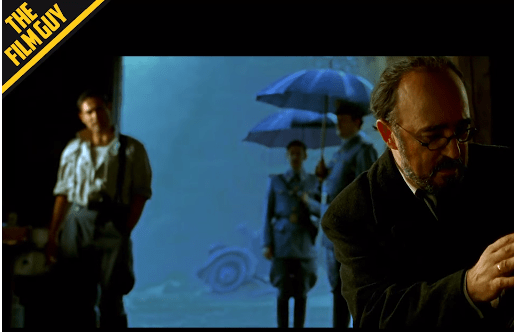
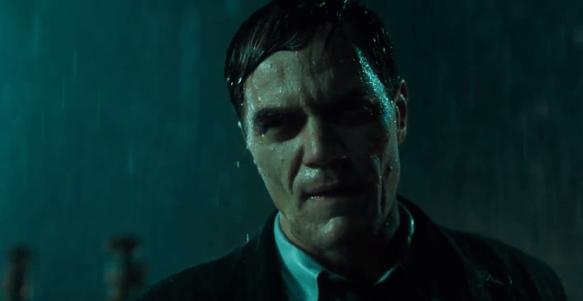
“I never fail” – An example of a villain who doesn’t ever make a choice. (Plus there’s heavy rain when is a Del Toroizm)

Similarities between protagonists

  • Many of them are orphans (in or be set before the film)
  • We often see the person that the main character loves the most die or dying which is often a parent (or a parent is one of them)
  • Often have a power or an ability that other people in the film don’t have/aren’t capable of. This commonly the ability to see spirits or to see into another world but we also see super human strength and agility


Del Toro treats the fantastical as the mundane

  • In Devils Backbone the first ghost sighting is during the day and purposely edited to not be scary
  • In Pan’s Labyrinth the first magical character Ofelia meets is a fairy and it almost plays out as though she were expecting it to happen
  • And specific rim starts years after humans have had their fast encounter with something else


Other films have to give lots of rules to make it believable. But as the magical in Del Toro films isn’t treated as overly special and doesn’t have a huge impact on the daily life of the characters, you don’t have to give a lot of exposition.


Mise en Scene

  • His films are constantly gorgeous to look at. It’s the difference in designing something to look cool and designing something to tell you about the character.
  • He’s a believer in encouraging the set to be character itself, building at least one big statement piece on to every set. It’s his way of connecting story moments with locations.

del toro set thing


Colour

  • He often uses colour to help tell his story.
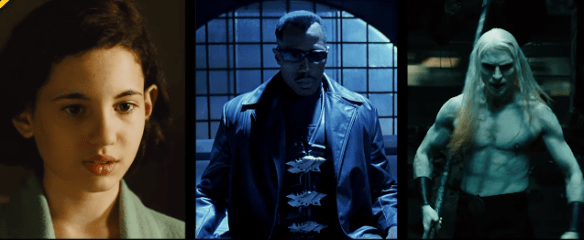
  • Common tones are yellow, blue and green which will often change dramatically per sequence such as in Pan’s Labyrinth where you have the blue vs the gold and red. When the magical and ‘real’ world collide, they colour difference starts to become more noticeable (battle between two worlds) and sets that were once coloured one way are now coloured another as they have been affected by one of the two worlds. He wanted to show the difference in intention between both story lines and the effect Ofelia’s story had on the world. You can find more control of colour in most of his other films where lighting will dramatically change from environment to environment including in the same scene to coincide with a characters journey or spiritual direction.
yellow vs blue vs green

Yellow/blue/green


difference in lighting

Difference in lighting


Logic and showing vs telling

Del Toro hates the need for perfect logic in films his beliefs that the strongest story telling comes from a place of mystery and awe and that not everything has to make effect sense. However audiences often do think about the logic and he has been criticised for not being able to get great performances from his actors, a possible reason is that he is an extremely visual story teller. He shows things rather than using long dialogue (telling). This means any problem with the actors, might be down to the script. His lean on visual style has stopped many of his films from achieving as well as they could have but more often than not, when he leads on his world creation abilities his films get closer to achieving it.


Del Toroizms

  • Religious symbolism
  • Scene taking place at night
  • Scene taking place underground
  • Heavy rain
  • Orphans
  • Clockwork
  • Children dying
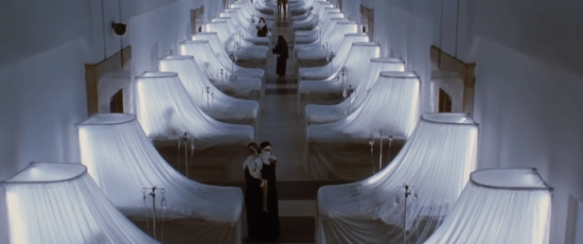
  • Creepy stuff in glass containers
  • The camera always moving and rarely stopping
  • Creatures and monsters


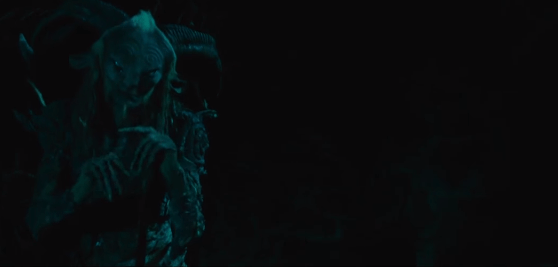
The monsters are human

A common theme is that the humans are monsters and the monsters are often human. As well as this, the human character that is the villain tends to take advantage of the monster. Del Toro said as he was bullied growing up because of his size, he relates more to his movie monsters than the people. This is a perspective that sees them as misunderstood creatures and not necessarily stereotypical monsters. Del Toro could be showing the desire for acceptance and how society should be more accepting.

pan

An example of a monster who is ‘human’ (but not a protagonist)


Pan’s Labyrinth Response

One of the main things I noticed about the film was the use of colour. Del Toro often uses colour to tell a story and he defiantly did so in Pan’s Labyrinth. The ‘reality’ world is largely made from blues and greens making it cold an uninviting. For example, the lighting is often blue, such as when Ofelia gets into bed with her mother. The mise en scene is also what makes this blue and green common; the costume design is a key element when it comes to colour telling the story. Ofelia wears a green dress when in ‘reality’, she physically takes it off before entering the tree. To contrast, when she is reborn at the end of the movie into the magical world, she is wearing gold and red which matches the colour scheme for that world throughout the film. Things like Ofelia’s red shoes and the close up of them could be a link to ‘The Wizard of Oz’ as Dorothy’s red shoes. The gold and red colours are more inviting and are internal colours which matches the frequent reproductive system imagery.

The fallopian tubes are an image that frequent occurs during the movie. This links with Ofelia’s desire to be close to her mother again after the war had affected her life. Del Toro wanted to explore the effect that war had on children, it’s part of the theme and binary oppositions brutality vs innocence. The war took her dad and then her mum re-married to Vidal who was part of the war leaving Ofelia in a situation and place she didn’t want to be in. The internal colours of the magical world and the tree being in the shape of fallopian tubes (mise en scene) therefore makes it a metaphor when Ofelia climbs into the tree (wants to be close to her mother again) and means that at the end of the movie she is reborn. This added to the sympathy that I already felt for Ofelia. There were other fallopian tube symbols in the movie such as in Ofelia’s book, the fauns antlers and a picture of the pale faced man in Ofelia’s book forms the shape of fallopian tubes.

I tend to think Del Toro puts masses of detail into his films regarding recurring symbols. In this movie time and hands were repeated many times but one that stuck out to me was the use of words. Ofelia’s mother tells her to call Vidal her father and that it is just a word, suggesting there was no meaning behind it. Plus, the doctor gave the speech about obeying just because people were told to which had a connection to the use of words. As well as this, the lullaby that Mercedes sings Ofelia which becomes a frequent melody throughout the film is wordless. I think Del Toro is trying to suggest that people other than Vidal use actions to express emotions whereas Vidal will use words which can be hollow, and that even if he does use actions he’s often just obeying because he’s told to.  He’s cruel and insincere, which we can tell from his actions as well.

Time was also mentioned and hinted at many times, especially with Vidal. His father smashed his watch so that he knew what time he had died, he asked Mercedes for his son to know the same. As well as this, he frequently checks his watch (a prop which is part of mise en scene) and we get frequent close ups of the watch because of this as well as being able to hear it tick, I think the first words we hear him say are stating that Ofelia and her mother are late. This could link to Ofelia’s story that she tells her brother about the flower that grants immortality, and how there were poisons thorns that guarded it, but all people spoke about was how dangerous it was and never the reward. It cuts to Vidal during this scene. I think Vidal is a contrast to the story, that it suggests that he believes he is ‘immortal’ because he thinks he’s better than everyone else, such as he believed he could defeat the rebels. His constant checking of time supports this as it could be a hint to how short life is, even for Vidal who seems to feel indestructible. It’s possible that the thorns in the story for Vidal were his actions that were cruel and evil, causing his own downfall and un-deservingness of immortality.

The violence in the film was significant in terms of characters and who they are. Vidal, was cruel and murdered without a thought. Ofelia, was passive even when faced with the pale faced man and had the dagger (mise en scene – prop). Mercedes was brutal but did it for her safety. I think Del Toro often uses violence to explore characters, I noticed similar scenarios in films like ‘The Shape of Water’ and ‘The Devils Back Bone’ (which is actually a sister movie to Pans Labyrinth).

Pan’s Labyrinth

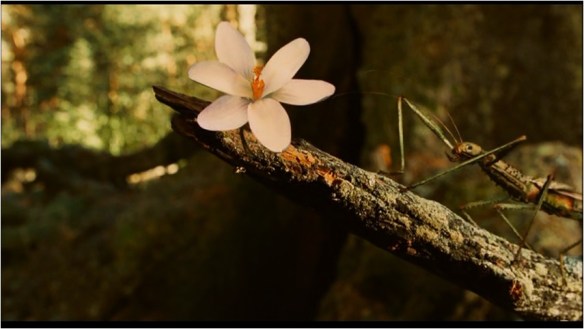
pans labyrinth flower and fairy


Some of my information was from this website: http://panslabyrinth.co.uk/

Director: Guillermo del Toro

Plot

In 1944 at the end of the Spanish civil war, Ofelia seeks refuge in a mysterious labyrinth and follows three dangerous tasks set for her by a magical creature who tells her she is the lost princess. Meanwhile, her mother (who has recently married a horrible man), is having pregnancy issues.

Spanish Civil War

Ofelia 

A brave, kind, young girl who is interested in fairy tales who seeks refuge in a labyrinth. She follows three dangerous tasks set to her by a faun and struggles with loneliness and the health issues her mother has regarding her pregnancy. Del Toro explores the way war effected children through this character and Ofelia also had to cope with her step-father who has no interest in her, and who is a horrible man. She is told by the faun that she is the long lost princess of the kingdom.

Mercedes 

Mercedes works as a house keeper for Captain Vidal (Ofelia’s step father) and forms a bond with Ofelia. Mercedes fights against Captain Vidal secretly along with the doctor but eventually has to face him.

Pan

A satyr/the faun who guards the labyrinth. He is complimentary and playful but also fierce, this represents both the bad and good in natures forces. Pan sets Ofelia the three dangerous tasks she must do, he needs her to discover the truth.

Captain Vidal 

He is a captain in Franco’s army and the new husband to Carmen (Ofelia’s mother). Along with soldiers he is attempting to find and kill resistance fighters near by. He is a cold, horrible and violent man who has no interest in fathering Ofelia. Without hesitation, he told the nurses that if Carmen must die to save the baby, they must do it which suggests he didn’t love Carmen either.

Carmen 

Ofelia’s mother and Captain Vidal’s wife. She is pregnant with Captain Vidal’s baby and is having serious pregnancy issues. She would like Ofelia and Vidal to get along, this might be why she told Ofelia to put away her books about fairies as Vidal would not have approved.

The Doctor 

He is the towns doctor and is secretly helping the resistance fighters with Mercedes. He must make a serious decision when it comes to helping the resistance. He also helps Carmen with her pregnancy problems.


About the Film 

  • Directed by Guillermo del Toro
  • Doug Jones played the creatures (he often appears in del Toro’s films)
  • There are lots of metaphors and lots of symbolism around hands, faces, eyes, time and the use of words
  • Innocence vs brutality is a theme throughout the film
  • The fantasy world was as dangerous and real as the real world.
  • The fantasy world is actually real, it’s not just inside Ofelia’s head. We know this because Ofelia was able to draw doors with the chalk Pan gave her and because of the flower at the end of the film.
  • The violence was significant and had meaning behind it. This is the same with other films directed by Guillermo del Toro too such as ‘The Shape of Water’
  • The iconic tree looks like fallopian tubes, the child entering the tree is like her being re-born. The film is full of baby and child imagery because Ofelia is re-born at the end of the movie and because most of the fantasy world she would dream of is going back in to her mothers womb. The colours of the magical world are golden and scarlet because they are internal colours and the rest of the world is blues and greens and pale greys which makes it more cold and un-inviting. Ofelia even takes off her green dress before entering the tree.
  • ‘The Wizard of Oz’ and ‘Alice in Wonderland’ were both inspirations
  • Pan the faun would “appear” to the director del Toro from behind a wardrobe in his grandmother’s house as a child
  • The scene where Vidal beats an innocent man with a bottle was inspired by a fight in which Del Toro was in when he was younger with a friend who was being hit with a bottle (but less brutally)
  • There is a lullaby that repeats throughout the film and can make the audience feel emotional


‘to obey – just like that – for obedience’s sake… without questioning… That’s something only people like you do.’ – the doctor

Spanish Civil War

  • The Spanish civil war was from 1936-1939
  • The nationalists (forces on the right) were lead by Generals Franco and Sanjurjo. The republicans (forces on the left) were lead by Azana
  • The nationalists received help from Nazi Germany and fascist Italy, the republicans received help from Russia along with volunteers from the United States and Europe.
  • The nationalists won the civil war. They had better soldiers and Russia had withdrawn support from the republicans after failures.


A lot of my information came from this website:

The Spanish Civil War