Film Easter ISP

Film Easter ISP


The Fallen Angels Question didn’t work for some reason, so here it is:

Section D: Film movements – Experimental film (1960-2000)

62) To what extent is the film you have studied recognisable as the product of an auteur? [20]

Fallen Angels is very recognisable as the product of the auteur Wong Kar-wai. For example, his recognisable use of film form. One of the main examples is his use of non-diegetic pop songs throughout the movie, not for ironic purposes, but to connote certain feelings to the audience. Another main example is his use of rain, which he uses to bring characters together in Fallen Angels, furthering the themes of loneliness and togetherness. The mise-en-scene of rain is also used in his other films like ‘The Grandmaster’. Furthermore, he has a specific use of editing in terms of time manipulation to convey meaning. Such as, the use of step printing, like during the assassination sequence, which to partially used to connote a sense of coolness to the character. He also uses slow motion, like the slow motion of the train dirivng past during the opening, which has a sense of lonliness. Simialrly, his use of cinematography also does this. His use of wide angle lens and deep depth of field shots create the sense of sepeartion, as the character at the front is distant from those behind them, creating the sense of lonliness and need for connection with other human beings. These themes can also be seen in his film ‘Chungking Express’, which is the sister film to Fallen Angels, which was initially the third part to the movie. Another connection between these movies are the actors. Interestingly, the same non-actor was used in both, which is an experminetal attitude to film making.  


Narratively, Wong Kar-wai’s work tends to be experimental, which is part of his auteur signature. Such as, instead of the narrative focusing on plot and explantaion, it focuses on character, themes like lonliness and connection, and emtions, as he uses expermintal narrative devices and narrative structure to convey very real human emotion. Such as, the narrative device during the opening of narrative repeition of two characters following the same path through the station, then both picking up the same key (close up) and enetring the same house but at different times highlights their lonliness and lack of close connection. This is instead of narrative devices being used for expostion, which most films have during the opengn equilibrium, but Fallen Angels does not. Throughout, instead of explaining who the charcaters are, and why they do what they do, like why the man assisinates people, Wong Kar-wai doesn’t tell us, and instead focuses on the emotion. This could be why the ending equilibrium is open instead of a closed ending, as the two characters on the same bike, with her holding on to him, is suggesting a closness between the two, even if momentary, which in a way sums up the themes of the films and the emotions of the film rather than any plot. During this ending, the lighting in the tunnel is green, and green lighting was also iused earlier when the son was spying on his dad watching the footage he filmed. As Wong Kar-wai doesn’t foolow traditional colour theory, it can be hard to intepret the exact connotations and meaning of his colour choices, but they are picked intentionaly and for emotional meaning. It’s possible due to both times that green lighting was used that it represents closeness between the characters. 

Blade Runner: Revision Notes


New Hollywood 

  • studio’s built themselves up with influence from the french new wave including non-linear narrative, and sex, drugs and violence. French New Wave changed eastern and western film.
  • fears of the time were exploited by blockbusters
  • still has 180 rule
  • not just about driving the story forward, also aesthetic experience
  • low budget to high budget
  • moral ambiguity of the protagonist
  • film school people like Spielberg
  • Also can be used as a form of escapism, but a different type
  • influence of TV


Opening: 

Auteur Signature Film Form

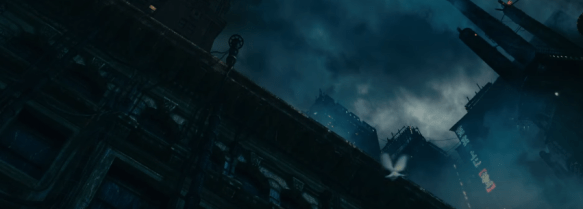
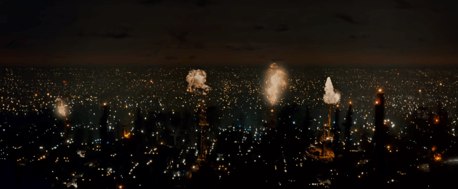
  • long establishing shot
  • film noir style – dull,cold and detective in his office vibe *
  • German expressionism *
  • arc (?) lights and strong shadows
  • low key lighting
  • shifts in genre – science fiction/film noir *
  • neon colours
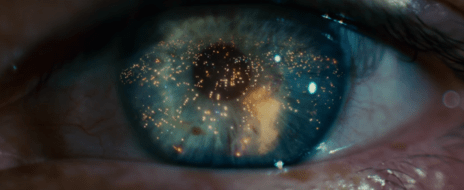
  • ECU pf the eye with flame going around the side – as we don’t know who it is, it could just be in the movie because it looks nice which Scott really cares about. It could be about question of identity as well.It doesn’t add to the narrative *

New Hollywood Film Form

  • composite images and lens flare
  • text exposition*
  • non-diegetic heart beating sound (during/start of turtle story)*
  • machine beeping
  • low key lighting – LA – cold
  • slow paced shots – low cutting rate
  • no explanation of why LA is like that*
  • no explanation of how Tyrel corp is so powerful
  • Pyramids – power symbol*
  • fire coming out of stacks*
  • flying cars – metropolis*
  • mundane grey office – parody of modern day office that contrasts to outside. Isolated from everyone else
  • light coming into the office but it is dark outside
  • action reaction shot (CU and MS) of talking*
  • heart beeping*
  • double speak

Production Context 

  • forced perspective – miniatures of the city made with LED lights (computer moved the camera?)*
  • Voight – Rompf machine made to look like it was breathing – links to the replicants*
  • low key lighting and fog to hide the set*
  • Budget change*
  • Song made for the film

Themes and motifs 

  • themes – neo-liberalism, fear of technology, fear of something new, fossil fuels are used in the world which is dirty (environmental fears)*

Representation 

  • no children – fear of AI/replicants taking the place of children and/or the replicants are the children/represent children*
  • the officer is a man
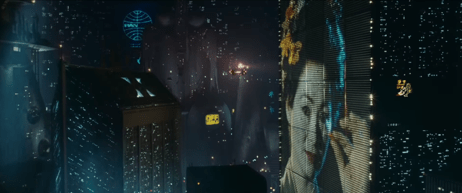
  • woman on the advertisement – only woman we have seen so far and advertising is dominating the world in general*
  • asian influence*

Political Context 

  • Asian influence*
  • Resemblance of Tyrel building to cathedral of light (Nazi’s) – looks similar and the light at the top – power that it represents as well*
  • cold war*
  • fear of technology – nuclear bomb and cold war*
  • in the 80’s technical advancements were mainstream*
  • Tyrel’s power – capitalism*
  • reliance on fossil fuels – no wind farms, fire*
  • neo-liberalism*


Middle: 

Auteur Signature Film Form 

  • neon colours outside of his window*
  • Genre shifts – science fiction, film noir*
  • Strong directional low key lighting

New Hollywood Film Form 

  • non-diegetic choir singing*
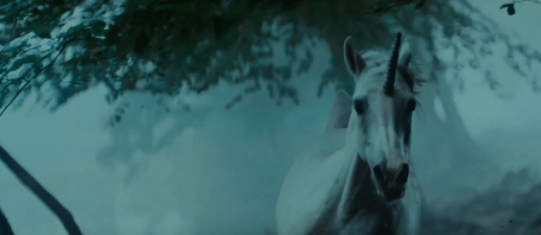
  • unicorn – high key lighting*
  • close up of pictures – he thinks it is his family etc.*
  • minimal and wooden performance – replicant? wooden performance relates back to the replicant at the beginning*
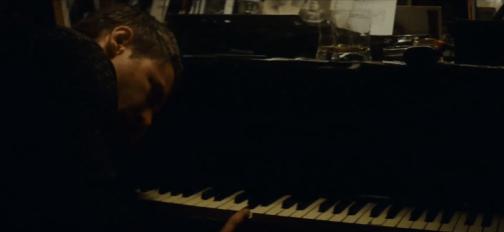
  • piano – evokes memory in himself*
  • gun and whisky – noirish character*
  • unicorn is fantastical yet it’s the only “real” animal in the film*
  • only real nature (trees) in the film*
  • morally ambiguous/compromised*
  • cross fade – like a flashback*
  • picture is labelled
  • the news paper on the TV type thing when he is searching is written in ideograms

Production Context 

  • unicorn scene – another movie – legend test shot*

Themes and motifs 

  • theme of surveillance – search light*
  • piano*
  • character haunted by memories*
  • unicorn motif*
  • technological advancement and high tec  – fear of it*
  • existentialism theme*

Representation 

  • apartment is decorated with Eastern looking furniture and ornaments (e.g. Buddah head and bonzi tree)*
  • women represented as exotic (?)

Political Context 

  • mise en scene – mix of cultures  – passed Cold War*


Ending: 

Auteur Signature Film Form 

  • heavy  shadows – German Expressionism*
  • low key lighting and high contrast
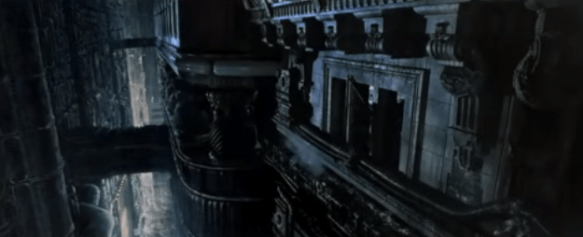
  • Baroque Style – elaborate set*
  • Use of colour (blue and orange ) – in the back of the corridor ?
  • rain dripping sound down wall – close sonic perspective – tension*
  • beautiful cinematography in the finger braking scene (close sonic perspective as well)*
  • Genre shifts – science fiction, horror, Western (gun)*
  • beams of light from behind the window
  • blue tinted lighting
  • neon lights in the background when climbing out of the window*
  • Close up of his hand when pulling himself up – like in Alien*
  • the search light has no narrative logic – they are fighting but nothing happens when they are seen by the search light. Suggesting whoever is in control of the search light doesn’t care about violence.*
  • blue harsh theatre lighting
  • close sonic perspective*
  • neon TDK sign*

New Hollywood Film Form

  • ‘aren’t you the good man?’ – protagonist isn’t good and moral ambiguity of protagonist – directly questioning*
  • ‘that’s the spirit’ response to being attack by Deckard, possibly saying that he has the power of a replicant but Deckard doesn’t know yet?*
  • ‘that hurt’, ‘where are you going?’ and calling Deckard’s actions ‘irrational’ suggests a humanness to Roy and suggests that Deckard is a replicant*
  • non-diegetic sound like bees
  • howling – supernatural like*
  • contrasting aesthetic of the building to the neon world
  • representation of LA – raining*
  • lack of clothing – symbol of natural state and understanding who he is?
  • bell chiming
  • thunder and lightning?
  • fans – industrial feel
  • futuristic non-diegetic sounds*
  • violence – French influence e.g. Roy touches Pris’s wound, braking fingers etc*
  • ‘that’s what it is to be a slave’ – non-diegetic choir like note*
  • Japanese theatre like music – oriental theme, east meets west like the mise en scene throughout the film – cold war*
  • hero saved by an unexpected person*
  • nemesis has a loss, trauma, scene – Roy is a child in an adults body trying to come to terms with mortality and the death of Pris*
  • shift in protagonist – Roy is a more heroic figure*
  • parallel action of Roy and Deckard*
  • Parallel of them both trying to fix their hands (both have damaged hands)  – replicants, same values, life value, just as much good or bad as people*
  • mechanical old sound – adds to the  coldness*
  • dramatic, tense and a lot about narrative*
  • nail in hand – stigmata – religious symbol, sacrificing himself ?, child of God?, a sense of some innocence?. Plus, Roy previously said ‘6,7, go to hell or go to heaven’*
  • symbolic that it is raining
  • Gaff shows up when everyone is dead
  • day time when he looks for Rachel
  • tracking shot of room focusing in on body under the sheet – symbolic of death*
  • mechanical sounds and blueness on TV – coldness
  • robot making poetry
  • narrative flip – hunter becomes the hunted – narrative was centred around Deckard finding and killing replicants*
  • choir singing when he lands – nail in hand – miraculous and religious link
  • hanging off building – narrative device and possibly a metaphor*
  • Roy is in silhouette and low angle shot  – dangerous*
  • Roy picks Deckard up with the nail hand
  • dove and nail – inner conflict ? – dove – freedom and peace symbol*
  • action reaction shots – highest tension of the movie – climax of the narrative*
  • living in fear is ‘what it is like to be a slave’*
  • change in tone – more high key lighting, music more major key*
  • slow motion footage – Roy looking down in the rain
  • ‘time to die’ is Roy’s last words – links humans and replicants, significance of life, acceptance of mortality*
  • day time shot of letting the dove go – found freedom/peace in death, symbolic of replicants having souls?*
  • cross fade of Roy and Deckard that acts as an action reaction shot- creates a connection between them (both scared of mortality?) – Roy is dead and Deckard is looking at him – feels united with him?, both replicants, both feel the same way etc*

Production Context 

  • W.B. Burbank set*
  • inspired by/a reference to metropolis (outside the building)*
  • matte painting – background?*

Themes and Motifs 

  • search light – surveillance*
  • unicorn SILVER origami – suggests that Deckard  is a replicant because it implies that Gaff new about the dream that Deckard had previously, suggesting it was an implanted memory. It also shows that Gaff knew Rachel was there, yet spared her. There is a voice over of Gaff in this moment of earlier on when he said ‘too bad she won’t live, but then again who does?’ (ironic) this paired with Deckard’s nod suggesting his awareness of being a replicant gives the idea that being a replicant doesn’t matter, you’re still mortal and feel the same feelings (pr maybe even less) as a human*
  • Japanese theatre like music – oriental theme, east meets west like the mise en scene throughout the film – cold war*
  • environmentalism – fans – energy resource ?*
  • humans underestimating technology ?
  • existentialism and the value of being alive*


Representation 

  • ‘this is for Zora’ and ‘this is for Pris’  – women are avenged be men, men are left to fight. Plus, he doesn’t mention Leon*
  • man cries – good representation*
  • Rachel has been made passive throughout the whole movie*
  • he needs to help Rachel be safe*
  • children – performance is like a game of hide and seek*
  • Roy is a child in an adults body trying to come to terms with mortality and the death of Pris*
  • children – Roy’s nursery rhyme esque speech – ‘6,7, go to hell or go to heaven’*
  • replicants are represented as/are the representation of children, ‘that hurt’ – raw emotion, highly refined sense of right and wrong*
  • she loves him and trust him but why? – fugitive on the run and he owes her so she trusts him?*


Political Context 

  • Japanese theatre like music – oriental theme, east meets west like the mise en scene throughout the film – cold war*


More 

  • Speech that Howard wrote – machine which accepts its mortality*
  • co-operations in charge, no government?*
  • maths doesn’t add up of the number of replicants (said near the beginning of the film) unless Deckard is one of them?


Blade Runner Ending Notes – Re-written

Key

*important notes


Auteur Signature Film Form 

  • heavy  shadows – German Expressionism*
  • low key lighting and high contrast
  • Baroque Style – elaborate set*
  • Use of colour (blue and orange ) – in the back of the corridor ?
  • rain dripping sound down wall – close sonic perspective – tension*
  • beautiful cinematography in the finger braking scene (close sonic perspective as well)*
  • Genre shifts – science fiction, horror, Western (gun)*
  • beams of light from behind the window
  • blue tinted lighting
  • neon lights in the background when climbing out of the window*
  • Close up of his hand when pulling himself up – like in Alien*
  • the search light has no narrative logic – they are fighting but nothing happens when they are seen by the search light. Suggesting whoever is in control of the search light doesn’t care about violence.*
  • blue harsh theatre lighting
  • close sonic perspective*
  • neon TDK sign*


New Hollywood Film Form

  • ‘aren’t you the good man?’ – protagonist isn’t good and moral ambiguity of protagonist – directly questioning*
  • ‘that’s the spirit’ response to being attack by Deckard, possibly saying that he has the power of a replicant but Deckard doesn’t know yet?*
  • ‘that hurt’, ‘where are you going?’ and calling Deckard’s actions ‘irrational’ suggests a humanness to Roy and suggests that Deckard is a replicant*
  • non-diegetic sound like bees
  • howling – supernatural like*
  • contrasting aesthetic of the building to the neon world
  • representation of LA – raining*
  • lack of clothing – symbol of natural state and understanding who he is?
  • bell chiming
  • thunder and lightning?
  • fans – industrial feel
  • futuristic non-diegetic sounds*
  • violence – French influence e.g. Roy touches Pris’s wound, braking fingers etc*
  • ‘that’s what it is to be a slave’ – non-diegetic choir like note*
  • Japanese theatre like music – oriental theme, east meets west like the mise en scene throughout the film – cold war*
  • hero saved by an unexpected person*
  • nemesis has a loss, trauma, scene – Roy is a child in an adults body trying to come to terms with mortality and the death of Pris*
  • shift in protagonist – Roy is a more heroic figure*
  • parallel action of Roy and Deckard*
  • Parallel of them both trying to fix their hands (both have damaged hands)  – replicants, same values, life value, just as much good or bad as people*
  • mechanical old sound – adds to the  coldness*
  • dramatic, tense and a lot about narrative*
  • nail in hand – stigmata – religious symbol, sacrificing himself ?, child of God?, a sense of some innocence?. Plus, Roy previously said ‘6,7, go to hell or go to heaven’*
  • symbolic that it is raining
  • Gaff shows up when everyone is dead
  • day time when he looks for Rachel
  • tracking shot of room focusing in on body under the sheet – symbolic of death*
  • mechanical sounds and blueness on TV – coldness
  • robot making poetry
  • narrative flip – hunter becomes the hunted – narrative was centred around Deckard finding and killing replicants*
  • choir singing when he lands – nail in hand – miraculous and religious link
  • hanging off building – narrative device and possibly a metaphor*
  • Roy is in silhouette and low angle shot  – dangerous*
  • Roy picks Deckard up with the nail hand
  • dove and nail – inner conflict ? – dove – freedom and peace symbol*
  • action reaction shots – highest tension of the movie – climax of the narrative*
  • living in fear is ‘what it is like to be a slave’*
  • change in tone – more high key lighting, music more major key*
  • slow motion footage – Roy looking down in the rain
  • ‘time to die’ is Roy’s last words – links humans and replicants, significance of life, acceptance of mortality*
  • day time shot of letting the dove go – found freedom/peace in death, symbolic of replicants having souls?*
  • cross fade of Roy and Deckard that acts as an action reaction shot- creates a connection between them (both scared of mortality?) – Roy is dead and Deckard is looking at him – feels united with him?, both replicants, both feel the same way etc*


br dove


Production Context 

  • W.B. Burbank set*
  • inspired by/a reference to metropolis (outside the building)*
  • matte painting – background?*


br metropolis


Themes and Motifs 

  • search light – surveillance*
  • unicorn SILVER origami – suggests that Deckard  is a replicant because it implies that Gaff new about the dream that Deckard had previously, suggesting it was an implanted memory. It also shows that Gaff knew Rachel was there, yet spared her. There is a voice over of Gaff in this moment of earlier on when he said ‘too bad she won’t live, but then again who does?’ (ironic) this paired with Deckard’s nod suggesting his awareness of being a replicant gives the idea that being a replicant doesn’t matter, you’re still mortal and feel the same feelings (pr maybe even less) as a human*
  • Japanese theatre like music – oriental theme, east meets west like the mise en scene throughout the film – cold war*
  • environmentalism – fans – energy resource ?*
  • humans underestimating technology ?
  • existentialism and the value of being alive*


Representation 

  • ‘this is for Zora’ and ‘this is for Pris’  – women are avenged be men, men are left to fight. Plus, he doesn’t mention Leon*
  • man cries – good representation*
  • Rachel has been made passive throughout the whole movie*
  • he needs to help Rachel be safe*
  • children – performance is like a game of hide and seek*
  • Roy is a child in an adults body trying to come to terms with mortality and the death of Pris*
  • children – Roy’s nursery rhyme esque speech – ‘6,7, go to hell or go to heaven’*
  • replicants are represented as/are the representation of children, ‘that hurt’ – raw emotion, highly refined sense of right and wrong*
  • she loves him and trust him but why? – fugitive on the run and he owes her so she trusts him?*


Political Context 

  • Japanese theatre like music – oriental theme, east meets west like the mise en scene throughout the film – cold war*


More 

  • Speech that Howard wrote – machine which accepts its mortality*
  • co-operations in charge, no government?*
  • maths doesn’t add up of the number of replicants (said near the beginning of the film) unless Deckard is one of them?

Blade Runner Middle Notes – Re-written

Key

*indicates most important notes


Auteur Signature Film Form 

  • neon colours outside of his window*
  • Genre shifts – science fiction, film noir*
  • Strong directional low key lighting


New Hollywood Film Form 

  • non-diegetic choir singing*
  • unicorn – high key lighting*
  • close up of pictures – he thinks it is his family etc.*
  • minimal and wooden performance – replicant? wooden performance relates back to the replicant at the beginning*
  • piano – evokes memory in himself*
  • gun and whisky – noirish character*
  • unicorn is fantastical yet it’s the only “real” animal in the film*
  • only real nature (trees) in the film*
  • morally ambiguous/compromised*
  • cross fade – like a flashback*
  • picture is labelled
  • the news paper on the TV type thing when he is searching is written in ideograms


br unicorn


Production Context 

  • unicorn scene – another movie – legend test shot*


Themes and motifs 

  • theme of surveillance – search light*
  • piano*
  • character haunted by memories*
  • unicorn motif*
  • technological advancement and high tec  – fear of it*
  • existentialism theme*


br piano


Representation 

  • apartment is decorated with Eastern looking furniture and ornaments (e.g. Buddah head and bonzi tree)*
  • women represented as exotic (?)


Political Context 

  • mise en scene – mix of cultures  – passed Cold War*

Blade Runner Opening Notes – Re-written

Key 

* indicates what is most important


Auteur Signature Film Form
  • long establishing shot
  • film noir style – dull,cold and detective in his office vibe *
  • German expressionism *
  • arc (?) lights and strong shadows
  • low key lighting
  • shifts in genre – science fiction/film noir *
  • neon colours
  • ECU pf the eye with flame going around the side – as we don’t know who it is, it could just be in the movie because it looks nice which Scott really cares about. It could be about question of identity as well.It doesn’t add to the narrative *


br eye


New Hollywood Film Form

  • composite images and lens flare
  • text exposition*
  • non-diegetic heart beating sound (during/start of turtle story)*
  • machine beeping
  • low key lighting – LA – cold
  • slow paced shots – low cutting rate
  • no explanation of why LA is like that*
  • no explanation of how Tyrel corp is so powerful
  • Pyramids – power symbol*
  • fire coming out of stacks*
  • flying cars – metropolis*
  • mundane grey office – parody of modern day office that contrasts to outside. Isolated from everyone else
  • light coming into the office but it is dark outside
  • action reaction shot (CU and MS) of talking*
  • heart beeping*
  • double speak


br vk


Production Context 

  • forced perspective – miniatures of the city made with LED lights (computer moved the camera?)*
  • Voight – Rompf machine made to look like it was breathing – links to the replicants*
  • low key lighting and fog to hide the set*
  • Budget change*
  • Song made for the film


br fp


Themes and motifs 

  • themes – neo-liberalism, fear of technology, fear of something new, fossil fuels are used in the world which is dirty (environmental fears)*


Representation 

  • no children – fear of AI/replicants taking the place of children and/or the replicants are the children/represent children*
  • the officer is a man
  • woman on the advertisement – only woman we have seen so far and advertising is dominating the world in general*
  • asian influence*


br ad


Political Context 

  • Asian influence*
  • Resemblance of Tyrel building to cathedral of light (Nazi’s) – looks similar and the light at the top – power that it represents as well*
  • cold war*
  • fear of technology – nuclear bomb and cold war*
  • in the 80’s technical advancements were mainstream*
  • Tyrel’s power – capitalism*
  • reliance on fossil fuels – no wind farms, fire*
  • neo-liberalism*

Hollywood – Classical and New Hollywood Essay


Hollywood directors from the 1960’s onwards had to re-invent American cinema from the classical period of Hollywood. How do the films you have studied reflect the forces that shaped Hollywood style and form? [40 marks]


Hollywood directors from the 1960’s onwards had to re-invent American cinema from the classical period of Hollywood. One reason why this happened, was because of the Paramount decree, and studios having everyone on contract including directors was no longer allowed. Plus, specific context influenced the films depending on the time that they were made, for example, Casablanca, an example of a classical Hollywood film, is a propaganda film to spread ideas about world war 2 and America’s involvement in the war. For example, Rick says ‘I bet they’re asleep all over America’ which is a reference to American Isolation. Plus, the motif of the search light creates the theme of surveillance adding to the time that the film was set. To contrast, new Hollywood films tend to focus on other contexts of the time such as the quickly developing technology. Blade Runner, an example of a new Hollywood film, is a dystopian film set in the future, and advancement in technology is heavily featured in the movie. For example, the ability for replicants to exist. The film is suggesting a danger in rapid technological development and advancement such as with the replicants, because they take the place of children making the world seem unnatural, this links to the representation of children, as the replicants are children but look like adults. Other than this, cinema was influence by certain waves and movements. Casablanca was influenced by German Expressionism, as Curtiz the director spent time creating films in Europe. His use of strong shadows and controlled lighting are not only a part of what makes him an auteur as they are a recognisable feature, but this cinematography was used due to influence from German Expressionism. Such as, the strong shadows on the walls in Rick’s café of surrounding items, and how we see the shadow of Rick using the safe, rather than Rick himself, adding to the theme of secretiveness as well as being an example of influence from German Expressionism. This shadow technique was used by Curtiz in his other films as well, such as his robin hood movie.  To contrast, new Hollywood films were very influenced by the French New Wave. This involved more violence, sex and drugs. Blade Runner includes lots of violence, which wouldn’t have happened during the classical Hollywood time period. For example, after Pris has been killed, the mise en scene includes blood and sight of her insides. The performance of Roy then continues this gory violence as he puts his fingers on her blood and wipes it on his face. This contrasts greatly to the scene in Casablanca, where the man is shot during the opening, and no blood or wound is seen. Another example of influence from the French New Wave in Blade Runner is the close sonic perspective sound of Roy breaking Deckard’s fingers. This violence is something that wouldn’t have been included during the Classical Hollywood period.


Another noticeable difference and change between Classical Hollywood films and New Hollywood films is the difference in protagonist. Classical Hollywood protagonist were clear cut, and morally clear, as well as their motivations being obvious. For example, the montage flashback in Casablanca highlights to the audience that Rick’s motivation is based on his love for Ilsa. Such as, the mise en scene of them sitting together in the car suggesting a whirlwind romance. It was usual for Classic Hollywood films to include a flashback that revealed the protagonist’s motivations, while the rest of the film remained linear. It’s also very clear where the protagonist Rick stands in terms of political context. For example, we know he believes that American isolation from the war was wrong, ‘What time is it in New York?’ and ‘I bet they’re asleep all over America’. This was also part of the film being a propaganda film, America initially didn’t get involved in the war because they lost too many people and too much money last time, but after Pearl Harbour they got involved and it was important for cinema to support these ideas. A reason why money towards cinema was still allowed, as well as the use of silver nitrate for the cameras, was because cinema could be used for propaganda purposes as well as to boast morale. To contrast, Deckard the protagonist in Blade Runner is less clear cut, for example he is morally ambiguous which wouldn’t have happened in Classical Hollywood films. For example, the diegetic dialogue of Roy directly addresses this issue of the protagonist’s moral ambiguity when he says, ‘aren’t you the good man?’ during the ending sequence. This makes the audience question Deckard’s morals, especially since we begin to feel more sympathy for the so-called villain Roy. This is because of the representation of children, as Roy is a child in an adult’s body who has to cope with his own mortality as well as deal with the death of a loved one because the protagonist killed her. The performance and mise en scene of him crying over Pris’s dead body emphasises this sympathy that the audience has for Roy, as well as being good gender representation as it goes against toxic masculinity. Hi speech at the end continues this sympathy and connection with Roy, as the high key lighting has connotations of goodness, suggesting that Roy is the good character who just wants himself and his friends to live, contrasting to the protagonist who is trying to kill him. This creates moral ambiguity in the protagonist, which is a feature of New  Hollywood films rather than Classical Hollywood films.


Hollywood directors from the 1960’s onwards also reinvented cinema in terms of narrative. This is because the technical aspects of Classical Hollywood films such as cinematic time and space, 180 rule, narrative logic, editing and the camera were all centred around driving the narrative of the story forward. Such as, in Casablanca, the tracking shot inside Rick’s café that obeys the 180-degree rule that purposefully drops down on Sam is used to introduce his character and therefore progress the narrative further. The montage flashback is an example of editing being used to drive the narrative forward as well. To contrast, despite still using some of the same rules like the 180 degree rule, the technical aspects of New Hollywood films like Blade Runner were not only used to drive the narrative forward. One way it could be used, is for symbolism. Such as the motif and symbol of the unicorn, that suggests that Deckard is a replicant. This is because the mise en scene of the origami unicorn outside his apartment suggests that Gaff knew about Deckard’s dream, meaning it is an implanted memory. Another reason why the technical aspects like the cinematography were not just used to drive the narrative forward is because some things were included just because they looked nice. Blade Runner is a good example of this, as Scott was an art graduate rather than a film graduate and cared more about the appearance of the cinematography and mise en scene rather than the performance. The extreme close up of the eye at the beginning of the movie could been example of a shot only being included because it looks nice rather than to drive the narrative forward as it doesn’t give us any new information. Scott’s concentration on appearance rather than acting was a reason why the cast disliked him, as he would spend hours setting up a scene leaving not much time for the acting, and he’d also reshoot scenes just so that things like the shadows were right. At one point, Scott’s relationship with the crew was so bad that he was actually fired from the film. Scott also cared greatly about the sets and is knows for is baroque sets such as the building featured at the end of blade runner. He did this for appearance, rather than to drive the narrative forward.


Blade Runner Context

Websites I have used and Quoted From:

http://darkdwarf5.tripod.com/belowthechickencoop/id66.html

https://www.britannica.com/event/Cold-War

https://www.history.com/topics/cold-war


Cold War


  • 1947-1991
  • “The Cold War rivalry between the United States and the Soviet Union lasted for decades and resulted in anti-communist suspicions and international incidents that led the two superpowers to the brink of nuclear disaster.”
  • “Cold War, the open yet restricted rivalry that developed after World War II between the United States and the Soviet Union and their respective allies. The Cold War was waged on political, economic, and propaganda fronts and had only limited recourse to weapons.”
  • “Following the surrender of Nazi Germany in May 1945 near the close of World War II, the uneasy wartime alliance between the United States and Great Britain on the one hand and the Soviet Union on the other began to unravel. By 1948 the Soviets had installed left-wing governments in the countries of eastern Europe that had been liberated by the Red Army. The Americans and the British feared the permanent Soviet domination of eastern Europe and the threat of Soviet-influenced communist parties coming to power in the democracies of western Europe. The Soviets, on the other hand, were determined to maintain control of eastern Europe in order to safeguard against any possible renewed threat from Germany, and they were intent on spreading communism worldwide, largely for ideological reasons. The Cold War had solidified by 1947–48, when U.S. aid provided under the Marshall Plan to western Europe had brought those countries under American influence and the Soviets had installed openly communist regimes in eastern Europe.”


Environmental

The film shows a future where the natural world is destroyed, and where the lack of environmental care has caused a lot of damage to the world. Such as, there’s no nature and no animals in the film. Plus, the fire at the begining could be suggestive of enviromental problems.


Communism and Capitalism

“The eradication of communism and the up-rise of capitalism also influenced the creation of Blade Runner. The consumer driven, capitalist world of Blade Runner removes the individuality of the population, and suppresses their natural instincts through control and corporate loyalty. The existence of the monopolistic Tyrell Corporation mimics the emergence of monopolistic companies in modern society, such as Microsoft. The infiltration of Japanese culture strengthens the economic importance, as during the 1980s Japan had become a world economic power.”


Technology

  • “Due to the technological revolution of the 1980s, much of the technology in Blade Runner is reminiscent of new advancements in the late 1970s and 1980s. The acceleration of the “space race” also caused a rapid progression in technological advancement, astronomical equipment infiltrating the general public. The detachment from nature seen in Blade Runner can be interpreted as a direct warning of the detrimental effects of technological advancement, and the redundancy of nature and humanity.”
  • Cold War and fear of technology (nuclear bomb)


Technology and AI

  • Question of consciousness- some scientists believe technology can simulate consciousness
  • Rights – irrelevant, no pain or pleasure, rights are meaningless. Rights protect us from infringements that cause us pain
  • Technologists believe Explosion of technology will occur when AI can create AI smarter than themselves
  • Human – identity, human exceptionalism. Deny other beings suffer as we do, animals once argued were mere autonoma.
  • Economic potential of AI exploitation
  • If robots become sentient there will be no shortage of arguments against rights, especially if there is an economic advantage
  • Philosophical debate


Blade Runner – Ending Notes


Auteur Signature Film Form 

  • heavy  shadows – German Expressionism
  • low key lighting and high contrast
  • Baroque Style – elaborate set
  • Use of colour (blue and orange ) – in the back of the corridor ?
  • rain dripping sound down wall – close sonic perspective – tension
  • beautiful cinematography in the finger braking scene (close sonic perspective as well)
  • Genre shifts – science fiction, horror, Western (gun)
  • beams of light from behind the window
  • blue tinted lighting
  • neon lights in the background when climbing out of the window
  • Close up of his hand when pulling himself up – like in Alien
  • the search light has no narrative logic – they are fighting but nothing happens when they are seen by the search light. Suggesting whoever is in control of the search light doesn’t care about violence.
  • blue harsh theatre lighting
  • close sonic perspective
  • neon TDK sign


New Hollywood Film Form

  • ‘aren’t you the good man?’ – protagonist isn’t good and moral ambiguity of protagonist – directly questioning
  • ‘that’s the spirit’ response to being attack by Deckard, possibly saying that he has the power of a replicant but Deckard doesn’t know yet?
  • ‘that hurt’, ‘where are you going?’ and calling Deckard’s actions ‘irrational’ suggests a humanness to Roy and suggests that Deckard is a replicant
  • non-diegetic sound like bees
  • howling – supernatural like
  • contrasting aesthetic of the building to the neon world
  • representation of LA – raining
  • lack of clothing – symbol of natural state and understanding who he is?
  • bell chiming
  • thunder and lightning?
  • fans – industrial feel
  • futuristic non-diegetic sounds
  • violence – French influence e.g. Roy touches Pris’s wound, braking fingers etc
  • ‘that’s what it is to be a slave’ – non-diegetic choir like note
  • Japanese theatre like music – oriental theme, east meets west like the mise en scene throughout the film – cold war
  • hero saved by an unexpected person
  • nemesis has a loss, trauma, scene – Roy is a child in an adults body trying to come to terms with mortality and the death of Pris
  • shift in protagonist – Roy is a more heroic figure
  • parallel action of Roy and Deckard
  • Parallel of them both trying to fix their hands (both have damaged hands)  – replicants, same values, life value, just as much good or bad as people
  • mechanical old sound – adds to the  coldness
  • dramatic, tense and allot about narrative
  • nail in hand – stigmata – religious symbol, sacrificing himself ?, child of God?, a sense of some innocence?. Plus, Roy previously said ‘6,7, go to hell or go to heaven’
  • symbolic that it is raining
  • Gaff shows up when everyone is dead
  • day time when he looks for Rachel
  • tracking shot of room focusing in on body under the sheet – symbolic of death
  • mechanical sounds and blueness on TV – coldness
  • robot making poetry
  • narrative flip – hunter becomes the hunted – narrative was centred around Deckard finding and killing replicants
  • choir singing when he lands – nail in hand – miraculous and religious link
  • hanging off building – narrative device and possibly a metaphor
  • Roy is in silhouette and low angle shot  – dangerous
  • Roy picks Deckard up with the nail hand
  • dove and nail – inner conflict ? – dove – freedom and peace symbol
  • action reaction shots – highest tension of the movie – climax of the narrative
  • living in fear is ‘what it is like to be a slave’
  • change in tone – more high key lighting, music more major key
  • slow motion footage – Roy looking down in the rain
  • ‘time to die’ is Roy’s last words – links humans and replicants, significance of life, acceptance of mortality
  • day time shot of letting the dove go – found freedom/peace in death, symbolic of replicants having souls?
  • cross fade of Roy and Deckard that acts as an action reaction shot- creates a connection between them (both scared of mortality?) – Roy is dead and Deckard is looking at him – feels united with him?, both replicants, both feel the same way etc


Production Context 

  • W.B. Burbank set
  • inspired by/a reference to metropolis (outside the building)
  • matte painting – background?


Themes and Motifs 

  • search light – surveillance
  • unicorn SILVER origami – suggests that Deckard  is a replicant because it implies that Gaff new about the dream that Deckard had previously, suggesting it was an implanted memory. It also shows that Gaff knew Rachel was there, yet spared her. There is a voice over of Gaff in this moment of earlier on when he said ‘too bad she won’t live, but then again who does?’ (ironic) this paired with Deckard’s nod suggesting his awareness of being a replicant gives the idea that being a replicant doesn’t matter, you’re still mortal and feel the same feelings (pr maybe even less) as a human
  • Japanese theatre like music – oriental theme, east meets west like the mise en scene throughout the film – cold war
  • environmentalism – fans – energy resource ?
  • humans underestimating technology ?
  • existentialism and the value of being alive


Representation 

  • ‘this is for Zora’ and ‘this is for Pris’  – women are avenged be men, men are left to fight. Plus, he doesn’t mention Leon
  • man cries – good representation
  • Rachel has been made passive throughout the whole movie
  • he needs to help Rachel be safe
  • children – performance is like a game of hide and seek
  • Roy is a child in an adults body trying to come to terms with mortality and the death of Pris
  • children – Roy’s nursery rhyme esque speech – ‘6,7, go to hell or go to heaven’
  • replicants are represented as/are the representation of children, ‘that hurt’ – raw emotion, highly refined sense of right and wrong
  • she loves him and trust him but why? – fugitive on the run and he owes her so she trusts him?


Political Context 

  • Japanese theatre like music – oriental theme, east meets west like the mise en scene throughout the film – cold war


More 

  • Speech that Howard wrote – machine which accepts its mortality
  • co-operations in charge, no government?
  • maths doesn’t add up of the number of replicants (said near the beginning of the film) unless Deckard is one of them?

Blade Runner – Unicorn Scene Notes


Auteur Signature Film Form 

  • neon colours outside of his window
  • Genre shifts – science fiction, film noir
  • Strong directional low key lighting


New Hollywood Film Form 

  • non-diegetic choir singing
  • unicorn – high key lighting
  • followed by close up of pictures – he thinks it is his family etc.
  • minimal and wooden performance – replicant? wooden performance relates back to the replicant at the beginning
  • piano – evokes memory in himself
  • gun and whisky – noirish character
  • unicorn is fantastical yet it’s the only “real” animal in the film
  • only real nature (trees) in the film
  • morally ambiguous/compromised
  • cross fade – like a flashback
  • picture is labelled
  • the news paper on the TV type thing when he is searching is written in ideograms


Production Context 

  • unicorn scene – another movie – legend test shot


Themes and motifs 

  • theme of surveillance – search light
  • piano
  • character haunted by memories
  • unicorn motif
  • technological advancement and high tec  – fear of it
  • existentialism theme


Representation 

  • apartment is decorated with Eastern looking furniture and ornaments (e.g. Buddah head and bonzi tree)
  • women represented as exotic (?)


Political Context 

  • mise en scene – mix of cultures  – passed Cold War