Inspiration from other Films


Guillermo del Toro films:

pldb

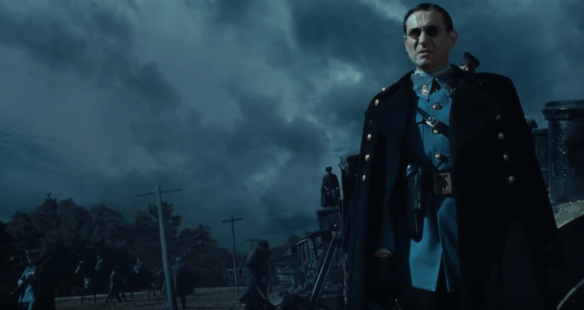
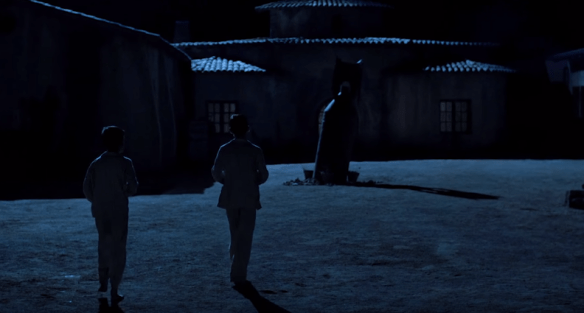
Guillermo del Toro is known for his coloured lighting. One of the colours he uses is blue, such as in Pan’s Labyrinth and The Devils Backbone. I would also like to use blue lighting to emphasise the sci-fi theme as well as to seperate the imaginary world (blue) to the real world. I used coloured lighting in my AS short film because of the connotations of the colour red and it as one of my favourite parts of mise en scene and cinemtatohgraphy that I used and so I would like to use it again. Plus, my love for the use of lighting specifically coloured lighting in movies.


Birdman and Beasts of the Southern Wild :

bm

cropped-beasts-of-the-souther-wild.png

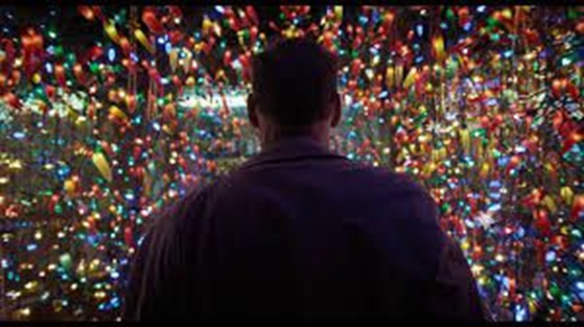
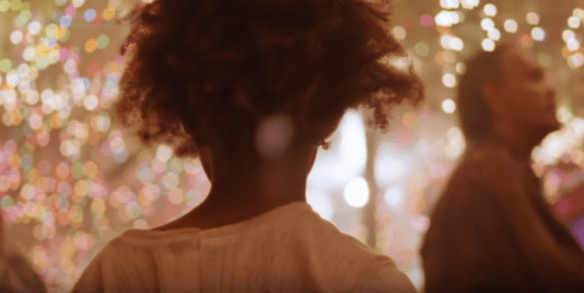
I’d like to use fairy lights as I think they evoke a lot of emotion as well as being beautiful to look at. Some films that does this are Beasts of the Southern Wild and Birdman, they can engulf the screen, I would like that in my film. I plan on using it to make it seem magical like, as I want to deck her reading closet in fairy lights where she imagines herself watching a tape from her future self after being prompted from the book. I’d also like to use fairy lights on the stairs when she is walking in the imaginary world to the TV because of the magical and hopeful theme it provides.


Good Time:


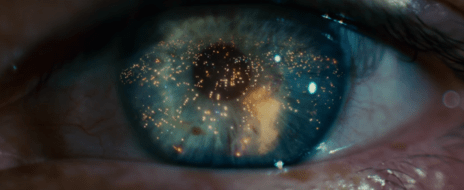
I’d like to use the device of a close up/extreme close up of my protagonist’s eyes to open and close the imaginary sequence in order to show the audience that it’s imaginary. Plus, there’s the meaning around eyes being ‘the windows to the soul’ and so using her eyes emphasises her desires that she has for life. Good Time uses specifically two eye close-ups to evoke particular emotions as well, I think it was really well used to sum up the reality of the scene.

Comparison of the short films – summer ISP


An analysis and comparison of the narrative features in each film:


How the protagonist and other characters are established and developed

  • Meshes of the Afternoon and When the Day Breaks use narrative repetition to establish and develop this. To contrast, Night Fishing uses visual symbols like water, the bells and the cloth and La Jetee uses non-linear narrative and theme like mortality and time.


How time and place are established and represented

  • La Jetee has a strong theme of time and uses a non-linear narrative to explore it as well as mise en scene elements. Meshes of the Afternoon, Night Fishing and When the Day Break also explore time through the theme of mortality; however, night fishing also ventures into themes of afterlife and spirit.


The use of enigma and narrative crisis and resolution

  • Meshes of the Afternoon creates a confusing non-linear narrative through lots of narrative repetition which is different every time. However, this is resolved at the end when all of the women are together, and then the woman is dead. When the day breaks also uses narrative repetition for the resolution as the opening of the blind instead of the closing like before suggests a sense of optimism and moving on. However, La Jetee uses a framed narrative that has the same place for the opening and the ending to close the narrative and it’s themes of time and mortality, while Night Fishing also ends while exploring the theme of mortality but also spirt and the afterlife.


An exploration of binary oppositions in the films

  • La Jetee – men & women: you only see the woman through the man’s perspective. And the present & past/future: you can’t escape from the present, switching between the present, past and future is a huge part of the narrative structure as well as the plot. The beginning introduces a childhood memory, and the ending explains this memory by showing the protagonist going back into the past, the animals are represented as timeless, just like the man and women in that moment
  • Night Fishing – Humans and Nature: the man is shown as disruptive to nature? The amount of fishing rods seemed invasive, the cutting of the fish in close up seemed cruel and violent. However, at one point her wear no shoes possibly implying a closeness to nature, the nature/sea/river is represented as dangerous to humans? Men and Women: the man is shown as more emotional than the women. Night and Day: bad things tended to happen at night? the day tended to have beautiful nature shots and colour


  • Meshes of the Afternoon- Reality and Dream: the line between the two is completely blurred, and the story becomes more and more layered in terms of this binary opposition as the short film continues. This includes in terms of characters and the mise en scene


  • When the Day Breaks – Happiness and Sadness: the pig’s house at the beginning is full of happiness, but after the incident it was sadder, and emptier, the contrast of the pig and the Cockrill’s emotions, and the pig becomes sad after interacting with the Cockrill. Humans and Animals: The usual binary opposition of human and animals is brought together in this short film, as the animals act like humans. Isolation and being open to society: The pig opening up her blind at the end of the movie suggested that she was opening herself up to society again, which gave a sense of hope to the audience that she will be happy again, the pig isolates herself when sad, the film shows how even when we try and disconnect ourselves, everyone in society is still connected


How the films use similar of different techniques and structures

Similar

  • The use of mise en scene e.g. the lemon, the pipes/wires and the chair, the hat and bells, the key and the mirror and the flower
  • Narrative repetition in Meshes of the Afternoon, When the Day Breaks (the blind) and La Jetee
  • Non-linear narrative in Meshes of the Afternoon, La Jetee and Night Fishing(?)
  • The use of no dialogue in When the Day Breaks and Meshes of the Afternoon
  • Exploring the theme of mortality

Differences

  • The linear narrative in When the Day Breaks
  • The use of animals in When the Day Breaks (specifically an anthropomorphized short film)
  • La Jetee used photographs to tell the story (apart from one blinking shot)
  • La Jetee uses non-linear narrative to explore relationships and memory
  • When the Day Break’s use of mundane and everyday tasks


An analysis and comparison of how visual/audio elements create meaning


Identify and explore the messages and ideas of the film

  • All of the films explore the theme of mortality, but they all do it in different ways. But they all explore death’s impact on the individual, as well as others around them. Most of the films also use narrative repetition to explore this theme as well .Such as, the opening and shutting of the blind in ‘When the Day Break’, the repetition in ‘La Jetee’ of his death/being where he dies, and the repetition in ‘Meshes of the Afternoon’.


Can you apply an ideological analysis?

  • ‘Meshes of the Afternoon’ could be exploring nihilism and going against it, as the film shows that every action she made had an impact


How does the film make you feel? What does it make you think about?

  • When the Day Breaks: Your emotions changes with the main character’s, you’re happy when they are happy and sad when they are sad. It makes you think about how everyone is intertwined, and mortality.
  • Meshes of the Afternoon: You feel tense. It makes you think about mortality, and it makes you question the motives of all the characters.
  • Night Fishing: You feel a range of different emotions. You think about mortality and family.
  • La Jetee: You feel a range of emotions which tend to align with the protagonists feelings but not all of the time, such as at the end you’re just shocked. It makes you think about mortality and war.


Compare the similarities and differences in the technical and aesthetic approaches and effects of each film

  • Allot of the films used narrative repetition to explore the themes such as mortality and to help drive the narrative forward.
  • Meshes of the Afternoon looked as though it could have been influenced by German Expressionism due to the use of shadows
  • Night Fishing filmed during night and because it was trying to win the ‘filmed on an iPhone’ competition


Explore what technical/experimental aspects of the film you may wish to adapt or use

  • Maybe use some narrative repetition like all of the films
  • Maybe use a mirror as a symbol like in ‘Meshes of the Afternoon’
  • Maybe use some non-diegetic music like in ‘Meshes of the Afternoon’
  • Maybe use an upside-down shot like ‘Night Fishing’


Explore how aesthetic elements might inspire your own works

  • Purposefully making the audience feel the same way that the main character does
  • Making the mise en scene influence how the audience feel

Meshes of the Afternoon – Viewing Notes


  • Use of shadows – dream-like, German Expressionism influence (?)
  • Non-linear narrative – narrative repetition and the break of this
  • Narrative repetition of stopping the vinyl (+ key etc)
  • Use of the sound to drive the narrative forward
  • The woman doesn’t have the flower the second time in the shadow, the mirror woman does
  • The repetition of walking up the steps – they’re both/all the same person
  • Use of slow-motion
  • Topsy turvy camera – dream and reality blurred
  • Reverse and unreversed (?) of going down and up the stairs
  • The theme of nature (ocean, grass, flower = knife)
  • Entrapment
  • Confronts him and herself
  • Suicide?
  • Froid – 3 parts of our mind
  • Biblical reference (sand, soil etc)

La Jetee – Viewing Notes


  • Nostalgia and photography
  • Way of reflecting the power and nature of photography
  • Voiceover foreshadows what happens next
  • Face turns into a skull – use of shadows
  • Repetition of images – slightly different/different position
  • Use of the heartbeat sound – non-diegetic
  • The theme of time
  • Whispering – invasive
  • Photo’s further and further away – calmer, peace
  • Does she want to be with him? Headless statue
  • Mortality – life and death
  • ‘timeless animals’ – theme of time and mortality
  • Future faces half in shadows – personality/morally/split
  • Narrative repetition/non-linear narrative
  • Blink – only bit of film
  • War – French and German

Night Fishing – Viewing Notes

  • Opens with a music video – musicians in the temple
  • Upside-down footage
  • Shot on an iPhone 4
  • Use of tracking shot
  • The colour of the sky fades into black and white
  • The use of water as a symbol
  • The use of sound e.g. the eerie noise
  • Bells – on the fishing rod, the woman holds them (fishing rod?), and they are used later on in the short film
  • Themes of mortality, death and spirit – throughout the film especially during the end
  • By the end, the narrative enigma’s tie-up
  • The man with the hat is one of the God’s in the temple
  • Between life and afterlife
  • Splitting life and afterlife – cloth rip


Casablanca Opening Notes – Re-written

Key

*important notes


Auteur Signature Film Form

  • motivated camera movement e.g. when a subject walks past, the camera follows them*
  • tracking camera – down into the city (even though it’s actually edited)
  • tracking shot of some people watching the plane*
  • Being shown the Bulgarian couple twice before being introduced to them due to motivated camera movement*
  • Different genres – comedy (trumpet), war, documentary like, spy thriller*


Classical Hollywood Film Form

  • characters have psychological motivations – they want to leave Casablanca*
  • montage of refugees and people being arrested*
  • document footage of refugees*
  • shown some characters before we are introduced to them*
  • 180 rule – when coming off of the plane*
  • Montage of people being rounded up and the cutting rate reinforces the message (link to how Curtiz had fled Europe and he might be trying to show his opinion?)*
  • Contrast of powerful/rich people and people in chaos being rounded up/vulnerable
  • Emblem of free french resistance on papers*


Production Context

  • Hal Wallis
  • All shot on WB set/studios because of money*
  • Budget film making – studio and model of a plane and the background is a painting (city and air crafts*


Themes and Motifs

  • Theme of deceit
  • motif – round up usual suspects*
  • motif – plane – escape*


Representation

  • no children*
  • multiple languages being spoken*


Political Context

  • world war 2*
  • refugees*
  • man was shot in front of Petain – visual criticism of vichy government. Mid-shot of Petain going down to a murdered French resistance sympathiser, French national anthem.*
  • Close up of the sign – freedom equality brotherhood after the man is murdered
  • Unoccupied France*
  • Vichy government*
  • Montage, V/O, documentary footage, animated map*
  • V/O saying people in Europe are trapped and trying to leave
  • Refugee crisis*


More

  • ‘the scum of Europe’ has come to Casablanca, set up to be undermined later
  • Structure – second shot of the Bulgarian refugees when they see the plane (maybe we’ll be on a plane), theme of escape*

Blade Runner Ending Notes – Re-written

Key

*important notes


Auteur Signature Film Form 

  • heavy  shadows – German Expressionism*
  • low key lighting and high contrast
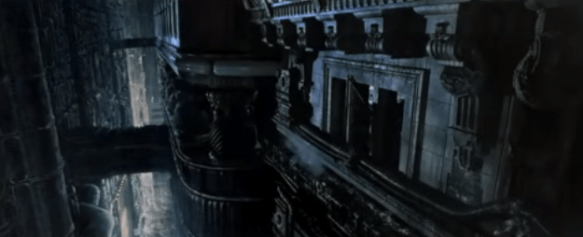
  • Baroque Style – elaborate set*
  • Use of colour (blue and orange ) – in the back of the corridor ?
  • rain dripping sound down wall – close sonic perspective – tension*
  • beautiful cinematography in the finger braking scene (close sonic perspective as well)*
  • Genre shifts – science fiction, horror, Western (gun)*
  • beams of light from behind the window
  • blue tinted lighting
  • neon lights in the background when climbing out of the window*
  • Close up of his hand when pulling himself up – like in Alien*
  • the search light has no narrative logic – they are fighting but nothing happens when they are seen by the search light. Suggesting whoever is in control of the search light doesn’t care about violence.*
  • blue harsh theatre lighting
  • close sonic perspective*
  • neon TDK sign*


New Hollywood Film Form

  • ‘aren’t you the good man?’ – protagonist isn’t good and moral ambiguity of protagonist – directly questioning*
  • ‘that’s the spirit’ response to being attack by Deckard, possibly saying that he has the power of a replicant but Deckard doesn’t know yet?*
  • ‘that hurt’, ‘where are you going?’ and calling Deckard’s actions ‘irrational’ suggests a humanness to Roy and suggests that Deckard is a replicant*
  • non-diegetic sound like bees
  • howling – supernatural like*
  • contrasting aesthetic of the building to the neon world
  • representation of LA – raining*
  • lack of clothing – symbol of natural state and understanding who he is?
  • bell chiming
  • thunder and lightning?
  • fans – industrial feel
  • futuristic non-diegetic sounds*
  • violence – French influence e.g. Roy touches Pris’s wound, braking fingers etc*
  • ‘that’s what it is to be a slave’ – non-diegetic choir like note*
  • Japanese theatre like music – oriental theme, east meets west like the mise en scene throughout the film – cold war*
  • hero saved by an unexpected person*
  • nemesis has a loss, trauma, scene – Roy is a child in an adults body trying to come to terms with mortality and the death of Pris*
  • shift in protagonist – Roy is a more heroic figure*
  • parallel action of Roy and Deckard*
  • Parallel of them both trying to fix their hands (both have damaged hands)  – replicants, same values, life value, just as much good or bad as people*
  • mechanical old sound – adds to the  coldness*
  • dramatic, tense and a lot about narrative*
  • nail in hand – stigmata – religious symbol, sacrificing himself ?, child of God?, a sense of some innocence?. Plus, Roy previously said ‘6,7, go to hell or go to heaven’*
  • symbolic that it is raining
  • Gaff shows up when everyone is dead
  • day time when he looks for Rachel
  • tracking shot of room focusing in on body under the sheet – symbolic of death*
  • mechanical sounds and blueness on TV – coldness
  • robot making poetry
  • narrative flip – hunter becomes the hunted – narrative was centred around Deckard finding and killing replicants*
  • choir singing when he lands – nail in hand – miraculous and religious link
  • hanging off building – narrative device and possibly a metaphor*
  • Roy is in silhouette and low angle shot  – dangerous*
  • Roy picks Deckard up with the nail hand
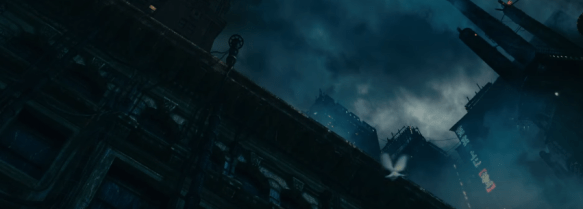
  • dove and nail – inner conflict ? – dove – freedom and peace symbol*
  • action reaction shots – highest tension of the movie – climax of the narrative*
  • living in fear is ‘what it is like to be a slave’*
  • change in tone – more high key lighting, music more major key*
  • slow motion footage – Roy looking down in the rain
  • ‘time to die’ is Roy’s last words – links humans and replicants, significance of life, acceptance of mortality*
  • day time shot of letting the dove go – found freedom/peace in death, symbolic of replicants having souls?*
  • cross fade of Roy and Deckard that acts as an action reaction shot- creates a connection between them (both scared of mortality?) – Roy is dead and Deckard is looking at him – feels united with him?, both replicants, both feel the same way etc*


br dove


Production Context 

  • W.B. Burbank set*
  • inspired by/a reference to metropolis (outside the building)*
  • matte painting – background?*


br metropolis


Themes and Motifs 

  • search light – surveillance*
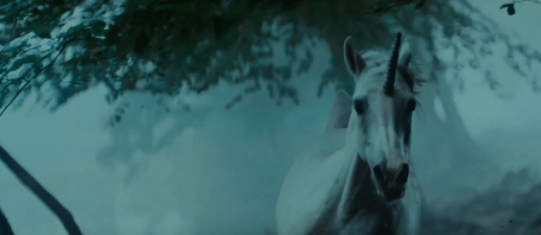
  • unicorn SILVER origami – suggests that Deckard  is a replicant because it implies that Gaff new about the dream that Deckard had previously, suggesting it was an implanted memory. It also shows that Gaff knew Rachel was there, yet spared her. There is a voice over of Gaff in this moment of earlier on when he said ‘too bad she won’t live, but then again who does?’ (ironic) this paired with Deckard’s nod suggesting his awareness of being a replicant gives the idea that being a replicant doesn’t matter, you’re still mortal and feel the same feelings (pr maybe even less) as a human*
  • Japanese theatre like music – oriental theme, east meets west like the mise en scene throughout the film – cold war*
  • environmentalism – fans – energy resource ?*
  • humans underestimating technology ?
  • existentialism and the value of being alive*


Representation 

  • ‘this is for Zora’ and ‘this is for Pris’  – women are avenged be men, men are left to fight. Plus, he doesn’t mention Leon*
  • man cries – good representation*
  • Rachel has been made passive throughout the whole movie*
  • he needs to help Rachel be safe*
  • children – performance is like a game of hide and seek*
  • Roy is a child in an adults body trying to come to terms with mortality and the death of Pris*
  • children – Roy’s nursery rhyme esque speech – ‘6,7, go to hell or go to heaven’*
  • replicants are represented as/are the representation of children, ‘that hurt’ – raw emotion, highly refined sense of right and wrong*
  • she loves him and trust him but why? – fugitive on the run and he owes her so she trusts him?*


Political Context 

  • Japanese theatre like music – oriental theme, east meets west like the mise en scene throughout the film – cold war*


More 

  • Speech that Howard wrote – machine which accepts its mortality*
  • co-operations in charge, no government?*
  • maths doesn’t add up of the number of replicants (said near the beginning of the film) unless Deckard is one of them?

Blade Runner Middle Notes – Re-written

Key

*indicates most important notes


Auteur Signature Film Form 

  • neon colours outside of his window*
  • Genre shifts – science fiction, film noir*
  • Strong directional low key lighting


New Hollywood Film Form 

  • non-diegetic choir singing*
  • unicorn – high key lighting*
  • close up of pictures – he thinks it is his family etc.*
  • minimal and wooden performance – replicant? wooden performance relates back to the replicant at the beginning*
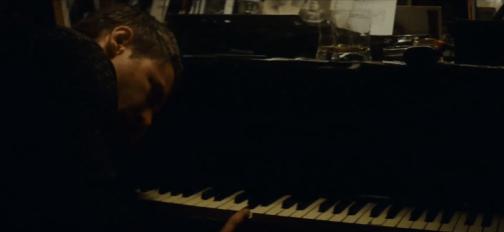
  • piano – evokes memory in himself*
  • gun and whisky – noirish character*
  • unicorn is fantastical yet it’s the only “real” animal in the film*
  • only real nature (trees) in the film*
  • morally ambiguous/compromised*
  • cross fade – like a flashback*
  • picture is labelled
  • the news paper on the TV type thing when he is searching is written in ideograms


br unicorn


Production Context 

  • unicorn scene – another movie – legend test shot*


Themes and motifs 

  • theme of surveillance – search light*
  • piano*
  • character haunted by memories*
  • unicorn motif*
  • technological advancement and high tec  – fear of it*
  • existentialism theme*


br piano


Representation 

  • apartment is decorated with Eastern looking furniture and ornaments (e.g. Buddah head and bonzi tree)*
  • women represented as exotic (?)


Political Context 

  • mise en scene – mix of cultures  – passed Cold War*

Blade Runner Opening Notes – Re-written

Key 

* indicates what is most important


Auteur Signature Film Form

  • long establishing shot
  • film noir style – dull,cold and detective in his office vibe *
  • German expressionism *
  • arc (?) lights and strong shadows
  • low key lighting
  • shifts in genre – science fiction/film noir *
  • neon colours
  • ECU pf the eye with flame going around the side – as we don’t know who it is, it could just be in the movie because it looks nice which Scott really cares about. It could be about question of identity as well.It doesn’t add to the narrative *


br eye


New Hollywood Film Form

  • composite images and lens flare
  • text exposition*
  • non-diegetic heart beating sound (during/start of turtle story)*
  • machine beeping
  • low key lighting – LA – cold
  • slow paced shots – low cutting rate
  • no explanation of why LA is like that*
  • no explanation of how Tyrel corp is so powerful
  • Pyramids – power symbol*
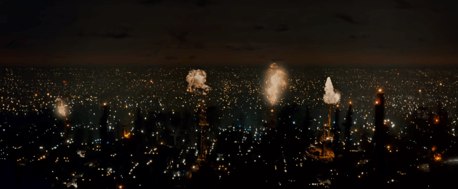
  • fire coming out of stacks*
  • flying cars – metropolis*
  • mundane grey office – parody of modern day office that contrasts to outside. Isolated from everyone else
  • light coming into the office but it is dark outside
  • action reaction shot (CU and MS) of talking*
  • heart beeping*
  • double speak


br vk


Production Context 

  • forced perspective – miniatures of the city made with LED lights (computer moved the camera?)*
  • Voight – Rompf machine made to look like it was breathing – links to the replicants*
  • low key lighting and fog to hide the set*
  • Budget change*
  • Song made for the film


br fp


Themes and motifs 

  • themes – neo-liberalism, fear of technology, fear of something new, fossil fuels are used in the world which is dirty (environmental fears)*


Representation 

  • no children – fear of AI/replicants taking the place of children and/or the replicants are the children/represent children*
  • the officer is a man
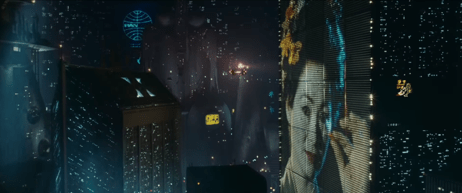
  • woman on the advertisement – only woman we have seen so far and advertising is dominating the world in general*
  • asian influence*


br ad


Political Context 

  • Asian influence*
  • Resemblance of Tyrel building to cathedral of light (Nazi’s) – looks similar and the light at the top – power that it represents as well*
  • cold war*
  • fear of technology – nuclear bomb and cold war*
  • in the 80’s technical advancements were mainstream*
  • Tyrel’s power – capitalism*
  • reliance on fossil fuels – no wind farms, fire*
  • neo-liberalism*

Pan’s Labyrinth Paragraphs


Meaning making and mise en scene in ‘Pan’s Labyrinth’

One example of how mise en scene creates meaning in ‘Pan’s Labyrinth’ directed by del Toro is the horrific and gruesome images around the paleman’s room. Not only does these images aesthetically encourage a gross and scared feeling in the audience, but they contextually link to Goya’s painting of Saturn eating his son, which links to how the film sometimes references world war 2. This is because Nazi’s often targeted children, as they believed this was cutting Judaism off at the source which some audience members might link to the context of Goya’s painting, as he ate his son at the fear of them growing up and overpowering him. This would make sense as it’s not the only world war two reference in the scene. The mise en scene of the pile of shoes can be interpreted as being a reference to the holocaust and the piles of clothes, as well as being symbolic of the incorrect princesses and evoking tension in the audience as it shows that Ofelia is in danger. Another way that mise en scene evokes the feeling of tension in the audience during the paleman scene is the red food. This is because red has the connotation of violence and anger. This is an example of del Toro’s common aesthetic choices, as he tends to use colour to create meaning in his films such as in ‘The Devils Backbone’, which he describes as the sister film to Pan’s Labyrinth, partly because they both explore the theme of how wat effects children. The sense of danger in the scene that is brought about through mise en scene such as the red food links to the representation of children, as Ofelia continues and completes the task despite it being scary, therefore representing children as strong and able to do difficult things.


Representation of Gender in ‘Pan’s Labyrinth’

At the beginning of del Toro’s ‘Pan’s Labyrinth’, the representation of women is that they need help from men. For example, Carmen, Ofelia’s mum, gets help from all males when she has pregnancy pains and problems. Plus, they are also shown as submissive through Carmen, as she sits in the wheelchair as it’s what Vidal, a male, wants her to do. This negative representation of women was built up to be brought down later in the film with characters like Ofelia and Mercedes. For example, Ofelia’s performance in the pale man sequence. The mise en scene of the blade that she finds, and the non-diegetic fantasy sharp sound that comes with it, aesthetically emphasises the danger of the situation to the audience. Other things that aesthetically bring tension and fear to the scene and audience are mise en scene like the red food, as red has connotations of danger and violence. Plus, the horrific images around the room which contextually link to Goya’s painting of Saturn eating his son. Ofelia, a girl, manages to survive this scary situation as well as not using violence, such as the dagger that she finds. This is a positive representation of women as they are shown as non-violent as well as brave and strong in a scary and tense scene that was also made tense with the action reaction shots of Ofelia and the paleman and the parallel action of Ofelia and the timer, creating time pressure and tension in the audience.


Meaning making and cinematography in ‘Pan’s Labyrinth’

The cinematography in the opening of Pan’s Labyrinth creates meaning in many different ways. For example, the blue low-key lighting at the very beginning when Ofelia is shown dying in reverse has connotations of coldness and sadness. It’s also dramatic irony as we know as an audience that Ofelia is going to die. This links to the theme of how war effects children, specifically the Spanish civil war as the film was set shortly after it, as Ofelia is shot by Vidal which we learn later who is a fascist. This links to del Toro’ aesthetics, as he often uses colour in his work to make meaning and explores how war effects children, such as in his “sister film” to Pan’s Labyrinth ‘The Devils Backbone’. The blue low-key lighting’s aesthetically negatively feel is emphasised to the audience when contrasted against the high key slightly yellow lighting once we are above ground. The opening also includes close ups of the stairs that the princess climbs up, this links to the production context and how del Toro took inspiration from the initiation wells when designing this piece of mise en scene. After the fairy-tale voice over that links to these close ups, we get a close up of Ofelia’s fairy-tale book with the silhouette of a girl, suggesting to the audience that Ofelia is the lost princess.


Social/political contexts in ‘Pan’s Labyrinth’

Pan’s Labyrinth directed by del Toro is a film set after the Spanish Civil War, which lasted from 1936 to 1939. Because the film is set shortly after the Spanish civil war, there are many explorations of politics and the war throughout the film. Such as, the symbolism of left- and right-wing politics throughout the film. Captain Vidal, a fascist, shown by the fascist symbol on the cars, favours his right hand symbolising right-wing politics. For example, his performance of shaking with his right hand, and telling Ofelia she should too. Too contrast, Ofelia favours the left symbolising left wing politics. Not only does she shake with her left hand, but during the paleman sequence, the mise en scene of the book she is given by the faun, shows her that she should open the middle lock, this is shown by an image of her left hand covering the middle lock. However, Ofelia ignores this and the fairy’s advice and opens the left lock which is the correct one and allows her to complete the second task. Not only does this add to the theme of disobedience but it also links to the representation of children as it’s showing hope in the future generation and hope that the children will grow up and fix the political problems. This links to how the effects of the Spanish Civil War lasted after it ended in 1969, it didn’t just all stop suddenly. This is explored in the film, as del Toro explores the theme of how war effects children which is a common theme that he explores, often through use of colour. He also does this in what he describes as the sister film to Pan’s Labyrinth, ‘The Devils Backbone’.


Aesthetic effects in ‘Pan’s Labyrinth’

Colour is a technique that del Toro often uses in his movies to get across meaning aesthetically, it is an example of one of his auteur signatures. During the ending of Pan’s Labyrinth, the blue and low-key lighting when Ofelia dies has the connotations of coldness and sadness, aesthetically emphasising the cruelty of Vidal and the Spanish Civil War which the film was set shortly after to the audience, as well as aesthetically evoking sadness. This contrasts to the yellow and high key lighting in the fantasy world after she dies, which aesthetically has happy connotations that makes the audience feel as though she is safe and away from the effects of the war now, and the people involved. This is a common theme that del Toro explores in his movies (how war effects children), he also explored this theme in what he calls the “sister film” to Pan’s Labyrinth, ‘The Devils Backbone’. During the endings sequence, there are many references to other movies. Such as, the mise en scene and close up on Ofelia’s red shoes. Not only is red associated with the fantasy world throughout the movie, but it contextually links to ‘The Wizard of Oz’, and how tapping the shoes takes Dorothy home.  The performance of Ofelia tapping the shows aesthetically makes the audience feel like she is now at how and where she should be. The positive connotations of the cinematography such as the high key lighting also get across this feeling/idea.