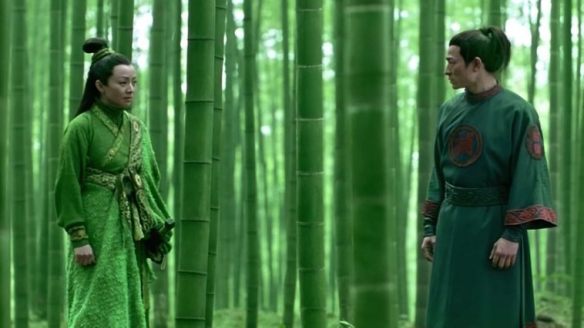
ISP 9


I used this video: https://www.youtube.com/watch?v=cfNKtxGMHig


  • Digital is cheaper in the end process but more expensive to buy in the first place
  • Film looks better in terms of colour etc
  • Film has a higher dynamic range, film is better at capturing details in whites and blacks and can’t be replicated with digital cameras. Also film can capture subtle details lost in digital photography
  • Digital cameras are generally lighter weight than film cameras.
  • Digital looks more high definition but this can make it appear unrealistic whereas film has the opposite effect
  • Several recent films have financially proven that movies shot on film still have a place in today’s society and film industry


Theories

Kim Longinotto
Longinotto has said ‘I don’t think of films as documents or records of things. I try to make them as like the experience of watching a fiction film
as possible, though, of course, nothing is ever set up.’ Her work is about finding characters that the audience will identify with – ‘you can make
this jump into someone else’s experience’. Unlike Moore and Broomfield, Longinotto is invisible, with very little use of voice-over, formal
interviews, captions or incidental music. As the ‘eyes’ of her audience, she doesn’t like to zoom or pan. She says she doesn’t want her films to
have conclusions but to raise questions.

Michael Moore
Moore, like Broomfield, is a very visible presence in his documentaries, which can thus be described as participatory and performative. His
work is highly committed – overtly polemical in taking up a clear point of view, what might be called agit-prop documentary. He justifies his
practice in terms of providing ‘balance’ for mainstream media that, in his view, provides false information. Part of Moore’s approach is to use
humour, sometimes to lampoon the subject of his work and sometimes to recognise that documentaries need to entertain and hold an
audience.

House of Flying Daggers – Opening Notes


Cinematography: 

  • Mid-shot/long-shot of her standing in-front of Jin, then after a reaction, a close-up of Mei
  • She’s framed in the centre, giving her more of a presence than the other girls
  • high key lighting, low contrast
  • Crane shot – tug of war
  • Zoomed in to wide – tracking shot of women entering. Also happens later with Mei
  • central framing


Mise en Scene:

  • text to set up the plot and the historical context
  • Green and red outfits
  • Peony Pavilion: colourful, stylised, elaborate
  • Colourful outfits (Peony Pavilion)
  • Blue dress – blue can be seen as a military colour BUT it’s more to do with feelings than a symbolic meaning
  • Specially made flooring
  • During the opening titles – red art on a white background – foreshadowing the ending with the blood on the snow
  • military/police base has dull colours/lack of colour especially when compared to the Peony Pavillion
  • Saturated colours
  • Bits of blue on the carpet – butterflies – and Mei’s dress is blue (high angle shot)
  • Red lipstick and paint separates her from the other women (and she said she was unlike them) and a possible link to the red associated with the soldiers/police


Editing:

  • Long take of her dancing (then it starts cutting – still her dancing)
  • Slow motion of her robe falling down after Jin cuts it
  • Cross fade of red lines to…….
  • Action reaction shots – conversation


Performance:

  • Mei is walking cautiously – deceiving us that she is blind
  • Jin is drunk
  • Leo is polishing his sword and sitting upright, contrasting to Jin who is slouched and drinking (but they are of equal rank)
  • Picking up swords compared to the women and instruments (similar/same shot) – representation of men and women
  • Repetition of men picking up the swords and the repetition of the women carrying the instruments.
  • Although everyone is lying – Leo true emotions are technically revealed as he feels jealous due to be in love with her
  • ‘Why can’t a blind girl work here?’ – Mei stands up for herself which Jin likes


Sound:

  • Opens with classical Chinese orchestra
  • Song lyrics that Mei sings
  • Distant sounds of laughter
  • Magical treatment to the sound one instrument echoes but not the rest – highly stylised sound scape
  • diegetic music
  • talking sets up the deception
  • “A second glance leaves the whole nation in ruins”


Messages/Meanings/Response:

  • Aesthetics: set (auteur), colour, elaborateness
  • Aesthetics: dedicates 3-4 minutes to a dance sequence


Representation – Gender:

  • women laughing as they lose tug of war against a single man (Jin)
  • He undresses Mei with his sword
  • Women all try and tear Jin away form hurting Mei
  • She’s arrested for being indecently dresses, but it’s not her fault – plan to arrest her then to ‘save’ her??
  • women are giggling, frivolous, named after flowers
  • women scared of the men
  • women falling over Jin


Contexts:

  • Tang Dynasty – Peony Pavilion  may seem over the top and stylised, but it has an element of truth. Correct representation.
  • Actress is in Crouching Tiger Hidden Dragon

House of Flying Daggers – Performance


Explore how either performance or mise-en-scène creates meaning


In the opening of ‘House of Flying Daggers’ the performance of Jin and Leo is essential to understand them as characters. For example, when we first see them through a mid-shot, they are discussing how there is a secret member of the ‘House of Flying Daggers’ at the Pionee Pavilion which they must do something about.  Leo is sitting up straight with good posture and polishing his sword. This suggests that he takes the situation seriously and that as a character he is professional. On the other hand, Jin is slouched in his chair and drinking which suggests unprofessionalism. This is ironic, as it’s actually Leo who is on the House of Flying Daggers side, not Jin, but he seems more focused in terms of finding the secret member. It’s interesting than Zhang managed to create a political film like this that was allowed by the government as China normally censored him; he was able to explore the political and social context that he wanted by setting the film in the distant past. This representation of men is that they have important jobs in a sort of army that women aren’t shown to be a part of. Jin is representing men as not very serious as he drinks on the job and is slouching (through his performance). This continues in the next scene. He is casually sitting on the floor, and in terms of proxemics he his very close to several women and after Mei does her dance he strips her down using his sword, and then later attempts to rape her. This representation of men is that they gross. His performance shows his drunkness, which could be a front as we know that he actually has a plan to get Mei to a place where he can ‘rescue’ her.

The women’s performances are also interesting. We originally see a group of women struggling to beat Jin in a tug of war fight while giggling seemingly over nothing very loudly, before falling over. This initial representation possibly suggests nievity and weakness. However, Mei changes this. She isn’t afraid to stand up for herself, ‘Why can’t a blind girl work here?’ which impresses Jin. Place, during her echo dance and her regular dance she dances in a controlled and impressive way creating a positive representation of women, and directly contrasting her to Jin. This links to how House of Flying Daggers is a pretty accurate representation of gender for the time period. The proxemics of her always being in the center/her always being framed in the center such as in the long shot of her standing before Jin allows the audience to view her as the protagonist. While she is dancing she uses her dress which the audience can see is beautiful. It links in with the mise en scene of the Pionee Pavillion which although seeming stylized is based in a reality as the Tang Dynasty period was full of peace, literature, and poetry. Bordellos of the time were places of beauty and artistic expression, just like the one depicted in the film. Her performance highlighting the dress and her surroundings when she is dancing, therefore, empathises to the audience the contextual side to the movie.

House of Flying Daggers Opening Paragraphs

Note: these are not my opening notes

One way that film form is used to create meaning is to highlight the protagonist to us. For example, the use of framing. Mei is always centralised which signifies her as important to the audience. The mise en scene is also used to set up the film. The mise en scene of the opening text sets up the plot of the movie to the reader as well as setting up the historical context of the film in a simple way. The difference in the performance of Jin and Leo highlights to us the differences in them as characters. Jin is slouched and drinking. He, therefore, comes across as more casual than Leo who is sat upright with good posture and polishing his sword making him seem more professional and formal.  The film form elements also create meaning relating to other core study areas –

Women are represented in two different ways. The initial performance of the group of women giggling while playing tug of war with Kin, and being unable to win despite severely outnumbering him is portraying women as weaker than men. However, Mei is independent and talented. She stands up for herself, ‘Why can’t a blind girl work here?’ which Kin likes as well as performing in the echo game perfectly. Men are shown as creeps through Jin. He drunkenly watches pretty women while they have there arms draped over him. He unties Mei’s clothes without permission and with a sword in which the slow-motion of her clothes falling emphasizes the moment and what he has done. He also attempts to rape her. At the end of the day, they both get arrested but Mei gets arrested for being indecently dressed which wasn’t even her fault but his, showing the unfairness in terms of treatment of these people because of their gender.

Zhang is known for his elaborate sets that can be described as Baroque. They tend to be detailed, colourful, rich and indulgent. The mise en scene of the brothel is no different, but although it seems stylized it does come for a place of reality. It has detailed floors and colours everywhere as well as the set itself being very large. This links in with the aesthetics, it seems luxurious and stylised and is part of Zhang’s recognisable auteurship.

“The Tang dynasty is often considered a “golden age” of Chinese civilization during which all areas of culture and civilization flourished – literature and poetry (famous poets Li Bai and Du Fu are from Tang period), painting, commerce, as well as science and innovation. Bordellos of the time were places of beauty and artistic expression, just as the one depicted in the film. The headmistresses of bordellos had wealth and power. Courtesans were intelligent, artful singers and poets who entertained guests with their skills and conversation.” Although the brothel can be considered over the top and stylised, it does have an element of truth. Bordellos of the time were places of beauty and artistic expression, just like the one depicted in the film. Therefore, the detailed walls, pillars, flooring, outfits and just everything all has an element of truth as well as linking to Zhang’s auteur style.

House of Flying Daggers Questions

  1. How might you describe Zhang Yimou’s visual style or aesthetic?

“But as with past Zhang Yimou efforts, the true stars are the sets, costumes, and scenery, a breathtaking banquet of colors and textures filmed with rapturous affection by cinematographer Xiaoding Zhao.”

Beautiful and magnificent mise en scene, often with great magnitude through the use of the outdoors.

““These man-made marvels can hardly compete, however, with the landscape through which Mei and Jin make their long escape. The autumn foliage of the woods bursts with colors so vivid they could shame American trees into staying green all year long; the bamboo grove where Mei and Jin are ambushed (shot on location, not in a studio) is an otherwordly setting, a shaded yet open arena punctuated by bare tree poles.””

  1. What is significant about Zhang as a Chinese filmmaker, the themes of House of Flying Daggers and its production context (contemporary Chinese Film Industry)

He avoided censorship by exploring themes and political ideologies in a time and place set in the past. This allowed him to explore what he wanted to explore, while still having the film shown.

Rebels stand in for the communists? But it’s not hammered in.

  1. What common criticisms are there of the film? What are seen as it’s strengths?

“It nonetheless soars as an action adventure… the movie blurs the line between dance and combat. It’s a correlation made explicit early in the film. After performing a slow, traditional dance for Jin at the Peony Pavilion, Mei is challenged by Leo to play the “echo game.” Upright drums are assembled in a circle around the blind girl; when Leo flicks a bean off one of them (then two, then dozens), Mei follows his lead with the long, weighted sleeves of her dress, spinning, kicking, and leaping with acrobatic zeal. (It undoubtedly helps that star Zhang Ziyi trained as a dancer before entering film.) At the end of her performance, the shift from art to violence is completed when Mei sends out one sinuous sleeve to unsheathe Leo’s sword and attack him with.”

“As in Hero, Zhang Yimou finds a balance between computer-generated effect and live-action stunt that continues to elude most Hollywood filmmakers. The soldiers’ javelins and rebels’ boomerang-like daggers may be digitized, but the combatants themselves are not. Even Mei’s remarkable sleeve-wielded sword is made possible with wires rather than pixels. As a result, no matter how delightfully cartoonish the action may at times become, it never looks like a cartoon.”

“I enjoyed “House of Flying Daggers” a lot, but I think “Hero” is a far superior film in many respects. First, the visual style: Cinematographer Zhang Xiaoding worked masterfully on “House of Flying Daggers,” and the end result is impressive. However, it was Christopher Doyle who worked on “Hero,” and his precision and attention to details are difficult to surpass. Each scene in “Hero” supports the plot and the philosophy underlying those scenes. Second, “House of Flying Daggers” does not carry the deep historical commentary that I discussed in the review of “Hero”. As I stated previously, it is primarily a love story using history as a backdrop. Nevertheless, “House of Flying Daggers” is a highly enjoyable film and a real visual artwork of cinema.”

Significant amount of melodrama. For a Western audience it may appear bombastic in its form.

  1. How are men and women represented in the film?

““Although they were renowned for their polite behavior, the courtesans were known to dominate conversation with elite men. The ladies were not afraid to openly castigate or criticize prominent male guests who talked too much or too loudly, boasted too much of their accomplishments, or whose rude behavior had in some way ruined dinner for everyone (on one occasion a courtesan even beat up a drunken man who had insulted her). (…) Men enjoyed the presence of assertive, active women” source Wikipedia …This validates “House of Flying Daggers” as an accurate historic re-imagination of the attitudes of the time.”

Men are shown as superior at the beginning of the film, which links into context of the time e.g. men being in the army not women. ??

  1. love triangle … wuxia genre set in a specific political/historical context. What is peculiar about how this plot and setting is explored in the film?

“history is only a setting for “House of Flying Daggers”. Though it is a Tang period inspired love story where: “individuals often share the plot designs of quick passion, inescapable societal pressure leading to the abandonment of romance, followed by a period of melancholy.” (Source: Wikipedia) In other words, lovers had to face the choice between passion and duty, which created even more tension. “

Set in the past is not unusual.

Love triangle may be weird in a film like this, and love triangles are cliche?

  1. How accurate are the depictions of life in the Tang Dynasty? Why might we question the authenticity of these representations? Provide examples and evaluate.

“The Tang dynasty is often considered a “golden age” of Chinese civilization during which all areas of culture and civilization flourished – literature and poetry (famous poets Li Bai and Du Fu are from Tang period), painting, commerce, as well as science and innovation. Bordellos of the time were places of beauty and artistic expression, just as the one depicted in the film. The head mistresses of bordellos had wealth and power. Courtesans were intelligent, artful singers and poets who entertained guests with their skills and conversation.” Although the brothel can be considered over the top and stylised, it does have an element of truth. The Tang Dynasty period was full of peace, literature and poetry. Bordellos of the time were places of beauty and artistic expression, just like the one depicted in the film.

  1. Why might the depiction of a heroic rebellion against the Tang Dynasty be a surprising production from one of China’s largest film producers?

He avoided censorship by exploring political and social ideologies in a different context, by setting the film in the past.

  1. How might domestic, East Asian and audiences from around the world respond differently to ‘House of Flying Daggers’?

‘Hero’ is also used in the comparison, but it was not widely shown. Some people believed Hero was  better in terms of exploring historical context. The director has said that Hero was the experiment and House of Flying Daggers was the real thing.

Western audiences used to a different style.

Actress from Crouching Tiger Hidden Dragon which did very will in the box office and every where.

Focus Film Factsheet Notes – House of Flying Daggers

Click to access house-of-flying-daggers.pdf

Rationale for study

House of Flying Daggers is a Chinese wuxia/martial
arts film, featuring the genre elements of spectacular
fighting, breath-taking acrobatics and exotic fantasy.
It combines these with a tragic triangular love story
and a narrative where nothing is as it first appears.

Cinematography
• Film as spectacle, the “look” of the film is of
paramount importance. Cinematographer Zhao
Xiaoding’s use of the wide screen to dramatic
effect. The plot twists and turns but, like those of
most operas, plot points are the devices that take
the spectator from one gorgeous scene to another.
• Exotic interior of the Peony Pavilion: high
key lighting, sumptuous colour. Whip pans
follow the beans as they hit the drums, high
angle shots show the pattern of Mei’s dance.
• Bamboo forest, green filter, high angle shots of
swaying bamboo, soldiers. Sweeping, whirling,
fast tracking movements follow the daggers.

Mise-en-Scène
• Emphasis on production values, visually
beautiful settings and costumes, elaborate film
set create the fantasy. Peony Pavilion rich,
exotic ancient China. Beautiful, extravagant
Tang Dynasty costumes, authentic detail of
interiors props, musical instruments. Costumes
by Emi Wada, a Japanese designer who has
worked for director Akira Kurosawa.
• Landscapes bamboo forests, birch forests,
meadows and fields with mountain ranges
in the background. Green forests, red and
gold autumn leaves in the meadows, white
snow provide the setting for the emotion
and the imagination of the film.
• Dramatic effect through visual imagery,
colour and composition. Highly stylised
choreography of fight scenes.

Editing
• Mei’s dance intercuts long shot of her
performing in the circle with a closer shot of
the drummers outside the circle. Movement
of beans towards drums, close up of faces.
• Use of CGI to follow swift trajectory of daggers.
• In the bamboo forest cuts between
vertical and horizontal above ground
swaying soldiers, ground level traps.

Sound
• Mei at the beginning is portrayed as
blind; sounds serve as a clue to her
understanding. Peony Pavilion echo game
sounds used to emphasise her reliance on
them. Tension, excitement, chattering of
women, drumming, slapping, silence.
• Action scenes, action emphasised by sounds
of bamboo fronds, counterpoint of flying
daggers, whoosh of bamboo spears, clash
of bamboo poles. Also sounds of flying
bamboos, falling leaves, sound of sword
cutting the air – Mei’s perception of the fight

  • Music by Shigeni Umebayashi mostly low
    register: cello, drums. Women’s voices
    used towards conclusion of action scenes,
    action not signalled by music which acts
    as a commentary at the conclusion.


Representations
• In Peking Opera all roles originally played
by men. Strong female characters central
to the tradition of wuxia. They fight with
swords and take part in combat. In the
Flying Daggers the leaders are now women.
Mei demonstrates female sexual power.
• Representation of China. Zhang Yimou
has called cinema “an excellent channel for
promoting China’s culture” with “cultural and
historical information” for Western audiences.
However he has been accused of “selling Oriental
exoticism” and received criticism that his
version of China “feeds his Western audience’s
image of exotic, primitive, timeless China”.
• Male and female passion is subject to
tradition and duty. Male characters are “Just
pawns on the chessboard”. The concluding
fight to the death between Leo and Jin
is about honour as well as jealousy.

Aesthetics (i.e. the ‘look and feel’
of the film including visual style,
influences, auteur, motifs)
• Mandarin title of the film translates as
‘Ambushed from Ten Directions’. Motif of
multiple deceptions, false identities, nothing
is as it first appears: Leo appears to be an
imperial soldier but is really a mole, the
former lover of Mei; Mei a rebel pretending
to be a courtesan, pretending to be blind; Nia
appears to be the madam of the Peony Pavilion,
then the leader of the Flying Daggers, then
only pretending to be the leader; Jin is an
Imperial soldier who pretends to be a rebel.
• Wuxia pian: Wu=martial + xia = chivalrous.
Origins of the Wuxia pian genre are to be found
in North Chinese Mandarin culture after the
9th century. Rival warlords ruled China and
unattached swordsmen could be hired as killers,
heroes who followed codes of honour and
chivalry defending the helpless against corrupt
leaders and officials. Swords, magic, fantasy and
the supernatural are central to wuxia mythology.
Today this is a highly popular fiction in Mainland
China, Taiwan, Hong Kong and Singapore.
• The director, Zhang Yimou is a household name
in China, responsible not only for films but for
the opening ceremony of the Beijing Olympics
of 2008, also for huge open air spectacles such as
the Impression Lie Sanji Show held on the banks
of the Li River featuring more than 600 amateur
performers. A graduate of the Beijing Film
Academy, one of the so called ‘5th generation
filmmakers’ he began as a cinematographer
and moved on to directing films about Chinese
life, particularly that of women. House of
Flying Daggers is his second action film.

POINTS – Contexts
Social
• China the most populated country of over 1.381
billion, and the world’s second largest state.
Historical
• During the Cultural Revolution (1966-1978)
the Beijing Film Academy closed, hardly any
films were made. The Academy reopened in
1978. For 10 years the teachers there had not
had any students. They did want to resume
teaching in the old way, which, against the
new styles emerging from Hong Kong and
elsewhere now appeared old fashioned. Like their
counterparts in other cinemas they wanted to
experiment. In 1982 the first academy students
since the reopening graduated. These were the
so-called “5th Generation” and included Chen
Kaige and Zhang Yimou. The 5th generation
had been through the hardships and upheavals
of the Cultural Revolution. Their reaction
was to make “exploratory films” that would
examine issues so far unexplored in Chinese
cinema. The Fifth Generation became the
first Chinese film-makers to achieve fame and
become widely known outside China. China
was the subject of their films, although very
different view of China than the socialist
realism of Mao before the Cultural Revolution.
Political
• After the Cultural Revolution foreign films were
imported to supply cinemas. Discussions were
held concerning artistic freedom. Zhang’s earlier
films were often criticised by the government
for their treatment of the realities of social
life in China. Since then he has enjoyed huge
3
A Level Film Studies – Focus Film Factsheet
success with his wuxia films, example of global
or transnational cinema’s demand for ethnic
cultural elements and lustrous visuals. “Exotic”
and “arty” China, popular with audiences.
Technological
• Use of CGI and digital effects and wire
work enhance acrobatics and fantasy.
Institutional
• Half the world’s films are produced on the
continent of Asia. India, Japan, Thailand, South
Korea and the 3 Chinese cinemas of Mainland
China, Hong Kong and Taiwan all have large
film industries. Success of Chinese global film
making. The “home” audience for these films
is potentially huge; cinema-goers in the region
spend millions per year on cinema tickets.
The industry has invested in digital cinema
and the revival of Chinese language films.

House of Flying Daggers – Article 3 – Variety

flyingdaggers1_758_427_81_sI used this website: https://variety.com/2004/film/awards/house-of-flying-daggers-2-1200533324/

“Two police captains, Leo (Hong Kong superstar Andy Lau) and Jin (Japanese-Taiwanese hunk Takeshi Kaneshiro), have been assigned to pry out the leader of the Flying Daggers, the most prominent of the anti-government rebel groups. Acting on a tip, Jin goes undercover to Peony Pavilion, a house of pleasure where a suspect is meant to be working.”

“This is classic martial arts stuff, as protagonists size up each other at an early stage, but Zhang stages the confrontation in a much more aestheticized way — through music, dance, color and design — than is usual. Though Mei proves his match even when he tries a final trick with the beans, Leo bests her in a subsequent encounter, through sensory overload.”

“Zhang has described the picture as “not an ordinary martial arts film, but a love story inserted into an action movie.” (In Japan, the film is to released under the English title “Lovers.”) That will broaden its appeal to distaff audiences, especially given Lau and Kaneshiro’s large following in Asia. But for a director who’s shown he’s more than capable of tugging the heartstrings (“The Road Home,” “Not One Less,” “Happy Times”) “Daggers” never really engages at an emotional level.”

“Like “Hero,” the pic has a basic hardness and rigor that marks it as northern rather than southern Chinese in flavor, however much the colorful lensing by Zhao Xiaoding (“Spring Subway,” plus an assistant d.p. to Christopher Doyle on “Hero”) and the lyrical score by onetime Japanese rock musician Shigeru Umebayashi (“In the Mood for Love”) tries to convince otherwise. Dialogue between the characters is also functional rather than inspired.”

“The action set pieces really are the core of “Daggers,” and these hit the mark with eye-popping accuracy and sonic elan. From Mei’s musical gymnastics in the Echo Game, to a balletic bamboo-forest fight that tops that in “Crouching Tiger” and equals the classic sequence in King Hu’s “A Touch of Zen,” to the heroes’ final mano a mano in the snow, Hong Kong action maestro (Tony) Ching Siu-tung pushes the envelope in the combination of wire-fu and CGI, to much more gutsy and realistic effect than in “Hero.””

“In a first for a swordplay movie, a sizable chunk of the pic was shot in a pine forest near Lviv, in Ukraine, whose soft pastels and New England-like fall colors contrast memorably with the green-suffused tones of the bamboo forest, lensed in Yongchuan, southwest China. Studio interiors, in Beijing, are smaller in scale than in “Hero,” with only one standout, the ornately colored, circular Peony Pavilion set. Other credits are top drawer, especially costumes by Emi Wada (another “Hero” returnee), whose use of fabrics and leather has an almost tactile flavor.”

“For the record, the Chinese title literally means “Ambushes From Ten Sides,” title of a classic pipa virtuoso solo, which describes a battle between two ancient warlords. Here, it reflects the continual skirmishing through which the two lovers travel — an action journey that’s the real heart of the movie.”


The Asian Cinema Blog – House of Flying Daggers

hofd2


I used this website: https://theasiancinemablog.com/cinema-of-china/house-of-flying-daggers-movie-review/

“With “House of Flying Daggers” Zhang Yimou brings the Tang dynasty to the wide screen with iconic beauty and elegant wuxia. It is a true fairy tale of love and martial arts in Ancient China. This film was highly acclaimed by critics”


“The “Echo Dance” scene is probably one of the most beautiful dance and wuxia mixtures put on screen.”


“The Tang dynasty is often considered a “golden age” of Chinese civilization during which all areas of culture and civilization flourished – literature and poetry (famous poets Li Bai and Du Fu are from Tang period), painting, commerce, as well as science and innovation. Bordellos of the time were places of beauty and artistic expression, just as the one depicted in the film. The head mistresses of bordellos had wealth and power. Courtesans were intelligent, artful singers and poets who entertained guests with their skills and conversation.”


““Although they were renowned for their polite behavior, the courtesans were known to dominate conversation with elite men. The ladies were not afraid to openly castigate or criticize prominent male guests who talked too much or too loudly, boasted too much of their accomplishments, or whose rude behavior had in some way ruined dinner for everyone (on one occasion a courtesan even beat up a drunken man who had insulted her). (…) Men enjoyed the presence of assertive, active women” source Wikipedia …This validates “House of Flying Daggers” as an accurate historic re-imagination of the attitudes of the time.”


“The fact that there is unrest against the government of that time is also historically accurate. There are several factors showing the growing tension and distance between rich and poor. First, after the An Shi Rebellion (See more about it here: Wikipedia), central government lost a lot of its power to military governors. These governors had the right to collect taxes from the people. Second, in those times the “equal-field system” was abandoned, which then allowed people to freely sell and buy land. This system used to give a lot of support to farmers, but after it was abandoned, many poor fell into debt. Third, just a year before the events of this film, there was an enormous flood in the Grand Canal in 858 AD where lot of people drowned, resulting in disastrous effects on the economy. (Source: Wikipedia) Here we can apply Marxist class struggle theory and say that the rebellion was a product of tension created by the increasing suppression of the poor by the rich. The portrayed events would have been even more turbulent because of the natural calamity the year before. These were exactly the conditions when a rebel band that steals from the rich and gives to the poor could achieve great support from common people as mentioned in the beginning of the film.”

“”Having said that, history is only a setting for “House of Flying Daggers”. Though it is a Tang period inspired love story where: “individuals often share the plot designs of quick passion, inescapable societal pressure leading to the abandonment of romance, followed by a period of melancholy.” (Source: Wikipedia) In other words, lovers had to face the choice between passion and duty, which created even more tension. “

“Many reviewers compare “House of Flying Daggers” to the director’s previous work, “Hero”. While the visual effects and martial arts styles do have similarity, they are still very distinctive films. I enjoyed “House of Flying Daggers” a lot, but I think “Hero” is a far superior film in many respects. First, the visual style: Cinematographer Zhang Xiaoding worked masterfully on “House of Flying Daggers,” and the end result is impressive. However, it was Christopher Doyle who worked on “Hero,” and his precision and attention to details are difficult to surpass. Each scene in “Hero” supports the plot and the philosophy underlying those scenes. Second, “House of Flying Daggers” does not carry the deep historical commentary that I discussed in the review of “Hero”. As I stated previously, it is primarily a love story using history as a backdrop. Nevertheless, “House of Flying Daggers” is a highly enjoyable film and a real visual artwork of cinema.”

The New Republic Article – House of Flying Daggers

hofd

I used this website: https://newrepublic.com/article/70443/redemption-film

“Hero ended by applauding individuals’ willingness to give up everything–their ideals, their country, their lives–for the good of the Chinese state. But while House of Flying Daggers is also about imperial rule and rebellion, by its conclusion politics have faded far into the background. Although a decisive battle is about to take place between the empire and its resistance, the protagonists have left behind their loyalties to either side, instead fighting and dying for more intimate concerns: for love, for jealousy, for redemption or release. Zhang never bothers to show the clash of armies or let us know its outcome. Empire, rebels, he seems to be saying, what difference does it make who wins in the end?”

“As great a relief as it is after the ugly moral of Hero, the tragic-romantic conclusion of House of Flying Daggers still falls flat. Even in his earlier, earnestly dramatic films–Ju Dou in 1990, for example–Zhang Yimou’s portrayal of love felt a little inert, a sentiment that was announced more clearly than it was conveyed. This stagy formalism persists in House of Flying Daggers, and while it may simply be an issue of awkward cultural translation, it nonetheless makes it hard to empathize too deeply with the characters’ loves and losses.”

“It nonetheless soars as an action adventure… the movie blurs the line between dance and combat. It’s a correlation made explicit early in the film. After performing a slow, traditional dance for Jin at the Peony Pavilion, Mei is challenged by Leo to play the “echo game.” Upright drums are assembled in a circle around the blind girl; when Leo flicks a bean off one of them (then two, then dozens), Mei follows his lead with the long, weighted sleeves of her dress, spinning, kicking, and leaping with acrobatic zeal. (It undoubtedly helps that star Zhang Ziyi trained as a dancer before entering film.) At the end of her performance, the shift from art to violence is completed when Mei sends out one sinuous sleeve to unsheathe Leo’s sword and attack him with.”

“As in Hero, Zhang Yimou finds a balance between computer-generated effect and live-action stunt that continues to elude most Hollywood filmmakers. The soldiers’ javelins and rebels’ boomerang-like daggers may be digitized, but the combatants themselves are not. Even Mei’s remarkable sleeve-wielded sword is made possible with wires rather than pixels. As a result, no matter how delightfully cartoonish the action may at times become, it never looks like a cartoon.”

“But as with past Zhang Yimou efforts, the true stars are the sets, costumes, and scenery, a breathtaking banquet of colors and textures filmed with rapturous affection by cinematographer Xiaoding Zhao.”

“These man-made marvels can hardly compete, however, with the landscape through which Mei and Jin make their long escape. The autumn foliage of the woods bursts with colors so vivid they could shame American trees into staying green all year long; the bamboo grove where Mei and Jin are ambushed (shot on location, not in a studio) is an otherwordly setting, a shaded yet open arena punctuated by bare tree poles.”

“House of Flying Daggers concludes with a sword battle between Jin and Leo that begins under sunny skies but ends in the midst of a heavy snow fall. It’s a stunning image, reminiscent of the swirling yellow leaves Zhang turned blood red at the end of a fight sequence in Hero. Unlike that scene, however, the melee in the snow is the result not of digital tinkering, but of a higher-order intervention–an unanticipated blizzard that nearly cancelled shooting before Zhang decided to integrate it into the film.”

British Film Essay – ISP


British Film

How useful has an ideological critical approach been in understanding the narrative resolution of your chosen films?


One way that an ideological critical approach has been helpful in understanding the narrative resolution in ‘Under the Skin’ is through the films exploration of the ideology of Romanticism. This is because from the opening equilibrium onwards the film explores the loss of innocence and the effect of nature. During the opening equilibrium, Laura (Scarlett Johansson) stares at an ant with a childlike curiosity (performance). The extreme high contrast lighting emphasises her performance, as she intensely stares at the ant. This could be interpreted as a sense of innocence in Laura which would make sense as the non-diegetic phonetic sounds, she made earlier suggested learning how to speak like a child. This child like innocence is lost as the film continues and as she is exposed to the world, linking therefore to the ideology of Romanticism. Later on in the film, the mise en scene of Laura’s black abyss has negative connotations and suggests her loss of innocence after entering and being exposed to the world. It’s also reminiscent of Richard Wilson’s 20:50 oil artwork, meaning this negatively connotated mise en scene could have a link to environmentalism in which the director is trying to say something bad about the way humans treat the earth. Throughout the film, Laura’s performance is shown to us as emotionless. She emotionlessly watches as people drown and she emotionlessly lures men into death. The pivotal turning point in her narrative is the mirror moment. There is a long take of Laura staring at herself in the mirror which is a visual metaphor for her analysing herself and choosing to become a better person as she literally steps into the light. This in turn comes with a representation that she is human like now. She cares for people like Adam Pearson’s character and lets him go, as seeing the fly on the window (extreme close up) made her think of him and feel sorry for him which is a very human thing. This humanity allowed her to feel connected with nature and it’s this connection with nature that proves to us that she is human like now, providing a narrative conclusion. During the closing equilibrium, there is an extreme long shot of the forest super imposed with Laura sleeping. This suggests her closeness and connection to nature and how in nature she can feel calm; linking to Romanticism. This is further proven and emphasised with the contrast to the motorcyclist man who hasn’t had the same journey. The extreme long shot of him standing on the mountains suggests he can’t find Laura because she’s human now, but it’s also reminiscent of Caspar David Fredrich’s Wanderer Above a Sea of Fog, and through this we wonder if he can feel the connection to nature, knowing he probably can’t unlike Laura who’s narrative has concluded with her being proven to be more human due to her kindness, caring nature and connection with nature.


Feminism is also explored in the film ‘Under the Skin’ linking in with the binary opposition of men and women. For the majority of the film, Laura who represents all women are displayed as predator like. For example, the over the shoulder, high angle shot of her in the shopping centre makes her seem predator like, as does the mise en scene of her picking a fur coat. She’s also expressed as a predator later in the film when she’s luring men in her abyss room. The non-diegetic eerie music is in sync with her performance making her seem powerful, dangerous and predator like. To contrast, the men are seen as the victims/prey as they aimlessly get lured into death by Laura. However, there is a narrative flip during the ending equilibrium that flips the binary oppositions of men and women and therefore prey and predator. During the ending, she is chased by a man who is attempting to rape her. The lack of music during this scene emphasises the scariness and horrificness of the situation as it doesn’t need music to convey it’s horrifcness. The extreme long shot of her hiding in the trees paired with her scared expression suggests the danger she is in as well. To contrast, the man’s performance is disgusting and terrifying, as he continues to chew gum while aggressively attacking her. There can very easily be a feminist critique of the film, as the binary opposition of men and women hardly ever suggests equality, apart from maybe straight after she saves Adam Pearson. Plus, there has been critique of how she dressed herself up in a stereotypically attractive way, and how she hardly speaks and lures men in with the idea of sex, it can come across as objectifying.


One way that an ideological critical approach has been helpful in understanding the narrative resolution in ‘Moon’ is through the films exploration of the ideology of capitalism; specifically, its critique of capitalism. During the opening of Moon, the montage of the earth has high key lighting, and is all colourful. This contrasts to the monochrome like and dirty mise en scene with functional lighting of Sam’s work base, suggesting an unfair working environment to Lunar Industries Workers. Plus, Sam is seen running on a treadmill which could be a visual metaphor for him putting in all the work but getting nothing back. This all links in with the ideology of capitalism as capitalism doesn’t benefit everyone, like workers, and through this representation the film presents a critique of capitalism which is still evident in the narrative conclusion possibly suggesting no hope. The spider like shadow of the Eliza arrival, and the mise en scene of them carrying guns all has connotations of this capitalist company being dangerous. The motif of the countdown device of the Eliza arrival diegetic/foley countdown also suggests their dangerousness, as we are told to worry about them arriving before Sam leaves.  When Sam does escape, we hear non-diegetic voice over of the earth’s reaction to what he has told them about Lunar Industries and their exploitation of workers through cloning. He’s called a ‘wacko’ and an ‘illegal immigrant’ suggesting that what he has to say isn’t listened to, meaning the film could be saying that capitalism couldn’t be taken down.


Another ideology that is explored in ‘Moon’ is environmentalism. During the opening infomercial montage that uses archive footage, the voice over discusses how Lunar Industries is positively impacting the environment by finding an energy resource (the moon) that doesn’t hurt the environment. It contrasts long shots of factories producing pollution to extreme long shots of greening deserts suggesting it can help make this positive change. Plus, the positive non-diegetic major music also has positive connotations. However, viewers are also told to question them. The immediate switch to more negative non-diegetic music is one of the reasons why. Plus, how they say they are environmentalists, but they’ve just move from harming one unrenewable resource to another. Plus, during the animated sequence they present the areas they are going to help (70%) as basically purely West America, setting up the binary opposition of the east and the west as well as suggesting that they are corrupt to the audience. This idea of corruption plants the seed of doubt in the viewers mind, allowing things like the ticking time bomb of the Eliza arrival during the ending to create tension, as well as again linking into capitalism as Lunar Industries are a capitalist company. This is allowed an impactful narrative conclusion due to build-up of tension and doubt. However, the environmentalism problem wasn’t solved by the end of the movie. Possibly being suggestive of real life as the film was made in 2009 and environmental problems were a big deal then as they still are now.