
Some influencers:
- James Whale’s Frankenstein
- Alfred Hitchcock’s Shadow of a Doubt
- Terence Fisher films
- Ingmar Bergman
Frequent elements of the protagonist character arc
- Face a choice, to deal with their own mistakes or let others suffer
- To fit in to what is expected or stand out.
- Put aside vengeance and mistrust for the greater good.
- To kill or not to kill
Choice is what separates is protagonists and his antagonists as his villains are never shown to have to choose to continue with their actions. This is a reason why people feel his characters are well written and are continuous.
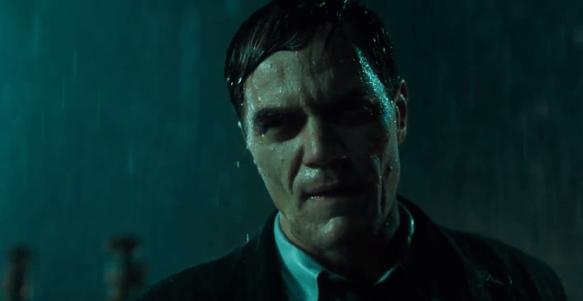
“I never fail” – An example of a villain who doesn’t ever make a choice. (Plus there’s heavy rain when is a Del Toroizm)
Similarities between protagonists
- Many of them are orphans (in or be set before the film)
- We often see the person that the main character loves the most die or dying which is often a parent (or a parent is one of them)
- Often have a power or an ability that other people in the film don’t have/aren’t capable of. This commonly the ability to see spirits or to see into another world but we also see super human strength and agility
Del Toro treats the fantastical as the mundane
- In Devils Backbone the first ghost sighting is during the day and purposely edited to not be scary
- In Pan’s Labyrinth the first magical character Ofelia meets is a fairy and it almost plays out as though she were expecting it to happen
- And specific rim starts years after humans have had their fast encounter with something else
Other films have to give lots of rules to make it believable. But as the magical in Del Toro films isn’t treated as overly special and doesn’t have a huge impact on the daily life of the characters, you don’t have to give a lot of exposition.
Mise en Scene
- His films are constantly gorgeous to look at. It’s the difference in designing something to look cool and designing something to tell you about the character.
- He’s a believer in encouraging the set to be character itself, building at least one big statement piece on to every set. It’s his way of connecting story moments with locations.
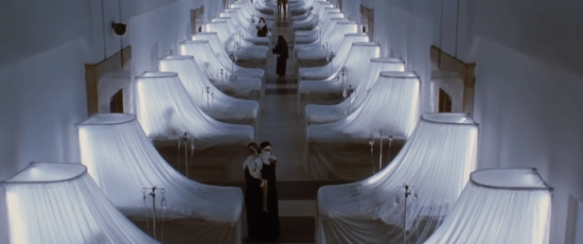
Colour
- He often uses colour to help tell his story.
- Common tones are yellow, blue and green which will often change dramatically per sequence such as in Pan’s Labyrinth where you have the blue vs the gold and red. When the magical and ‘real’ world collide, they colour difference starts to become more noticeable (battle between two worlds) and sets that were once coloured one way are now coloured another as they have been affected by one of the two worlds. He wanted to show the difference in intention between both story lines and the effect Ofelia’s story had on the world. You can find more control of colour in most of his other films where lighting will dramatically change from environment to environment including in the same scene to coincide with a characters journey or spiritual direction.
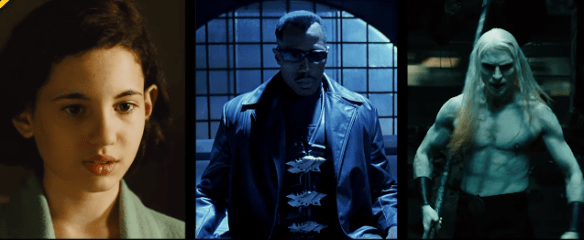
Yellow/blue/green
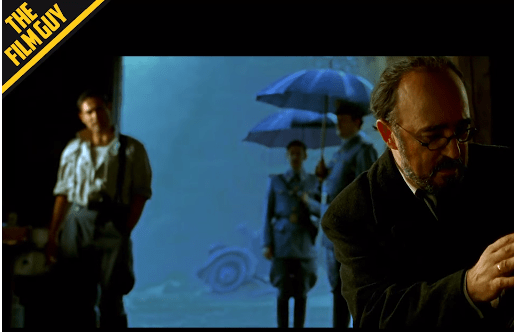
Difference in lighting
Logic and showing vs telling
Del Toro hates the need for perfect logic in films his beliefs that the strongest story telling comes from a place of mystery and awe and that not everything has to make effect sense. However audiences often do think about the logic and he has been criticised for not being able to get great performances from his actors, a possible reason is that he is an extremely visual story teller. He shows things rather than using long dialogue (telling). This means any problem with the actors, might be down to the script. His lean on visual style has stopped many of his films from achieving as well as they could have but more often than not, when he leads on his world creation abilities his films get closer to achieving it.
Del Toroizms
- Religious symbolism
- Scene taking place at night
- Scene taking place underground
- Heavy rain
- Orphans
- Clockwork
- Children dying
- Creepy stuff in glass containers
- The camera always moving and rarely stopping
- Creatures and monsters
The monsters are human
A common theme is that the humans are monsters and the monsters are often human. As well as this, the human character that is the villain tends to take advantage of the monster. Del Toro said as he was bullied growing up because of his size, he relates more to his movie monsters than the people. This is a perspective that sees them as misunderstood creatures and not necessarily stereotypical monsters. Del Toro could be showing the desire for acceptance and how society should be more accepting.
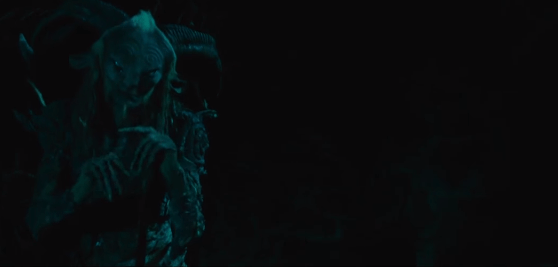
An example of a monster who is ‘human’ (but not a protagonist)
 Georgia Newman Film Studies